The Independent Uganda: You get the Truth we Pay the Price


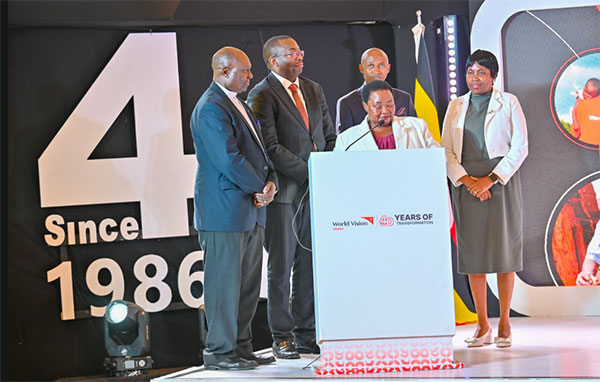
World Vision Uganda Commemorates 40 Years of Transforming Lives, Unveils Bold New Strategy for 2026–2030
Kampala, Uganda | THE INDEPENDENT | Four decades ago, amid the ashes and uncertainty of the Luwero Triangle in 1986, World Vision Uganda began a journey of hope. What started as a response to the suffering of children and families caught in the liberation war has grown into a mission that has touched millions of lives across the country.
Now, in 2026, World Vision Uganda marks this remarkable 40-year milestone even as it turns purposefully toward the future, officially launching its new Strategic Plan for 2026–2030.
This commemoration, officials said, is a moment to pause and give thanks for four decades of transformed communities, restored dignity, and children given the chance to thrive.
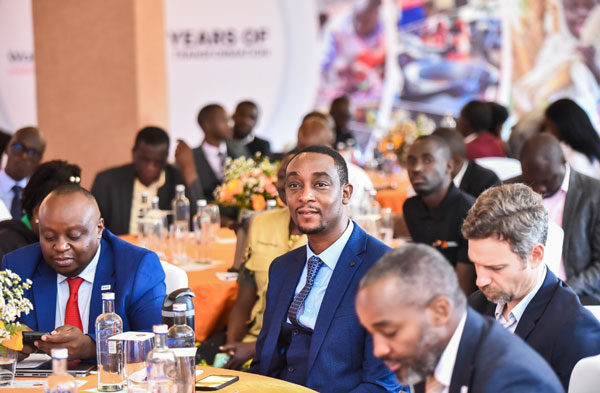
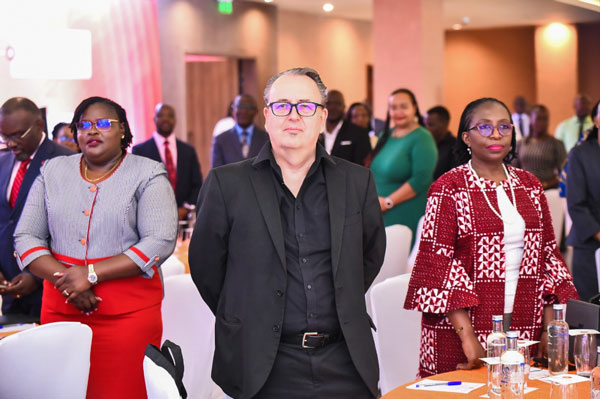
The commemoration and strategy launch at Speke Resort Munyonyo on Wednesday, celebrated World Vision Uganda’s journey since 1986; honouring the millions of lives transformed and communities strengthened along the way, from the organisation’s founding years to its present-day reach.
Prime Minister Robinah Nabbanja, who represented President Yoweri Museveni, expressed her admiration for World Vision, noting that it has been at the forefront of transformation across the country. The organisation has expanded its reach to more than 50 districts through 52 Area Development Programmes, touching millions of lives through interventions in health and nutrition; education; child protection; resilience and livelihoods; water; sanitation; and hygiene.
“The President of Uganda, Yoweri Museveni, congratulates World Vision on its constructive partnership with the government. The government and World Vision share a rich history since World Vision’s founding in 1986. World Vision has worked with us on the social and economic agenda, building schools, health facilities, and livelihoods through collaboration.”
She added that “household poverty levels have dropped, child marriages have reduced, and education outcomes have improved in areas where World Vision works. These achievements are not organisational successes but contributions to government’s development agenda. We also recognise World Vision’s contribution to policy and legislative reform efforts to combat child sacrifice, child labour, and child marriage, as well as its role in school feeding programmes.”
At the heart of the celebrations were children, many of whom shared, in their own voices, how World Vision’s programmes has shaped their young lives.
New strategy
The event marked the official launch of the 2026–2030 strategy, unveiling the organisation’s vision, priorities, and roadmap for the next five years of impact. It also reaffirmed World Vision Uganda’s enduring capacity and commitment to walking alongside vulnerable children and communities as they pursue lasting wellbeing.
There is a long list of things to celebrate, officials said. From the early recovery work in Luwero, through the rehabilitation of victims of the LRA war in Northern Uganda, to the response to hunger in Karamoja, to the support of refugee and host communities in West Nile and South Western Uganda, and on to a growing footprint spanning Health & Nutrition, Child Protection, Economic Empowerment, Education, and Water, Sanitation & Hygiene across the country.
“And it is, in the same breath, a moment to look ahead with renewed conviction, as World Vision Uganda charts a bold new course for the vulnerable children and families who still wait for that same hope to reach them.
Under the new strategy, World Vision Uganda has set an ambitious goal: contributing to the sustainable wellbeing of more than five million vulnerable children and their families between 2026 and 2030, a target that reflects both the scale of need still ahead and the depth of the organisation’s resolve to meet it.
World Vision Uganda is a light of hope says Nasser, 13
For 40 years, we have been that light of hope for children across the nation, standing with the most vulnerable, nurturing their wellbeing, and walking alongside communities as they rebuild & rise. #WorldVisionUgandaAt40 pic.twitter.com/ZGn8wH5QeJ
— World Vision Uganda (@WorldVisionUg) August 26, 2026
Over the last four decades, World Vision Uganda has remained true to its calling, walking with the most vulnerable, standing in the gap for children whose voices are often unheard, and restoring dignity where it has been stripped away. That calling has not wavered, even as the contexts it has answered have shifted.
“Through every season, our calling has remained constant, rooted in faith, expressed through service, and measured in the lives of children who now know what it means to hope again,” World Vision said in a statement.
Michael Segwaya, World Vision Uganda Board chairperson, captured the spirit of the World Vision journey: One promise I want to share is that as we embark on the next forty years, we will stay; when it is difficult, we will stay. When the world looks away, we will stay. When resources are scarce and the challenges are great, we will stay, because the children of Uganda deserve a partner who does not leave when it gets hard.”
Jeremiah Nyagah, National Director of World Vision Uganda, reflected on both the weight and the promise of this moment: “As we celebrate 40 years of transformation in Uganda, we give thanks for the millions of children, families and communities whose lives have been transformed through the collective efforts of government, donors, faith leaders, communities and development partners. While we are proud of the impact achieved since 1986, we recognise that much work remains. Our new 2026-2030 strategy renews our commitment to reaching the most vulnerable children and ensuring they experience lasting wellbeing, resilience and hope for a brighter future.”