The Independent Uganda: You get the Truth we Pay the Price


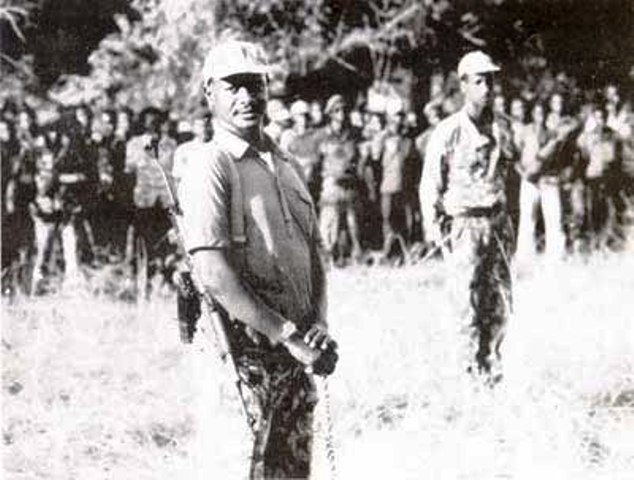
COMMENT | ANDREW PI BESI | Reader, three happenings and an interesting outlier this past week form the basis for this essay.
The first: Public outrage over the manner in which Kampala’s immediate former Lord Mayor, Erias Lukwago, was arrested. As the controversy grew, a passionate member of the Patriotic League of Uganda circulated a recording of an alleged telephone conversation between MJG Kahinda Otafiire and Ambassador Mirjaam Blaak. According to him, the recording proved that Otafiire dislikes Gen. Muhoozi Kainerugaba and does not wish to see him succeed his father, Gen. Yoweri Museveni, as Commander-in-Chief.
The second: The resurfacing of remarks also attributed to Otafiire, in which he lamented the hijacking of the National Resistance Army’s ideals by opportunists. Referring to the excesses associated with the 11th Parliament under the now embattled Anita Annet Among, he warned against grafting “backward ideologies” onto the NRA’s historical mission.
The third: An exchange on X between veteran journalist Kalundi Serumaga and Gen. David Sejusa, prompted by Kalundi’s review of William Pike’s memoir, Combatants: A Memoir of the Bush War and the Press in Uganda.
Drawing on an interview given by Winnie Byanyima and other historical accounts, Kalundi argued that the NRA was less an indigenous revolutionary movement and more a project ultimately embraced and financed by British interests after the collapse of their relationship with the UPC government. To him, the NRA and the story of its founding in 1981 amount to little more than a “twenty-seven guns foundational myth.”
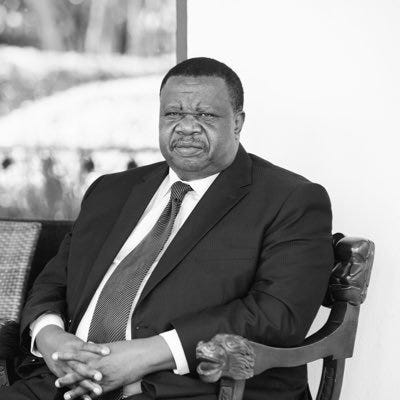
The Outlier: Not a retired general, not a veteran journalist, but a young Ugandan named Elijah Mwesigwa.
Following Lukwago’s abduction from his home by UPDF soldiers and the circulation of humiliating images of him on social media, Elijah penned a thoughtful essay titled Bro, I Did Not Fight Your War.
Unlike Otafiire, Kalundi, Sejusa, Pike, myself, or even President Museveni, Elijah belongs to a generation with no living memory of Amin, Obote II, the Bush War, or the NRA’s entry into Kampala in January 1986. His generation inherited the Uganda that emerged from those events, but not the experiences that shaped them.
My charge to him that the Bush War was and remains his war notwithstanding, Elijah’s complaint was both simple and profound:
“The dividends of that war were never shared with my generation. The ideals of the Ten-Point Programme weren’t betrayed by the youth; they were auctioned off by the very people who fought for them. The generals and revolutionaries of 1986 didn’t just capture power; they captured the economy, the land and the future. They turned public office into a family business and patriotism into a loyalty test.”
Whether one agrees with Elijah’s conclusion is beside the point. What makes it significant is that it exposes a widening generational divide in Uganda’s political discourse.
For me, these episodes are not really about Muhoozi Kainerugaba, Mirjaam Blaak, Anita Among, Kalundi Serumaga, William Pike, or even Erias Lukwago. They are about a deeper question: who owns the legacy of the NRA revolution?
Like many Ugandans, I often find myself disillusioned by the distance between the ideals that animated the NRA struggle and the realities of contemporary governance. Many, including members of my family, rallied around the NRA because it represented a compelling alternative to the instability, violence, and political decay that had come to define Uganda’s post-independence experience.
The frustration expressed by Elijah is, therefore, not entirely misplaced. It reflects a growing sentiment that some of the aspirations embodied in the Ten-Point Programme have been compromised by patronage, corruption, and the emergence of a political class more concerned with preserving privilege than advancing the public good.
Yet acknowledging these shortcomings should not require us to abandon historical honesty.
Many Ugandans who lived through the years preceding and during the Bush War regarded the NRA not merely as the most visible anti-Obote force, but as the best organised, most disciplined, and most politically coherent. At a time when numerous groups opposed the government, it was the NRA that developed durable structures, articulated a clear programme, and built support among significant sections of the population.
Foreign governments may well have sought to influence events, as they often do during periods of conflict. But to reduce the NRA’s victory primarily to foreign sponsorship is to overlook the agency of Ugandans themselves and the genuine appeal the Movement commanded at the time.
The NRA inherited a country devastated by political violence, economic collapse, and institutional decay. Faced with a choice between ideological rigidity and pragmatism, it largely chose the latter.
Rather than treating East or West as articles of faith, the Movement pursued economic recovery, welcomed investment, restored macroeconomic stability, and reconnected Uganda to regional and global markets. Whatever one thinks of the Movement today, it is difficult to deny that the Uganda of 2026 bears little resemblance to the bankrupt and fractured state of the 1980s.
Roads, telecommunications, financial services, educational opportunities, regional trade, and a degree of economic stability are all products, in part, of decisions made during the Movement’s formative years.
Yet acknowledging those achievements should not blind us to the growing crisis of purpose confronting the Movement today.
Many Ugandans increasingly question whether the promise of “fundamental change” has given way to a political elite content to feed off the state rather than reform it. Public office is now perceived as an avenue for personal enrichment. Patronage flourishes, corruption persists, and public confidence in institutions continues to erode.
Perhaps most troubling is the growing distance between the state and the citizens.
For decades, the UPDF has enjoyed a level of public goodwill unmatched by most institutions in Uganda. It is, to an extent, seen not merely as a military force but as one of the greatest achievements of the NRA revolution.
But reputations, like revolutions, require constant renewal. When citizens are abducted rather than arrested, when due process appears secondary to displays of force, and when humiliating images of suspects are circulated for public consumption, institutions inevitably risk undermining the trust upon which their legitimacy depends.
This, perhaps, is what MJG Otafiire’s warning and young Elijah’s frustration ultimately have in common.
Otafiire speaks as a custodian of the revolution. He worries that the ideals which animated the struggle have gradually been displaced by opportunism, patronage, and the pursuit of personal enrichment. His concern is not merely about succession or personalities. It is about whether the Movement still recognises the historical mission that justified its rise to power.
Elijah, by contrast, speaks as an heir to the revolution. He inherited the Uganda that emerged from 1986 and asks a different question. If the revolution transformed Uganda, what part of that transformation belongs to his generation? And if its ideals still matter, where are they to be found in the conduct of public affairs today?
Their perspectives differ, but together they expose the central challenge confronting the Movement four decades after its victory. A revolution cannot survive indefinitely on memories of past achievements. Nor can it rely solely on the legitimacy earned by those who fought its battles.
As President Museveni embarks upon what may prove to be the defining chapter of his presidency, the challenge before him is not merely one of succession, economic growth, or electoral victory. It is the challenge of renewing public confidence that the principles which inspired the NRA struggle still have meaning in contemporary Uganda.
Ergo, the greatest threat to the legacy of the NRA revolution is neither Kalundi’s revisionism nor Elijah’s impatience. It is the possibility that the Movement itself may cease to embody the values that once distinguished it from those it replaced.
History has already recorded the NRA’s victory. The more difficult question is whether the revolution can still command the loyalty of those who never fought its war. Otafiire’s warning and Elijah’s challenge are, therefore, not opposing arguments. They are two sides of the same question: who owns the legacy of the NRA revolution, and what must be done to ensure that future generations regard it as an inheritance worth preserving rather than a history lesson to be endured?
*****
By Andrew “Pi” Besi | On X: @BesiAndrew