The Independent Uganda: You get the Truth we Pay the Price


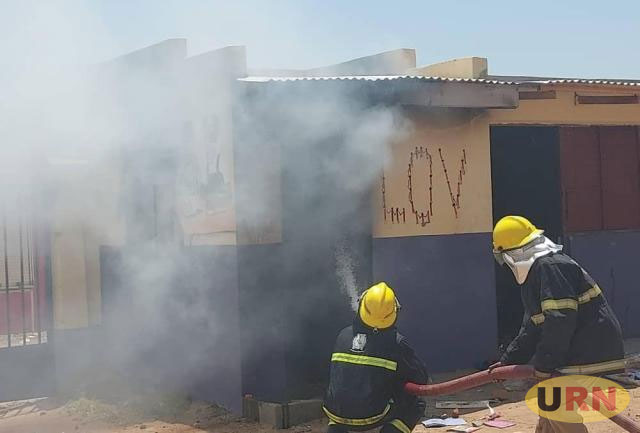
COMMENT | MATHIAS RUKUBA | On every school day in Uganda, hundreds of learners, teachers, support staff, and visitors converge in one place. Different ages. Different backgrounds. Different needs. One shared responsibility: safety.
Yet, across the country, school safety is too often treated as an afterthought, noticed only when tragedy strikes, property is destroyed, or learning is violently disrupted. By then, the cost is already too high.
School safety is not a one-time project, a checklist item, or a reaction to public pressure. It is a routine, continuous responsibility that must be planned, reviewed, funded, and enforced before schools open, while they operate, and after each term ends. Anything less is not a mistake; it is negligence.
Schools are not just centers of learning; they are public spaces. Every day, crowds move through classrooms, dormitories, walkways, dining halls, playgrounds, laboratories, and assembly grounds. In such environments, attention to detail does not merely improve comfort; it saves lives.
From the erection of buildings to the extension of classrooms and construction of dormitories, sick bays, laboratories, and access points, safety considerations must be embedded from the very beginning. Schools are not static institutions. They grow, expand, and adapt; facilities are built one year and modified the next. Each change alters the risk profile.
This is why professionals such as engineers, safety officers, fire experts, and risk assessors should never be treated as optional extras. They are essential partners in school operations.
Yet, across Uganda, many institutions rely on assumptions rather than assessments. Buildings rise without proper safety audits. Electrical installations are overloaded. Walkways are poorly designed. Emergency exits are blocked. Dormitories are expanded without reconsidering escape routes.
Without professional safety input at every stage, these changes introduce hidden hazards:
- Electrical faults in newly built or modified blocks
- Inadequate emergency exits when rooms are re-purposed
- Stairways and walkways without proper guarding
- Dormitories lacking escape routes or smoke detection systems
Risk assessments exist to uncover such dangers before tragedy strikes. Qualified fire safety officers advise on correct equipment, placement, and maintenance. Structural engineers ensure extensions do not compromise load safety or evacuation routes.
School management teams operating without professional safety input are like ships navigating stormy waters without maps, compasses, or warning systems.
These risks are not theoretical. They are the root causes behind many of the accidents and fire outbreaks Ugandan schools have experienced. And these are not rare exceptions; they are recurring patterns.
True safety requires intentional investment. Firefighting equipment, lightning (thunder) arrestors, personal protective equipment, CCTV cameras, alarms, and secure access controls are no longer luxuries. They are basic requirements for modern schools.
But equipment alone does not create safety.
- A fire extinguisher that no one knows how to use becomes decoration.
- A CCTV camera that no one monitors is wasted money.
- An alarm system without drills creates panic instead of protection.
That is why training is just as important as procurement. Safety knowledge must reach everyone: head teachers, deputies, bursars, matrons, guards, cooks, cleaners, and even prefects. In an emergency, the first responders are rarely outsiders; they are the people already inside the school
In recent years, Ugandan schools have recorded multiple deadly and disruptive incidents that expose how urgent this crisis has become.
- In August 2025, a student drowned at Seeta High School, sparking calls for better supervision and trained lifeguards, and renewing debates around general safety preparedness in schools.
- In October 2023, a devastating fire at Kasana Junior School in Masaka killed seven pupils and injured others.
- On January 15, 2022, a dormitory fire at New Crest Kibedi School in Kawempe claimed the lives of four children and left others with respiratory complications.
- In November 2025, lightning struck pupils at St. Augustine Nursery and Primary School, Walukuba Parish, Buliisa District highlighting the deadly risk of natural hazards in schools without adequate lightning protection.
- In November 2025, students at Comboni Comprehensive College in Adjumani District went on a violent strike following a mobile-phone confiscation exercise, vandalising infrastructure, breaking perimeter walls, smashing windows, and burning the school generator, disrupting learning and exposing gaps in discipline management and school community relations.
These are not isolated headlines. They are warnings looking Uganda straight in the eye.
Uganda’s safety trends reveal a pattern of neglect
Available crime and building safety reports paint a troubling picture:
- Schools account for an estimated 35% of all fire incidents nationally, despite being places meant to protect children.
- Only about 13% of schools have basic fire preparedness mechanisms. Very few dormitories are fitted with automatic fire alarms or adequate emergency exits.
- Many school dormitories are overcrowded, far beyond recommended capacities, increasing the risk of rapid fire spread.
- Fires often break out at night, when learners are asleep and least able to respond or escape.
Each statistic represents young lives placed at risk because routine checks were skipped, warnings ignored, and preventive actions delayed.
Risks Change and So Must Our Thinking
Safety threats are not static. What was a major risk ten years ago may not be the same today. Urban schools face different challenges from rural ones. Day schools differ fundamentally from boarding schools. Technology, crime patterns, climate change, and population growth continue to reshape risk landscapes.
Rapid urbanisation has increased congestion around schools. Flooding affects low-lying areas. Power fluctuations elevate fire risks. Regional security concerns vary widely. Treating safety as “the same everywhere” is a dangerous mistake.
This is why routine risk assessments and safety checklists are critical. Schools must assess likelihood and impact regularly not only after incidents occur. Preparedness must be practiced before the school year begins, reinforced during term, and reviewed again after each holiday break.
The real problem is not money, it is mindset
Research and experience reveal a consistent pattern; many school administrators take safety for granted until disaster strikes.
When an incident occurs, urgency suddenly appears. Meetings are called. Blame is assigned. Promises are made. But time cannot be reversed. Lost lives, damaged reputations, and destroyed infrastructure cannot be restored to their original state.
In many cases, the challenge is not lack of funds. It is a lack of awareness, prioritisation, and accountability.
Do administrators truly understand the consequences of ignoring safety?
Why do we wait ignorantly or negligently for disaster before we act?
Investing in academics is important. But investing in safety is foundational. Without safety, learning cannot thrive.
Safety is a leadership responsibility
Ultimately, safety begins at the top. It is the responsibility of school administrators and boards to ensure compliance with standards and protocols. The willingness to engage professionals, train staff, inspect facilities before and after school opening, and enforce safety measures consistently is a clear mark of responsible leadership.
Public awareness in Uganda is growing, but concern alone is not enough. Parents, regulators, school owners, and communities must demand proactive safety planning, not reactive damage control.
A Call to Act, Before the Bell Rings Again
School safety should never be seasonal or symbolic. It must be routine, deliberate, and continuously reviewed before learners return, while schools are in session, and after each term closes. Uganda’s schools can no longer afford to gamble with lives and property. Safety is not a cost; it is an investment in trust, continuity, and the future.
Because when safety is ignored, education pays the price. And when safety is prioritised, everyone wins.
*******
 MATHIAS RUKUBA | Security Management Advisor & Security Consultant
+256773061600