The Independent Uganda: You get the Truth we Pay the Price


What should Africa’s trade strategy be as deadlock persists at the World Trade Organization?
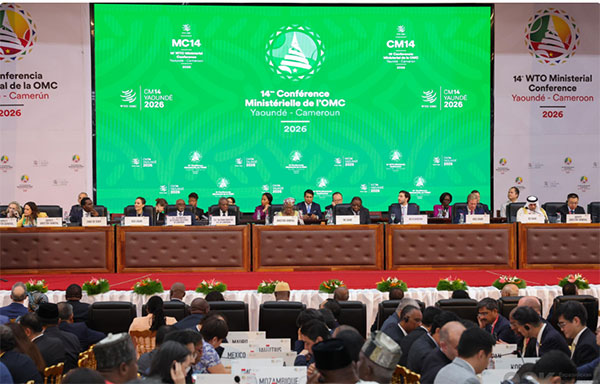
COMMENT | JANE NALUNGA | The outcome of the 14th Ministerial Conference of the World Trade Organization in Yaoundé, Cameroon, which concluded on 30 March 2026, has once again laid bare the structural weaknesses of the multilateral trading system. Rather than delivering substantive outcomes on Africa’s long-standing development concerns and demands, the Ministerial Conference ended in deadlock, reinforcing growing questions about the WTO’s ability to deliver concrete, binding outcomes on issues central to the continent’s development agenda and quest for structural economic transformation.
After four days of negotiations, ministers were only able to adopt three limited decisions on integrating small economies into the multilateral trading system, a political decision taking note of work done on special and differential treatment in standards-related measures and a political decision to continue the fisheries subsidies negotiations. Meanwhile, the most critical issues, including WTO reform and the Least Developed Countries package, were deferred to Geneva for further discussion. This outcome reinforces a long-standing trend in which difficult decisions are postponed, leaving core development concerns unresolved.
In the aftermath of the deadlock, the 166 WTO members opted to move negotiations back to Geneva in an attempt to salvage progress in five specified areas identified by the MC14 chair. However, the draft texts developed in Yaoundé, including those on WTO Reform, and the two moratoria on customs duties on electronic transmissions and TRIPS non-violation and situation complaints, carry no binding legal status in which members are required to use as the basis for negotiations in Geneva. Their uncertain standing means that members may reopen negotiations or introduce new proposals, potentially making the process more complex and prolonged.
Deep divisions over digital trade rules
At Yaoundé, the failure to renew the WTO’s long-standing moratorium on customs duties for electronic transmissions exposed deep divisions over digital trade rules and highlighted the risks for developing regions, particularly Africa. While some developed countries led by the US pushed for longer or permanent extensions, others resisted, arguing that the moratorium limits the ability of developing countries to generate revenue and maintain policy space for digital transformation. For Africa, where digital infrastructure and participation in global digital supply chains remain uneven, the lapse underscores the urgent need for inclusive rule-making that safeguards policy space, supports digital infrastructure development, and ensures equitable access to the benefits of the global digital economy. These objectives would also be in full alignment with the AfCFTA Digital Trade Protocol which mandates no customs duties amongst African platforms but does not foreclose this policy space for African member states to levy duties on platforms outside Africa.
Agriculture, a central pillar for African economies, once again saw no meaningful progress. Negotiations stalled amid calls to reset the agenda, explore “new approaches,” leaving unresolved yet again the critical issues such as domestic support, market access, public stockholding for food security, and special safeguard mechanisms. The continued lack of outcomes in this area underscores a longstanding imbalance in the trading system, where development-oriented concerns are relegated to the sidelines to appease the commercial interests of net farm exporting members.
Africa’s trade strategy must evolve
Africa’s trade strategy must therefore evolve to reflect this dual reality. Defending key interests within the WTO remains essential, particularly in areas such as agriculture, food security, and development flexibilities. At the same time, there is a need to deepen regional integration and strengthen alternative platforms that can deliver tangible outcomes. Expanding intra-African trade, building productive capacity, and advancing regional value chains are critical components of this approach.
At the same time, the conference brought renewed focus to the growing role of plurilateral agreements, particularly the Investment Facilitation for Development Agreement. Supported by over 120 members, proponents are seeking to integrate this agreement into the WTO framework despite the absence of full consensus. This approach raises concerns about the erosion of the WTO’s consensus-based model and the risk of increasing fragmentation within the system. The expansion of such agreements could create a multi-speed trading system with differing obligations, potentially weakening coherence and inclusivity.
Developing countries face pressure to adopt the Investment Facilitation for Development Agreement (IFDA), touted as a tool to streamline investment and enhance transparency, but it risks limiting policy space and prioritizing foreign investors’ interests over Africa’s development and regulatory autonomy.
For African countries, this trend presents a complex challenge. While plurilateral initiatives may offer opportunities in areas such as investment attraction, they also carry risks of constraining domestic policy space and introducing obligations that may not align with domestic development priorities. Existing continental frameworks, such as the African Continental Free Trade Area, provide an alternative basis for shaping trade and investment rules in a manner that is more responsive to Africa’s specific needs and development goals.
The broader global context also shaped the outcome of the ministerial. Economic pressures, geopolitical tensions, and rising costs of living limit the flexibility of governments to make concessions or extend negotiations. At the same time, evolving negotiation practices within the WTO, including informal consultations and smaller group discussions, risk diluting the collective bargaining power of developing countries, even as African members attempt to maintain coordinated positions.
Collectively, these developments point to a multilateral trading system under significant strain and in transition. For Africa, this moment calls for a recalibration of trade strategy. Continued engagement within the WTO remains essential, as it continues to provide the foundational rules governing global trade. However, reliance on the WTO alone is no longer sufficient to advance the continent’s development objectives.
A balanced approach is needed that combines active engagement in multilateral processes with stronger regional integration and domestic capacity building. Expanding intra-African trade, strengthening regional value chains, and leveraging frameworks such as the African Continental Free Trade Area are essential to reduce dependence on external markets and mitigate the impact of global trade delays.
At the same time, Africa must adopt a more strategic and coordinated approach to emerging global trade-related issues. This involves not only participating in negotiations but also actively shaping them to ensure that new rules support structural transformation, industrialisation, and technological development across the continent.
The deadlock in Yaoundé is part of a broader pattern of issue-specific negotiations in which we are likely to witness the increasing fragmentation within the global trading system. The pressures of Africa hosting the MC14 are hopefully now behind us. As negotiations return to Geneva with no guarantee of timely resolution, Africa must now assert and pursue its strategic priorities both within and beyond the WTO to safeguard its long-term economic interests and advance its development agenda.
*****
 Jane Nalunga is the Executive Director of the Southern and Eastern Africa Trade Information and Negotiations Institute (SEATINI)