The Independent Uganda: You get the Truth we Pay the Price


Mbale, Uganda | THE INDEPENDENT | Umukuuka wa Bugisu has advised organisations replanting indigenous trees on the slopes of Mt Elgon to keep accurate and disaggregated statistics that guide them on evidence-based policy and decision-making.
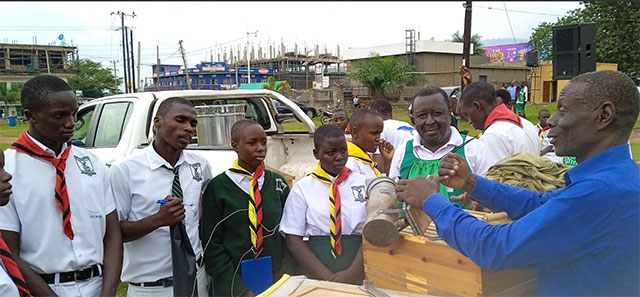
Umukuuka wa Bugisu, Sir Jude Mike Mudoma’s message was delivered to members of the Mt Elgon Tree Growers’ Enterprise (METGE) at celebrations to mark the planting of 25 million indigenous trees on the slopes of the mountain and neighbouring areas. The replanting was funded by the Welsh County Government of the United Kingdom (UK) and undertaken in collaboration with Size of Wales, an international environmental Non-Governmental Organisation (NGO). District Local Governments (DLGs) in the Mt Elgon region also participated in the replanting.
The Mount Elgon region, once known for its fertile soils, reliable rains, and rich biodiversity, has over the past three decades faced the harsh realities of climate change, often arising from heavy deforestation. The change has been evidenced in rising temperatures, unpredictable rainfall, landslides, floods, prolonged dry spells, the loss of fertile land and depletion of water sources. These changes have not only destroyed crops and homes but have also affected the livelihoods and wellbeing of the communities—especially our farmers, women, and youth. This week, over 30 victims are reported to have died in landslides on the slopes which also destroyed crops and domestic animals.
In the speech read for him by his Information, Media, and Communications Minister Alfred Geresom Musamali, Umukuuka wa Bugisu said without the statistics it may be difficult to confirm the progress so far made.
“I am deeply honoured to join you on this momentous day as we celebrate an extraordinary achievement—the distribution of 25 million trees across the Mount Elgon sub-region and beyond,” said Umukuuka wa Bugisu.
“I thank the leadership of Mount Elgon Tree Growing Enterprise (METGE) for the kind invitation and for the tireless commitment to restoring the environment, protecting our mountain, and improving the lives of our people,” he added.
He said the work of METGE—planting and distributing 25 million trees—is not just an environmental milestone but also a cultural and moral victory. He added that through partnerships with local communities and government, METGE has shown that restoration is possible when people unite for a common cause.
“These trees mean more than greenery—they represent hope, resilience, and a renewed commitment to protect Mt. Elgon’s fragile ecosystem for generations to come,” he said.
“As a cultural institution, we have also been active in promoting environmental stewardship through community mobilisation, cultural education, and encouraging the planting of indigenous trees around homesteads, schools, and sacred sites. We continue to remind our people that tree planting is not only an act of conservation but also an expression of respect for the Creator and for the generations yet to come,” he added.
But Umukuuka wa Bugisu cautioned that the task before METGE is far from over because climate change is real, and its effects continue to threaten the survival of mankind.
“We must, therefore, move beyond celebration to more action. However, I am afraid all these will not achieve much unless we are in a position to measure our milestones. I would have been most delighted if we had been able to disaggregate further the information about the trees we have so far planted,” he said.
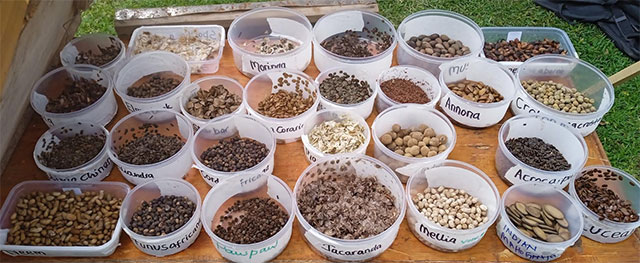
“What species, for instance, have we planted? How many among those are fruit trees, and how many are for tuber food, timber, wood fuel, medicinal extractions, decorative use, and customary rituals? In which districts, sub-counties/town councils or city divisions, parishes, and households did we plant them? During which years, months and weeks did we plant them? Have we manured, watered, and pruned/trained them since? What have been the results of those efforts?”
“Many of you here know that my professional background is in forestry resources management, and as a forester, every answer to these questions has policy and decision-making implications for our region, country, and continent. If for instance, we have planted more trees in the lands owned by persons who use grid electricity and Liquified Petroleum Gas (LPG) for cooking while ignoring the energy-poor households, we may only be doing some glorified public relations stints instead of solving the climate change and other Sustainable Development Goals (SDGs) challenges.”
He pointed out that, happily, the Institution of the Cultural Leader a week earlier started the journey to overcoming their challenge to the production and use of the statistics that track such development milestones. He announced that the Uganda Bureau of Statistics (UBOS) entered a Memorandum of Understanding (MoU) with Umukuuka wa Bugisu to build the capacity of the cultural institution to produce and use these statistics locally but also to feed into the National Statistics System (NSS). Under the MoU, UBOS will this Financial Year (FY) support us with furniture, three desktop computers, and hundreds of table computers for our statistics production and use.
“We are especially happy about the tablets because they were manufactured at the Sino-Uganda Industrial Area here in Mbale City and procured by UBOS for use in the National Population and Housing Census (NPHC) 2024. So, while UBOS is just giving back to the community that manufactured the machines, we do not take the gesture for granted,” said Umukuuka wa Bugisu.
“I am, therefore, appealing to the people of Bugisu to fully take advantage of the support to track their own development. I am equally requesting the people of Bugisu to always give UBOS maximum support whenever it visits our households to collect any other data for tracking attainment of milestones in the National Development Plan (NDP) and international commitments,” he added.