The Independent Uganda: You get the Truth we Pay the Price


Civil society warns of potential repetition of 2011, when election-related spending drove inflation above 30%
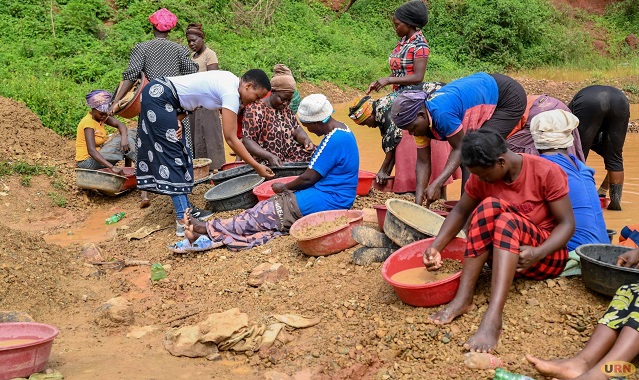
NEWS ANALYSIS | JULIUS BUSINGE | David Kitoosa studies the red soil beneath his feet as if searching for answers buried in it. His hands, hardened by years of brickmaking and truck-driving across Wakiso District, tell a story of toil without reward. In Muyenje village, the scent of woodsmoke clings to the air, mixing with a resignation shared by many around him.
“We’ve stopped listening to politicians’ promises; we have wasted enough time on them,” he says. His three children are eager to study, yet some remain at home—not for lack of ambition, but because he cannot raise the Shs50,000 needed for basic UPE requirements.
“They tell us the economy has grown under Museveni,” he continues. “But for us here, people are poor. They have no money.” He gestures to the landscape: imposing new mansions ringed with steel gates stand beside homesteads where a single meal is never assured. “Some people have built nice houses, but others have nothing to eat. Their land has been grabbed by ‘mafias’; they cannot even dig like they used to.”
Thirty kilometres away in central Kampala, the economic squeeze takes a different form. For 20 years, Nabukeera’s stall along the Nakivubo channel was her lifeline, generating up to Shs200,000 a day. Then redevelopment—led by businessman Hamis Kiggundu—swept away the trading lanes, replacing them with demolition fencing and promises of modernity.
Now operating from a temporary stall, her earnings have halved. “They tell us the economy is growing, but we are the ones suffering,” she says, her voice shaking with frustration. Education, health care, transport, food and rent have all risen sharply—each increase further eroding her livelihood.
A growing economy, a shrinking reality
As Uganda moves toward the January 15, 2026 general election, these stories expose the gulf between official economic optimism and everyday hardship.
On paper, the numbers glitter. The central bank has held the policy rate at 9.75%, projecting GDP growth of 6.5–7.0% for FY2025/26. Inflation sits comfortably at 3.4%, and in November S&P Global revised Uganda’s outlook to “positive”, praising its strong economic momentum.
Yet statistics tell only part of the story. Unemployment remains at 12.7%. GDP per capita lingers at $2,882. One in every four shillings collected in taxes goes directly to interest payments. These figures form the backdrop to the Uganda experienced by Kitoosa and Nabukeera—an economy performing well in aggregates but poorly for the individuals expected to carry it.
Uganda’s export boom highlights the imbalance. Gold and coffee earned $4.2bn and $2.2bn respectively in FY2025—headline numbers celebrated by policymakers. But the structures behind them reveal a different reality.
The gold industry, 70% artisanal, channels its largest profits to opaque UAE-based networks. The coffee sector supports 1.7 million smallholder households, yet farmers typically receive only 20–30% of export value. What Uganda calls export-led success often masks a model where value creation occurs at the top, not the bottom.

Rehema Kahunde of the Economic Policy Research Centre notes that while manufactured exports have tripled as a share of total exports—from 4.2% in FY2010/11 to 13% in FY2022/23—most of Uganda’s goods remain unprocessed.
“Exports are still largely low-value primary commodities,” she says. The dream of value addition, long promised, remains largely unrealised.
Uganda’s present predicaments are rooted in its past. The post-independence optimism of the 1960s, when the economy grew at an average of 6.7%, collapsed under Idi Amin as inflation soared to 215% and the economy imploded. The reforms that followed 1986 restored stability, with growth averaging 6% for decades.
Julius Kapwepwe of the East African Budget Network points to the structural transformation since then: diversification from six export commodities in 1988 to about 30 today, and GDP expanding from $3.5bn to a projected $66.2bn in 2026. Yet the benefits of this growth have not reached the majority, creating what might be described as a regime of “controlled prosperity”—macro stability with limited wealth diffusion.
Election economics returns
With elections approaching, fiscal policy is again under scrutiny. Opposition figures, including the FDC’s Nathan Nandala Mafabi, promise job creation and better use of future oil revenues. Meanwhile, the government has already passed Shs5.7 trillion in supplementary budgets this fiscal year. The deficit is projected to widen to 7.2% of GDP, far above the 3% benchmark.
Civil society warns of potential repetition of 2011, when election-related spending drove inflation above 30%. Julius Mukunda of CSBAG urges caution, noting that unrestrained expenditure could destabilise an already fragile balance.
Senior officials, however, remain upbeat. Public Service chief Lucy Nakyobe argues that “an efficient public sector is essential to unlocking entrepreneurial potential,” while Treasury Secretary Ramathan Ggoobi envisions Uganda’s GDP expanding tenfold to $500bn by 2040. But the optimism feels remote from the lived experiences of ordinary families.
The looming oil boom carries high expectations. Kahunde underscores the need for transparency, fiscal rules and directing revenues toward high-impact, pro-poor investments. Kapwepwe notes that large infrastructure projects—including the Kabalega refinery and the Tilenga–Tanga pipeline—could bolster Uganda’s balance of payments.
Yet these gains remain distant for citizens like Kitoosa and Nabukeera, whose immediate concerns revolve around school fees, rent and food.
A nation at a crossroads
Uganda’s economy shows clear signs of progress: tourism earns nearly $2bn annually; electricity generation capacity has tripled; and digital infrastructure now spans dozens of districts. But growth remains uneven. Power outages still disrupt four in every ten businesses. Banks prefer lending to government rather than to the private sector, stifling small enterprises.
For all the data, the most telling assessment may come from those living on the margins. “We are not feeling the growth they talk about,” says Nabukeera. Kitoosa is even more resigned: “I don’t want to hear about politicians anymore.”
As the 2026 election nears, Uganda faces a critical question: Who is this growth for? Until citizens like Kitoosa and Nabukeera feel part of the economic story, the country’s much-touted progress risks remaining an impressive façade—one unmoored from the daily realities of the people it is meant to uplift.
Key Facts & Figures: Uganda’s Economic Dichotomy
- GDP growth vs. lived reality
- Fact: GDP is projected to be $66.2 billion in 2026, growing at 6.5-7.0%.
- Explanation: This macro-level growth contrasts sharply with the micro-level reality where citizens like vendor Nabukeera have seen her daily income halved, demonstrating that aggregate economic expansion does not translate to individual prosperity.
- The debt servicing trap
- Fact: For every Shs 100 collected in taxes, Shs 25 is spent on interest payments.
- Explanation: This massive outflow of cash directly crowds out funding for essential services like healthcare and education, creating a vicious cycle where borrowing to fund budgets undermines the state’s ability to deliver services.
- Elite capture in the export sector
- Fact: Gold exports hit $4.2 billion, with 70% being artisanal, but profits flow to foreign conglomerates.
- Explanation: This illustrates “elite capture,” where the formal economic benefits of a resource are extracted by a few well-connected entities, bypassing the local artisans who do the work and contributing to inequality.
- The smallholder farmer’s plight
- Fact: Coffee exports earned $2.2 billion, but the 1.7 million smallholder households receive only 20-30% of the export value.
- Explanation: This shows a critical failure in value addition and supply chain equity. The primary producers bear the most risk and labor but are systematically excluded from the majority of the financial rewards.
- Unemployment and stifled credit
- Fact: Unemployment is 12.7%, while private sector credit growth has slowed to 8.2%.
- Explanation: These figures are linked. Banks find it safer and more profitable to lend to the government (holding 31% of assets in securities) than to small businesses, directly stifling job creation and business expansion.
- Election-driven fiscal slippage
- Fact: The fiscal deficit is projected to widen to 7.2% of GDP, against a 3% benchmark.
- Explanation: This indicates a recurring pattern where fiscal discipline erodes during election cycles due to increased spending, raising public debt and inflation risks without generating sustainable growth.
- The infrastructure paradox
- Fact: Installed electricity capacity tripled to 2,047 MW, yet 4 in 10 businesses face persistent outages.
- Explanation: This reveals a gap between infrastructure investment and operational reliability. The high cost of backup power sources erodes business competitiveness, negating the intended benefits of increased capacity.
- The cost of political uncertainty
- Fact: Three supplementary budgets in FY2024/25 totaled Shs 5.7 trillion (2.5% of GDP).
- Explanation: Frequent, unplanned supplementary budgets—often for classified and non-emergency items—undermine fiscal credibility, reduce predictability for investors, and are a hallmark of weak budgetary institutions.
- Low revenue mobilization
- Fact: Government revenue has stagnated at 14% of GDP.
- Explanation: This low tax-to-GDP ratio, compared to peers like Kenya (17%), creates a narrow fiscal space, meaning the government has very little money to invest in development projects without resorting to more borrowing.
- The inflation history
- Fact: An item that cost Shs 100 in 1980 cost Shs 4.44 million at the start of 2025.
- Explanation: This historical perspective underscores the devastating impact of past hyperinflation (reaching 215.4% in 1979) and explains the Central Bank’s current hawkish stance, prioritizing low inflation even at the cost of higher interest rates for businesses.