The Independent Uganda: You get the Truth we Pay the Price


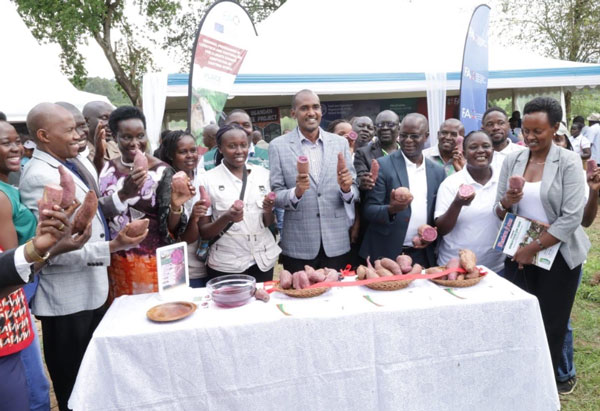
Mbarara, Uganda | PATRICIA AKANKWATSA | Uganda’s agricultural researchers, policymakers and development partners have called for greater investment in agricultural innovation and the adoption of research-based technologies to strengthen food security, improve nutrition and protect consumers from unsafe food.
The call was made on October 16 during Uganda’s national celebrations for World Food Day at the Mbarara Zonal Agricultural Research and Development Institute (MbaZARDI) in Mbarara City, held under the theme “Innovate Today. Nourish Tomorrow.”
The celebrations highlighted the need to move agricultural research beyond laboratories and research stations and ensure that farmers can access and use innovations to increase production, respond to changing weather patterns and improve household incomes.
Agriculture remains central to Uganda’s economy and livelihoods, but food insecurity, climate pressures, crop pests and diseases, and food contamination continue to threaten the availability and safety of food.
Hunger remains a global challenge
In his World Food Day message, Food and Agricultural Organisation (FAO) of the United Nations Director-General QU Dongyu said hunger remained a significant global challenge despite advances in agricultural science and technology.
Dongyu noted that 645 million people faced hunger in 2025, while around one in three people worldwide could not afford a healthy diet.
He said innovation was essential to transforming agrifood systems, but stressed that scientific advances must translate into practical improvements in people’s lives.
Technologies such as digital agricultural advisory services, early-warning systems, smart irrigation and improved farming practices can help farmers increase production, adapt to climate change and strengthen their livelihoods.
However, such innovations have limited impact when they remain confined to research institutions or pilot projects instead of reaching the communities that need them.
Dongyu called for stronger cooperation among governments, researchers, businesses and farming communities to ensure that agricultural innovations are accessible, affordable and suited to local needs.
He said progress should contribute to FAO’s Four Betters: better production, better nutrition, a better environment and a better life, while ensuring that no one is left behind.
Food security faces multiple pressures
In Uganda, food security remains uneven, with some communities facing greater risks because of drought, poverty, displacement and dependence on rain-fed agriculture.
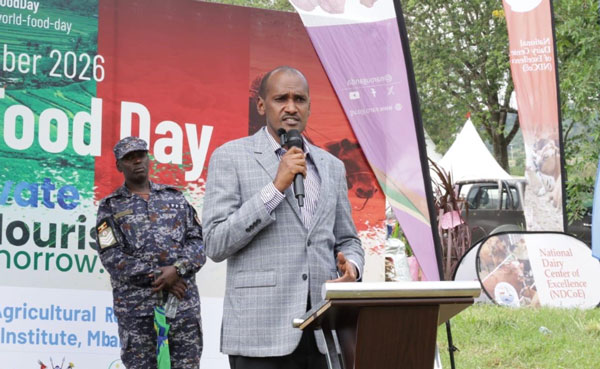
The FAO’s food security assessments have highlighted challenges among refugee and host communities. An assessment covering August 2025 to February 2026 projected that about 712,000 refugees in Uganda would face crisis-level or worse acute food insecurity. The figure illustrates the pressures on vulnerable households, although it relates to that specific assessment period.
Changing rainfall patterns and prolonged dry spells also threaten agricultural production, particularly for farmers who lack irrigation and other climate-resilient farming options.
Speaking at the celebrations, the Minister of Agriculture, Animal Industry and Fisheries, Frank Tumwebaze said the government had convened district leaders to discuss the effects of prolonged drought and the need to prepare communities for changing weather conditions.
He warned that areas traditionally considered food secure could also face growing risks.
“Even hitherto food secure regions may soon become insecure,” Tumwebaze said.
He urged agricultural extension workers to help farmers understand and adopt practices that can improve their resilience to changing weather patterns.
The minister said government was using national agricultural research institutes to showcase improved seeds, breeding stock, climate-smart farming practices and methods of controlling pests and diseases.
He said the priority was to ensure farmers could benefit from these technologies rather than allowing research findings to remain within scientific institutions.
Food safety remains a concern
Beyond food availability, the safety and quality of food remain important public health concerns in Uganda.
Contamination by aflatoxins, naturally occurring toxins produced by certain fungi, is a particular concern in crops such as maize and groundnuts. Poor drying and storage conditions can increase the risk of contamination, exposing consumers to harmful substances.
The United Nations’ Uganda Country Analysis 2025 reported that some districts had recorded aflatoxin contamination in sorghum and groundnuts above Uganda’s national limit of 10 parts per billion in up to 30% of samples. The report also cited a 2017 finding that about 65% of maize samples tested exceeded Uganda’s maximum limit, highlighting a longstanding challenge rather than the current national prevalence.
Food-borne illnesses also place pressure on the health system. The same UN analysis reported that Uganda registered about 1.3 million food-borne illness cases in 2021.
The figures highlight the need to strengthen food handling, processing, storage and quality-control systems, alongside efforts to increase agricultural production.
Improved technologies, better post-harvest practices and stronger enforcement of food safety standards could help reduce contamination and limit food losses.
Research must translate into better livelihoods
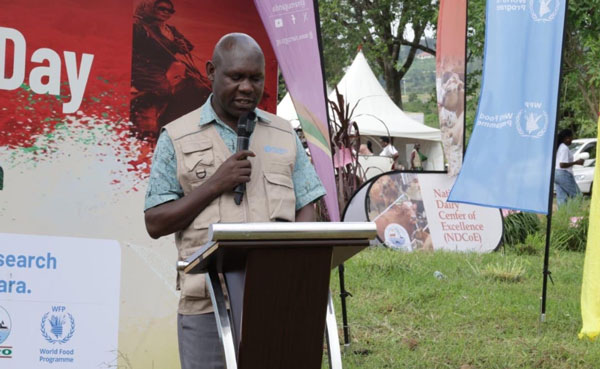
Martin Ameu, FAO’s assistant representative in Uganda, speaking on behalf of the country representative, Ezana Kassa, said innovation must reach farmers and deliver measurable improvements in their lives.
He cited climate-resilient crop varieties, improved livestock practices, water harvesting, solar-powered irrigation, better storage and processing, digital information services and the conversion of agricultural waste into useful products as examples of innovations that could strengthen agrifood systems.
“Our choices today will determine tomorrow’s answers,” Ameu said.
He added that research should be judged by its impact on farmers’ productivity, incomes and livelihoods, rather than by the number of technologies developed.
“Ultimately, innovation must improve farmers’ productivity, incomes and livelihoods,” he said.
“The true measure of our research will be the difference it makes in farmers’ lives.”
Ameu said partnerships between researchers, government, development partners and farmers were necessary to ensure that innovations responded to practical challenges, including changing weather, post-harvest losses and food safety.
“If we innovate together today, with no one left behind, we can nourish Uganda tomorrow,” he said.
The event also coincided with 100 years of MbaZARDI, which was established in 1926 as Mbarara Stock Farm.
Uganda’s agricultural research institutions continue to develop and promote improved crop varieties and other technologies intended to raise productivity, strengthen resilience and improve nutrition. But their wider impact will depend on farmers’ ability to access these innovations, afford the necessary inputs and receive practical guidance on how to use them.