The Independent Uganda: You get the Truth we Pay the Price


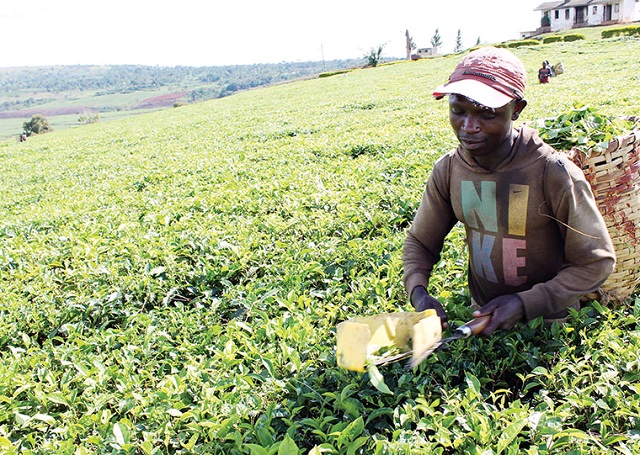
Kampala, Uganda | URN | A prolonged crisis in Uganda’s tea sector—marked by financial strain, market challenges, and weak regulation—has forced the government to step in with new laws and a planned 310 billion shillings investment to revive the industry. The Minister of State for Agriculture, Fred Bwino Kyakulaga, said the government is drafting new laws and guidelines to streamline the tea sector and address long-standing bottlenecks affecting farmers and processors.
Kyakulaga explained that the intervention follows sustained outcry from stakeholders and earlier consultations, including a meeting between tea growers, processors, and President Yoweri Museveni held in Bushenyi in August 2025. He made the remarks on Friday during a two-day retreat of tea processors organized by the Uganda Tea Association at Mountains of the Moon Hotel in Fort Portal City.
Kyakulaga said the government has already identified tea as a strategic crop and is finalizing a comprehensive framework to guide the sector’s growth. He noted that the interventions will go beyond financing to strengthen regulation, improve quality standards, and address structural weaknesses across the value chain.
The planned 310 billion shillings investment will target three key areas: provision of fertilizers to farmers, a 152 billion shillings bailout for processors, and clearing of 112 billion shillings owed to tea seedling suppliers. He revealed that although the current financial year budget did not initially cater for the full intervention, the government has already allocated 8 billion shillings to kick-start fertilizer distribution, with the full package expected in the 2026/2027 financial year.
The minister emphasized that the government will also work with stakeholders to enforce standards and ensure responsible practices across the value chain. He urged farmers, processors, and transporters to play their roles effectively to ensure the sector fully benefits from the intervention.
Victoria Ashabahebwa, the chairperson of the Uganda Tea Association, said the industry formally approached the government in 2023 after facing a major crisis, particularly at the Mombasa auction market. She noted that stakeholders called for urgent government support, including working capital, bailouts for struggling tea companies, and clear laws to guide operations.
Ashabahebwa said the proposed regulations should address labour shortages in factories, promote mechanization, and enforce standards to prevent the processing of substandard green leaf. “We also need extension workers dedicated to the tea sector, more financing for factories, and strict enforcement of quality standards starting from plucking,” she said.
She, however, noted improvements, revealing that 90 percent of Ugandan tea is now absorbed at the Mombasa auction due to improved quality. She added that prices have risen by 20 percent over the past year, with a kilogram currently fetching about 1.4 dollars.
Ashabahebwa said the retreat focused on developing a strategic roadmap centered on financing, logistics, market access, and correcting inefficiencies in the sector. Grace Kyomugisha, Board Chairperson of Kayonza Tea Factory, welcomed the government’s fertilizer support but warned that factories remain under-capitalized.
She questioned how increased production would be handled if factories continue operating with outdated machinery and heavy debts. Patrick Tiberondwa, Manager at McLeod Russel Kiko Tea Estate, highlighted growing labour shortages, noting that companies are spending heavily to source workers. He called for mechanization support to reduce reliance on manual labour.
Elisa Kakyomya also urged the government to prioritize the sector and establish clear policies, including support for debt recovery.
Financial institutions also backed the call for reforms. Kaziro Kyambade, Head of Corporate, Institutional and Business Banking at Diamond Trust Bank Uganda, said access to affordable credit is critical for reviving the sector. He encouraged tea producers to partner with banks to secure low-interest financing for fertilizers and factory modernization.