The Independent Uganda: You get the Truth we Pay the Price



Mombasa, Kenya | NEWS CORRESPONENT | Ugandan and Kenyan private-sector bodies have signed three agreements on tourism, trade and investment at a regional summit in Mombasa, Kenya.
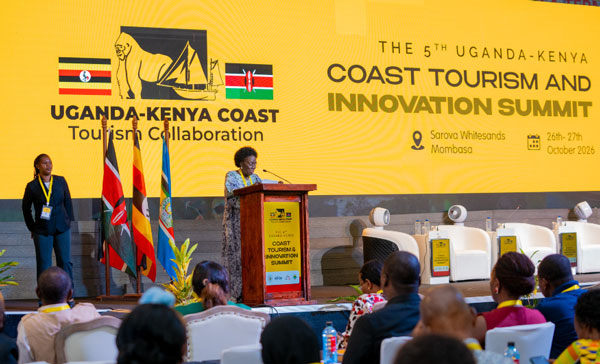
The memoranda of understanding (MoUs) were signed on the opening day of the fifth Uganda–Kenya Coast Tourism and Innovation Summit at the Sarova Whitesands Beach Resort & Spa on 26 and 27 October.
The Association of Uganda Tour Operators (AUTO) and the Kenya Association of Tour Operators (KATO) signed an agreement on sustainable tourism and regional tourism cooperation across East Africa.
The Uganda Association of Travel Agents (TUGATA) and the Kenya Association of Travel Agents (KATA) signed an MoU on implementing the Uganda–Kenya Coast Tourism Collaboration, which the document describes as a framework for cooperation on innovation, investment, youth participation and regional integration.
The Private Sector Foundation Uganda (PSFU) and the Mombasa chapter of the Kenya National Chamber of Commerce and Industry (KNCCI) signed an MoU on trade, investment and private-sector cooperation.
The three signings were among the targets organisers set for this year’s summit, which they say marks a shift from tourism promotion towards policy action and measurable results.
Organisers also aim to secure at least two digital tourism prototypes ready for commercial backing and at least 10 business-to-business links between Ugandan and Kenyan coastal operators, with progress tracked over three months.
The summit is convened by Uganda’s Consulate General in Mombasa under the theme “Unlocking Tourism Opportunities: Resolving Policy Bottlenecks through Technology, Youth and Seamless Mobility across East Africa”. It has brought together government officials, tour operators, technology developers and investors.
Delegates plan to review Article 104 of the East African Community (EAC) Treaty, which covers the free movement of people, labour and services, to identify barriers to cross-border travel.
Government representatives are expected to sign a joint declaration for submission to the EAC Secretariat. A communiqué setting out institutional commitments and deadlines is due within two weeks and will be reviewed at the 2027 summit.
The agreements come as travel between the two neighbours rises. Uganda Tourism Board figures show Kenyan visitors to Uganda rose from 466,902 in 2024 to 519,041 in 2025.

Kenya Tourism Board data puts Ugandan arrivals in Kenya at 234,556 in 2025, which the board says makes Uganda one of Kenya’s largest source markets. Kenya is targeting 300,000 Ugandan visitors this year.
Ambassador Herbert Kiguli, Uganda’s Consul General in Mombasa, said the two countries were marketing their attractions as a combined package rather than as rivals.
“Our approach is to embrace complementarity rather than competition, connecting Kenya’s coast to Uganda’s rich natural and cultural heritage through the ‘Beach to Bush, Bush to Beach’ concept, for the mutual benefit of both countries,” he said.
Ambassador Charles Ssentongo, who represented the Permanent Secretary of the Ministry of Foreign Affairs, said the government would “continue to facilitate, work with and advocate for the interests of tourism stakeholders”.
Ssentongo said trade barriers were being handled through the Uganda–Kenya Joint Permanent Commission and called for practical, time-bound solutions.
He described tourism as one of four sectors, alongside agriculture, minerals, and science, technology and innovation, that the government is relying on under its Ten-Fold Growth Strategy, which aims to grow Uganda’s economy from about $50bn to $500bn by 2040.
Susan Nakawuki Nsambu, Uganda’s Minister of State for Tourism, Wildlife and Antiquities, said partnerships needed to turn into lasting business relationships.
“The value of this partnership lies not simply in the meetings we hold, but in the relationships we build, the businesses we connect, and the opportunities we unlock,” she said.
She asked organisers of familiarisation trips to include officials from her ministry to improve policy coordination.
Rebecca Alitwala Kadaga, Uganda’s First Deputy Prime Minister and Minister for East African Community Affairs, gave the keynote address.
“Tourism cooperation must go beyond promoting destinations to empowering local communities, protecting our natural resources and creating sustainable economic opportunities,” she said.
Kadaga called for formal cooperation frameworks, business-friendly policies, better transport infrastructure and improved visitor safety.
The summit follows a six-day familiarisation tour of the Kenyan coast by more than 70 Ugandan tour operators, travel agents, hoteliers and Uganda Tourism Board officials. Operators also hope to use the 2027 Africa Cup of Nations, which Kenya, Uganda and Tanzania will co-host, to draw visitors to both countries.
The meeting began in 2022 as the Uganda–Kenya Coast Tourism Conference. It falls under Uganda’s Economic and Commercial Diplomacy Strategy for 2025/26 to 2029/30, which tasks the country’s missions abroad with promoting exports, investment and tourism.