The Independent Uganda: You get the Truth we Pay the Price


Kampala, Uganda | THE INDEPENDENT | Uganda’s Ministry of Foreign Affairs has commended the US Government for publishing the new US travel regulations that include stringent visa restrictions, adding that it will not reciprocate.
Effective January 21, 2026, the US Department of State paused all immigrant visa issuances to nationals of countries, including Uganda, whose immigrants “have a high rate of collecting public assistance at the expense of the U.S. taxpayer”.
For Uganda, this included the introduction of a Visa Bod of USD 15,000 (Currently about USD 53.5 million) when one is applying for a business or tourism visa, like visiting a friend or relative, and going on a business trip.
The Bond, which is payable after the applicant is informed of their eligibility, is refundable when one does not travel or when they travel and strictly observe the visa conditions.
The regulations also include the reduction of visa validity to three-month single-entry, with any excess days beyond that period attracting consequences like deportation, and lifetime ban on trave to the US.
At least four African countries including Mali, Burkina Faso, and Niger, have retaliated by either increasing visa fees for American travelers or banned issuance of entry visas to them, while Malawi has reintroduced the mandatory visa requirements for US citizens.
Margaret Kafeero, the Head of Public Diplomacy at the Ministry says they would not exercise reciprocity, because the US has explained why this pilot programme, adding that some of the reasons fronted for the move are genuine. Kafeero said that the two governments are continuing in talks to find the best position possible for the interest of the Americans and Ugandans.
On how the government perceives the US move, Kafeero says the US government action was prompted by Ugandans who violate visa rules and regulations, and that any government would be concerned.
She however, says that while such individuals are few, all Ugandans have a duty to ensure that every Uganda observe the visa terms and conditions of any host country and not just the USA. She was speaking at the American Centre in Kampala where the US Embassy in Kampala addressed Washington’s justification of the new travel restrictions.
The Bond: At the time of the interview, the consular officer will inform the applicant whether they are eligible for a visa and will provide instructions on how to pay this bond.
“Applicants must not use any third-party website for posting the bond, nor pay a bond before instructed to do so by a consular officer,” says a statement by the US Embassy. It adds that B1/B2 nonimmigrant visas for nationals of Uganda cannot be issued until the bond has been paid.
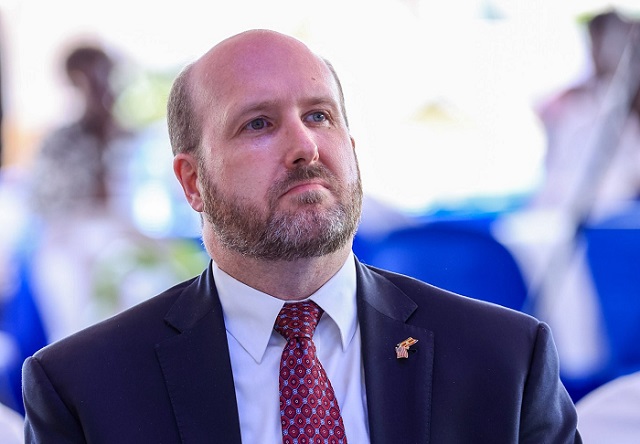
Immigrant visa applicants may submit visa applications and attend interviews, and the Department of State will continue to schedule consular appointments for visa interviews. US Ambassador to Uganda, William Popp says President Trump has emphasised that immigrants must be financially self-sufficient and not be a financial burden to Americans.
The Department of State is undergoing a full review of all screening and vetting policies to ensure that immigrants from high-risk countries do not unlawfully utilize welfare in the United States or become a “public charge”.
Popp says that most visas for Ugandan citizens are for single entry and will be valid for three months. On the bond, Popp encouraged situations where the host, either a business of a family or friend being visited in the US may pay if the visitor is not able to, since the money is refundable.
Asylum seekers are exempted from these restrictions, but the Envoy warns that this must be states on application, and not to try to change status of stay when already in the US on a different visa type.
Evans Abaho, the head of Consular Services at the Ministry of Foreign Affairs, advised Ugandans to abide by the regulations, saying that the government of Uganda is fully behind the information given to the traveling public.
According to him, this will help Ugandans avoid committing mistakes when applying for visas and be aware of the regulations when they are in the US, meaning that that the issuance of the regulations is for the good of the intending travelers
***
URN