The Independent Uganda: You get the Truth we Pay the Price


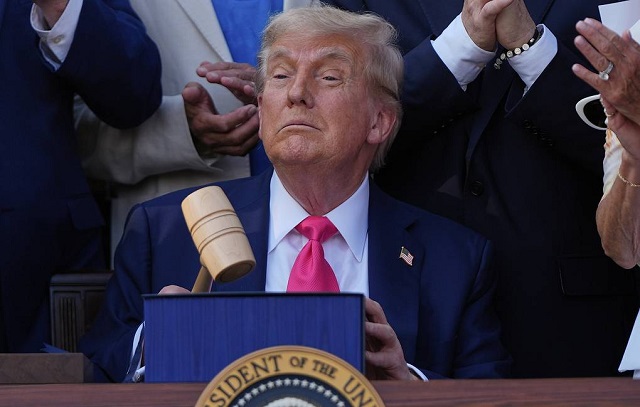
COMMENT | ZAKI LAIDI | Since his return to the White House, US President Donald Trump’s vision for the world – particularly for Europe – has often been difficult to discern amid his characteristic incoherence and bombast. His new National Security Strategy (NSS), however, sheds light on the principles driving his foreign-policy agenda.
In outlining an explicitly nationalist and nativist framework, the NSS marks a sharp break with the multilateral approach that has guided American statecraft since 1945. Its disdain for liberal values should dispel any lingering illusions about the current state of the transatlantic alliance, making clear that Trump will stand with Europe only if it fully embraces his MAGA (Make America Great Again) ideology – or, rather, its European variant: Make Europe White Again.
While US leadership was once defined by ideological universalism, the NSS adopts a decidedly parochial posture. As Trump’s Secretary of War Pete Hegseth put it, the Pentagon will no longer be “distracted by democracy building, interventionism, undefined wars, regime change, climate change, wokeness, or feckless nation building.”
Many governments in the Global South will undoubtedly applaud this shift. Some of America’s adversaries already have. For Russia, which described Trump’s NSS as “consistent with our vision,” the war in Ukraine suddenly looks far more promising.
Trump likes to present himself as a champion of individual liberties, especially free speech. But the NSS tells a different story, announcing his intention to oppose the “elite-driven, anti-democratic restrictions on core liberties in Europe, the Anglosphere, and the rest of the democratic world, especially among our allies.”
As the NSS demonstrates, Trump’s expectations of Europe diverge sharply from Europeans’ own understanding of the transatlantic relationship. While European leaders want to preserve the American security umbrella without subscribing to Trump’s ideological project, he demands that they adhere to a MAGA-fied global order yet offers little in return.
In essence, Trump proposes replacing the strategic solidarity between the United States and Europe – an arrangement he no longer believes in – with a civilizational alliance that rests on three key conditions.
The first is a demand that the European Union dismantle regulatory frameworks that, in Trump’s view, infringe on freedom of expression and harm US interests. Vice President JD Vance made the same argument at the Munich Security Conference in February, claiming that the real threat facing Europe comes from “old entrenched interests hiding behind ugly Soviet-era words like misinformation and disinformation” to impose “digital censorship” on populist voices.
But EU penalties on US tech giants like Google, Apple, Facebook, and Amazon have had nothing to do with political censorship. And the recent $140 million fine imposed on X (formerly Twitter), which enraged Trump officials, concerned transparency and consumer-protection violations: the platform’s misleading user verification policy, its failure to provide required advertising data, and its efforts to block researcher access. By framing this as censorship, Trump merely repeats claims made by X owner Elon Musk, who has made no secret of his support for “abolishing” the EU.
The second condition is that the EU overhaul its immigration and asylum policies, which the NSS portrays as a threat to Western civilization. Europe’s far-right parties, largely defined by their opposition to immigration, quickly seized on this ideological endorsement, with French far-right leader Éric Zemmour proclaiming that “Trump is the only one to defend European civilization.”
Trump’s third condition is that Europe stop treating American military protection as a given. In his telling, European governments have long relied on NATO for US security guarantees while using the EU to undermine America’s economic interests.
US Deputy Secretary of State Christopher Landau drove that point home in a recent post on X. “When these countries wear their NATO hats,” he wrote, they praise transatlantic unity. But when they “wear their EU hats,” they pursue agendas that are “utterly adverse to US interests and security,” including “censorship, economic suicide/climate fanaticism, open borders, disdain for national sovereignty/promotion of multilateral governance and taxation, and support for Communist Cuba.”
One particularly striking passage in the NSS warns that “within a few decades at the latest,” some NATO members “will become majority non-European.” It is an “open question,” the document notes, whether future populations “will view their place in the world, or their alliance with the US, in the same way as those who signed the NATO charter.”
The wording reflects Trump’s longstanding belief that immigration will render European countries “less European,” as though Europe’s identity rested on ethnic purity. This profound misunderstanding underscores the widening cultural and political gulf between Europe and the US.
Trump’s NSS also makes it abundantly clear that Europe should expect little US support for Ukraine. Seeing itself as “at odds with European officials who hold unrealistic expectations for the war,” the administration aims to “reestablish conditions of strategic stability across the Eurasian landmass” and “mitigate the risk of conflict between Russia and European states.” The US, in this vision, is not Europe’s partner against Russia but a mediator between the two sides.
Taken together, these positions should alarm European leaders. Faced with a hostile administration, they must recognize that the era of automatic American protection is over and confront the continent’s strategic vulnerability head-on. As Charles de Gaulle warned decades ago, Europe cannot depend on the US forever. To survive, it must awaken from its geopolitical slumber and reclaim control of its own fate.
*****
Zaki Laïdi, a former special adviser to the High Representative of the European Union for Foreign Affairs and Security Policy (2020-24), is a professor at Sciences Po.
Copyright: Project Syndicate, 2025.
www.project-syndicate.org