The Independent Uganda: You get the Truth we Pay the Price


COMMENT | Charles Okello Ayai | In my previous article titled “The Quandary of De-Dollarization”, I mentioned that my general interest is a broad set of ideas I decided to refer to as “popular Pan-Africanism”. I went on to state that I would use a number of different subjects to show that most ideas that fly under the banner of popular Pan-Africanism are, in fact, wrong and do not reflect the realism and maturity that is needed to tackle the challenges that Africa faces.
This week, I shall treat the subject of structural adjustment programmes (SAPs), arguably the favourite scapegoat of the popular Pan-Africanists when it comes to identifying causes of Africa’s underdevelopment.
A very brief history of SAPs
The blueprint for structural adjustment, including economic liberalisation in Africa was provided by the 1981 World Bank-published report titled “Accelerated Development in Sub-Saharan Africa: A Plan for Action”. Written by Prof. Elliot Berg, it has since become commonly known as the Berg report. In it, Prof. Berg blamed government interventions for blocking post-colonial African economic progress. Instead, he urged trade liberalisation, promising growth from what he understood to be Africa’s comparative advantage: agricultural commodity exports such as coffee, tea, cocoa etc.
The Berg Report was, in part, a response to the set of policies laid out in the Lagos Plan of Action (officially “The Lagos Plan of Action for the Economic Development of Africa, 1980–2000”), an OAU-backed plan to increase Africa’s self-sufficiency. The Lagos Plan of Action (LPA) has been characterized as the collective response of African states to the growing reliance on Western economies underpinned by so-called neoliberal ideology, of which the later 1981 Berg Report was seen as emblematic. The LPA claimed that development in Africa could be achieved by a decreased reliance on raw material extraction, industrialization, global equality in trade relations and an increase in development aid from the international community.
The main difference between the Berg Report and the LPA, many Africanist scholars have noted, is the absence in the LPA of any blame on, or calls for reform of, domestic governments of Africa. This contrasts significantly with the Berg Report, which apportioned blame solely on the African leaders themselves, with the international community taking no responsibility for their part in Africa’s demise. This difference is the subject of the next section.
State intervention
Removing ‘distortions’ caused by marketing boards and other state institutions was a key pillar of the Berg Report where it was argued that this would unleash export-led growth for Sub-Saharan Africa. For those who might not know, marketing boards were state-controlled or state-sanctioned entities that historically managed the sale and purchase of agricultural commodities. I’m not going to launch into a theoretical critique of why monopoly may be disadvantageous, and even more so when it is a lucrative government monopoly. I will also not repeat the stock argument that pre-supposes corruption and incompetence wherever government is involved. Rather, I shall discuss how state intervention became a vehicle for economic mismanagement.
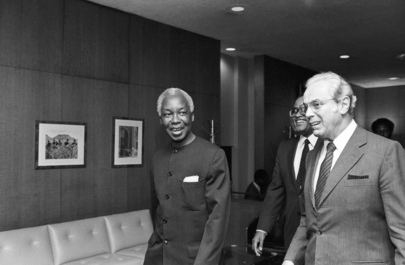
Consider the case of Tanzania and Julius Nyerere, himself a popular Pan-Africanist. In September 1967, in a paper entitled Socialism and Rural Development, Nyerere laid out his proposals to establish self-sufficient socialist villages across the country as the basis for rural development. He termed this indigenous form of socialism as ujamaa, a Kiswahili word he defined in English as ‘familyhood’. He believed that in time the idea of ‘familyhood’ and the values it encompassed could be extended beyond the village community to other ethnic groups, setting a social pattern for the entire country.
The disruption caused by the ‘villagisation’ programme nearly led to catastrophe. Food production fell drastically, raising the spectre of widespread famine. Between 1974 and 1977 the deficit recorded in cereals was more than 1 million tons. Drought compounded the problem. The shortfall was made up with imports of food, but the country’s foreign exchange reserves were soon exhausted. In 1975 the government had to be rescued by grants, loans and special facilities arranged with the assistance of the IMF and the World Bank and by more than 200,000 tons of food aid. Far from helping Tanzania to become more self-reliant and to reduce its dependence on the international market economy, Nyerere’s ujamaa programme made it dependent for survival on foreign handouts. Nor did the idea of communal farming take root. Although by 1979 some 90 per cent of the peasantry had been moved into ujamaa villages, a mere 5 per cent of agricultural output came from communal plots.
Other aspects of Nyerere’s socialist strategy were no more successful. His programme of state control spawned a multitude of state corporations that were inefficient, incompetently managed, overstaffed and mired in debt. By 1979 some three hundred parastatal organisations had been set up – state industries, state banks, state farms, state marketing boards, state shops. They were controlled by managers who acted more like bureaucrats than businessmen and ran their domains as civil service bureaucracies, exercising considerable patronage. Workers came to regard their jobs as guaranteed by the socialist state. In a candid speech in 1977 entitled ‘The Arusha Declaration Ten Years After’, Nyerere complained bitterly of the inefficiency, indifference and laziness of managers and workers in state-run enterprises. ‘It is essential that we should tighten up on industrial discipline. Slackness at work, and failure to give a hard day’s effort in return for wages paid, is a form of exploitation; it is an exploitation of the other members of society. And slackness has undoubtedly increased since the Arusha Declaration was passed.’
But state enterprises continued to operate in the same manner, incurring huge losses. Among the most notorious were ten state-owned crop authorities. The pyrethrum board, for example, spent more on its administrative costs in 1980 than the total value of the crop it purchased; the sisal board’s overheads in 1980 were higher than the amount Tanzania earned from exporting sisal. Farmers meanwhile were offered inadequate prices and faced long delays in payment, sometimes lasting up to one year, and eventually they resorted to using the black market or growing subsistence food. The production of export crops like sisal, cashew nuts and pyrethrum fell drastically in the 1970s. By the end of the 1970s Tanzania was in dire straits. Its trade deficit was widening all the time: in 1980 exports covered only 40 per cent of the value of imports; its foreign debt had soared. With sharp increases in world oil prices, its terms of trade were constantly deteriorating. Oil imports, which used only 10 per cent of the value of exports in 1972, took 60 per cent in 1980; a ton of exported tea in 1970 bought 60 barrels of oil, but in 1980 only 4.5 barrels. The shortage of foreign currency hampered the running of factories and farms. For want of spare parts and materials, machinery and trucks were idle. Inflation and drought added to the toll. A shortage of basic commodities like soap, sugar and cooking oil and other consumer goods produced black markets, petty corruption and smuggling – magendo, as it was called. Manufacturing output in 1980 was reduced to less than one third of capacity. Agriculture declined by 10 per cent between 1979 and 1982. National output between 1977 and 1982 declined by about one-third. The average standard of living between 1975 and 1983 fell by nearly 50 per cent. In a broadcast in December 1981 to mark the twentieth anniversary of Tanzania’s independence, Nyerere admitted: ‘We are poorer now than we were in 1972.’.
Granted, ujamaa in Tanzania was perhaps the most drastic social experiment in post-colonial Africa, but my point here is not to discredit state involvement per se. I wanted to use a particular case study of a country that mismanaged its own affairs before SAPs were in the picture, and that by a leader considered by a fair number of Africans to be one of the most visionary this continent has produced. Similar occurrences of economic mismanagement could be cited in most other Sub-Saharan African countries prior to SAPs. I will, at this point, recommend The State of Africa: A History of the Continent since Independence by Martin Meredith for anyone who should like to know more about how economic mismanagement in post-colonial Africa unfolded prior to SAPs.
So, to involve the state or not to involve the state?
No, that is not the question. I find it dangerous indeed because it introduces a false dichotomy which forms the basis of pointless debates of capitalism versus socialism, neither of which exists and any attempts to actually create either one in keeping with ideological purity invariably end in disaster. What exists are mixed economies, each one unique in its makeup and more importantly, the context in which they are established, that is, the people in charge, its neighbours, local political environment and other such things.
I take no issue with the stated goal of the LPA of industrialisation, or even their methods of achieving them as far as they advocated significant state support and coordination. Early-stage industrialisation requires significant state involvement. However, my concern is the philosophy underlying this push for industrialisation as outlined by the LPA. It is essentially inward looking, in a parochial sense. The LPA aimed to “minimize Africa’s links with Western countries by maximizing Africa’s own resources”. I don’t think the framers of the LPA quite understood what industry is for. Development through industrialisation, is not so much for the purpose of “self-reliance”, as they put it, as it is for the purpose of being able to project power on the global stage by reason of being on a higher rung of the ladder of the world system, if I may borrow Immanuel Wallerstein’s terminology. And industrialisation can only be successful if a country produces high-quality goods that other countries want to buy, in progressively more complex economic sectors. Any successful industrialisation programme in Africa, as was the case in Asia, would strengthen links with the West, not weaken them, for obvious reasons. Africa would need access to Western markets, capital, skilled labour and technical knowledge.
A parochial-style industrialisation programme can, in fact, cause a prosperous country to quickly become mired in poverty. Argentina is an example of a nation that had extensive industry, a huge working class, and a leading position in the world economy. After Peron it had high tariffs, a protectionist economy, and extremely strong regulations protecting workers and consumers from the depredations of “international finance”. It had furthermore a body of theory widely embraced by its intelligentsia that criticized international finance capitalism. This empowered a class of labor leaders, organizers, professors and intellectuals who held economic nationalist and protectionist views. By the time of Milei, Argentina had become a stagnant backwater competing not with the United States or Japan but with Venezuela. This understanding of industry as a means of cultivating national competitiveness on the global stage rather than merely being a jobs programme was also lost on other countries in Latin America with their import-substitution policies that caused rent-seeking behaviour by local elites. In the words of one economist, import-substitution industrialisation in Latin America was all carrot and no stick. This is precisely why import substitution industrialisation failed to transform Latin America to first world status.
It seems to me, then, that successful industrialisation that catapults a nation from third world to first world necessitates a certain balance of state involvement and an openness of the economy grounded in the understanding that development is not a process of escaping the world system but rather utilising it to the benefit of one’s country.
******
 Charles Okello Ayai | African Export-Import Bank in Cairo |