The Independent Uganda: You get the Truth we Pay the Price


Equity Bank enables St. Andrew’s School Save UGX 15 Million a Year Through Clean Cooking
Mbarara, Uganda | NEWS CORRESPONDENT | In Mbarara district, within Rubindi village, a quiet revolution is taking place. St Andrew’s Secondary School is leading clean cooking in the area.
The school administration recently acquired technology from Ebenezer Energy, which manufactures improved energy-saving stoves, to support the adoption of cleaner cooking practices. This change in direction is reshaping the future for children and staff, and proving that renewable energy is the cornerstone of education transformation in Uganda.
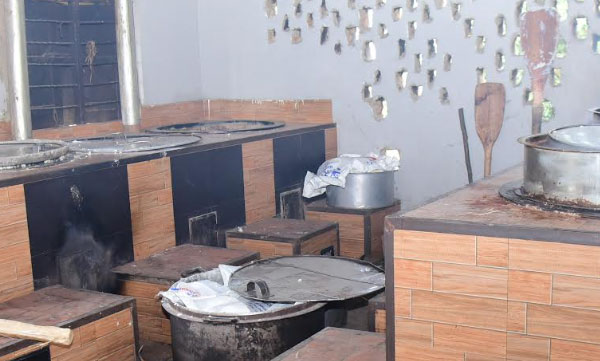
After years of their unsanitary kitchen, filled with soot; the dark-stained, smoky kitchen walls; chimneys releasing smoke 24/7; and the constant sicknesses of the cooking staff, the school administration sought a sustainable solution to this problem.
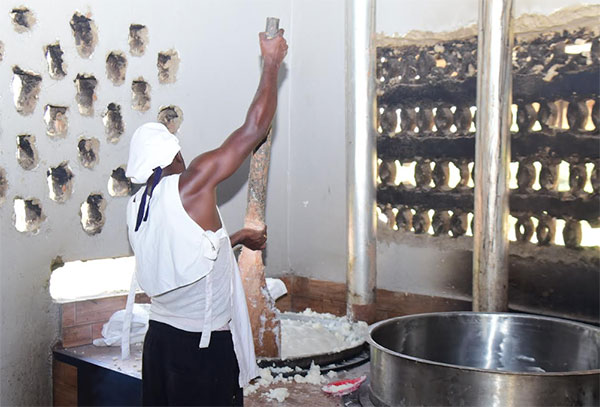
For years, the school relied on the use of traditional cook stoves and firewood to prepare three meals a day for the learners and the staff. The cooks spent most of their time in the kitchen, preparing these meals in the smoke-covered kitchens. This is why the school received multiple reports concerning the health of their staff.
Starting this year, the school had their kitchen reconstructed. There was put in place an inner kitchen structure, including inbuilt cook stoves and the kitchen walls painted white color. This is possible because the new cooking method uses less firewood, there is little smoke and ash released, and the stoves release less heat.
Robert Bayo, the head teacher of St Andrew’s Secondary School Rubindi, explains the impact of the smart kitchen on the school’s operations.
“Before this method, we used 15 lorries of firewood in a term, that is, 45 lorries a year, spending Shs 400,000 per lorry. This method was inefficient in terms of the money spent and the negative effects that the use of firewood had on our staff that work in the kitchen. When this new method was proposed, the School Management Committee agreed to the proposal to transition to a smart kitchen, so we made this investment. Starting this term, we have only used 3 lorries this term, and we project to only use six lorries for the entire term,” Bayo says.
Previously the school resorted to cutting down its trees for firewood.
“I really hope that Ebenezer can help us to get a system that will enable us to completely do away with the use of firewood; it is really effective.”

Timothy, the head of the Parent Teacher Association (PTA), explains why the association agreed to the smart cooking proposal.
“Some of the key changes brought by the adoption of the system include the reduction of the budget spent on firewood for cooking every term and year; this money can be invested in other projects. Also, the reduction in the number of cooks also meant a reduction in the costs. In addition, the school no longer cuts the trees in its forest for firewood, but now keeps it for making other things like furniture,” he says.
This transformation was made affordable through the Results-Based Financing (RBF) Program. A powerhouse collaboration between Equity Bank Uganda, Energising Development (EnDev) Uganda, and GIZ. The Results-Based Financing program provides incentives to suppliers like Ebenezer to provide access to high-quality solar equipment for individuals and business owners.
“The impact has been significant. Through our partnership with GIZ, we helped expand access to clean cooking systems and solar technologies across different communities,” says Virginia Semakula, Equity Bank Uganda Manager-Energy, Environment and Climate Change Pillar Head.
Many schools like St. Andrews’ have reduced dependence on charcoal, firewood, and kerosene by adopting cleaner cooking solutions. Businesses such as salons, households, retail shops, and farms adopted solar-powered systems, enabling them to operate longer hours and reduce energy costs.