The Independent Uganda: You get the Truth we Pay the Price


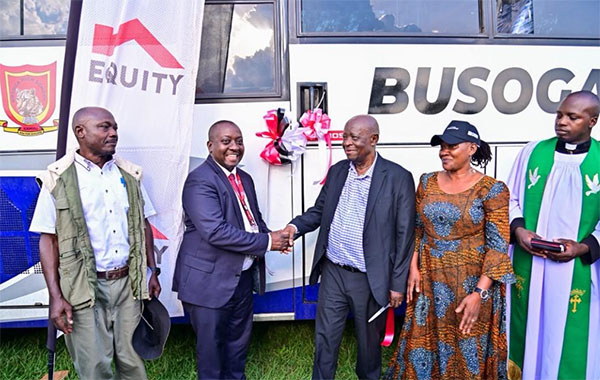
COMMENT | THE INDEPENDENT | The recent handover of a 67-seater Isuzu school bus to Busoga High School in Kamuli is a notable milestone for the institution. Yet, viewed against Uganda’s current transport landscape, this event represents far more than a standard corporate asset acquisition. It highlights a critical intersection where innovative asset financing directly addresses an urgent national crisis: the physical safety of our learners.
Uganda’s roads have increasingly become a hazard for young citizens. Over recent months, a series of tragic road crashes involving school transport has devastated families nationwide, forcing the Ministry of Education and Sports to implement a temporary suspension on school tours and trips. For years, our educational system has tolerated structural transport gaps, leaving learners to navigate long walking distances along busy thoroughfares or depend on unregulated public transport options. The status quo is no longer tenable. As Kamuli Municipal Education Officer Ivan Wakabi aptly noted during the ceremony, protecting our children on their daily commute requires an immediate transition to dedicated, roadworthy institutional vehicles.
However, the primary barrier preventing schools from modernizing their transport infrastructure has always been financial. Educational institutions operate on highly seasonal cash flows, heavily dependent on termly tuition collections. Expecting a school to pay upfront for a modern, structurally sound commercial vehicle from its liquid operating capital is unrealistic. Doing so chokes the cash flow needed for textbooks, laboratory supplies, and staff salaries.
This is exactly where the commercial banking sector must step up, moving past traditional lending models to offer functional equity. Equity Bank Uganda’s asset financing model provides a practical blueprint for this shift. By spreading the capital expenditure of a high-capacity vehicle over flexible, long-term repayment schedules, the bank enables institutions like Busoga High School to secure premium, modern transport without triggering a fiscal crisis in their boardrooms.
Furthermore, this acquisition highlights a shift in what defines a modern school vehicle. The inclusion of onboard surveillance cameras for real-time monitoring and occupant accountability demonstrates that student safety requires proactive management. This investment provides parents with genuine peace of mind, knowing their children are traveling within a secure, supervised environment.
If we are to effectively reduce road safety risks for our youth, school administrators nationwide must heed the call to aggressively upgrade their transport assets. Financial institutions must similarly expand access to tailored infrastructure, bridge, and asset financing suites. For Busoga High School, the blessing of their new bus and its driver symbolizes a hopeful new chapter. For the broader Ugandan education sector, it serves as a clear reminder that investing in modern transport is no longer an optional luxury; it is a fundamental duty of care.