The Independent Uganda: You get the Truth we Pay the Price


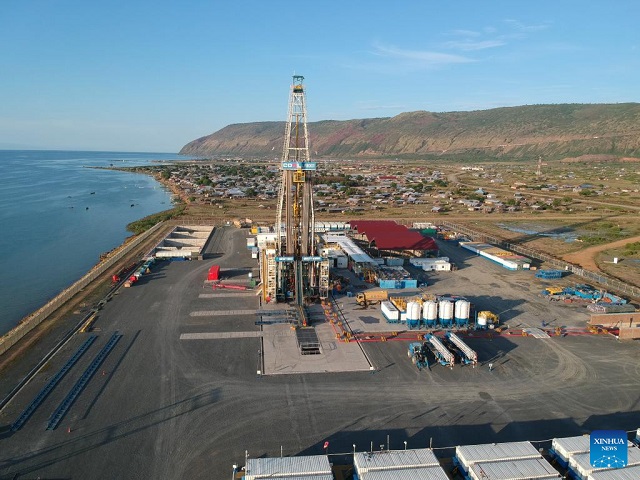
COMMENT | GLORIA SEBIKARI | As Uganda races toward First Oil, it is essential that the country keeps one eye on current developments and another firmly fixed on the future. While the Tilenga, Kingfisher, East African Crude Oil Pipeline (EACOP), and Refinery projects are progressing, Uganda must fast-track new oil exploration to secure long-term production, maximize economic benefits, fully utilise the petroleum infrastructure, as well as achieve a sustainable oil and gas industry in the country.
Uganda has already confirmed an estimated 6.65 billion barrels of oil in place, with about 1.6 billion barrels considered recoverable. These resources are significant and have the potential to transform the country through increased revenues, investments, industrialisation, and job creation. However, petroleum resources are finite, and sustained economic benefits will depend on the country’s ability to replace and expand its reserves through ongoing exploration.
Today, 14% of the Albertine Graben is licensed for petroleum operations, comprising 8% exploration and 6% development licences. As such, the case for accelerated exploration is particularly compelling because 86% of the Albertine Graben remains unlicensed. In addition, Uganda possesses other sedimentary basins which also require exploration. Exploration presents a unique opportunity to discover additional resources that can extend the lifespan of the country’s petroleum industry and strengthen its position as a regional energy hub.
The importance of accelerating exploration is underscored by the recent notice from the Ministry of Energy and Mineral Development announcing the receipt of a direct application for a Petroleum Exploration Licence over the Kanywataba and Turaco prospects. This demonstrates that interest in unlocking Uganda’s remaining petroleum potential remains strong.
New discoveries are critical for sustaining major investments such as EACOP, the planned refinery, central processing facilities, and associated infrastructure beyond the current reserves.
Global experience offers valuable lessons.
For many countries, sustainability was not built on a single discovery but on a sustained commitment to exploration, innovation, and prudent resource management. The discovery of the Ekofisk field in 1969 transformed Norway’s petroleum sector and demonstrated how continuous investment in exploration, research, and technology can unlock greater value over decades. Initially expected to recover only a fraction of its resources, the field has remained productive for more than 50 years due to ongoing investments and technological advancement. In the early 1970s, Norway was estimated to hold 4.2 billion (bn) barrels of oil equivalent. However, with continued exploration, 56bn barrels of total oil equivalent have been produced as of the early 2020s, and 16bn barrels of oil equivalent is estimated to still be discovered.
Another example is the Prudhoe Bay field in Alaska, discovered in 1968. When development began, operators expected to recover roughly 40% of the oil in place. However, through decades of technological innovation, expected recovery increased to around 60%. In 1968, the Prudhoe Bay field was initially estimated to hold 10bn barrels of recoverable oil. To date, more than 13bn barrels of oil have been produced, demonstrating how technology and improved recovery techniques can significantly increase recoverable reserves over time. More than five decades after its discovery, Prudhoe Bay remains one of North America’s most productive oil fields.
For Uganda, fast-tracking exploration is also an economic imperative. The petroleum sector has already attracted over US$14 billion in investment and accounts for nearly 70% of foreign direct investment into the country. New exploration campaigns can attract additional capital, create jobs for Ugandans, stimulate local businesses, and generate further opportunities for technology transfer and skills development.
Furthermore, additional discoveries would strengthen future government revenues. Uganda is projected to earn between US$1 billion and US$2.5 billion annually during production. Expanding the resource base through exploration could significantly increase these returns and provide greater resources for infrastructure development, industrialization, education, healthcare, and the country’s broader economic transformation agenda.
As Uganda prepares to join the community of oil-producing nations, the journey should not end with First Oil. Rather, First Oil should mark the beginning of a new phase characterized by aggressive exploration, strategic investment, and long-term planning. By accelerating exploration today, Uganda can secure future production, sustain critical infrastructure, maximize national value, and ensure that its petroleum resources continue driving economic transformation for generations to come.
****
 The author is the Manager Corporate Affairs at the Petroleum Authority of Uganda
Email; gloria.sebikari@pau.go.ug