The Independent Uganda: You get the Truth we Pay the Price


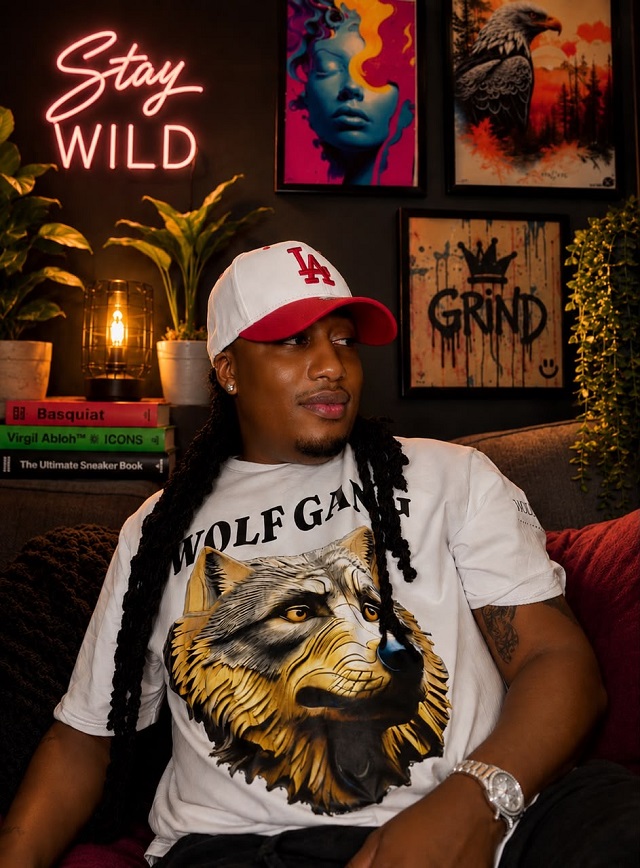
Kampala, Uganda | THE INDEPENDENT | Tattooing in Uganda is no longer confined to the edges of the creative scene.
In Kampala, a growing number of artists are turning the human body into a canvas, combining drawing and design with a technical process that requires precision, knowledge of skin and strict attention to hygiene.
Among them is Mulindwa George William, better known as Marvin Tattoos, who has developed his work into a business with two studios in Kampala.
His experience reflects a broader change in how specialised creative skills are being turned into commercial enterprises, particularly as social media gives artists new ways of displaying their work and reaching clients.
But unlike conventional visual art, tattooing presents artists with a canvas that is both permanent and unpredictable.
A drawing can be altered, discarded or painted over. A tattoo cannot be treated so casually once the needle has entered the skin.
Turning drawings into permanent work
Mulindwa, who was born on December 9, 1990, works across several tattoo styles, including realism, black-and-grey, portraits, fine-line designs, lettering, geometric patterns, traditional and tribal- inspired designs, as well as memorial pieces.
The range is significant because tattooing is not a single visual style.
Clients arrive with different ideas, references and expectations, requiring the artist to determine what can realistically be translated onto skin.
A design may have to be resized or altered depending on where it is going to be placed. The artist must also consider proportions, line weight, shading and how the work is likely to change as the tattoo ages.
The result is a process that combines elements of illustration, design and craft.
For clients, however, the technical process often begins with something less tangible—a memory, relationship, belief, experience or simply an appreciation of a particular image.
A portrait may commemorate a family member. A date may mark an important event. A symbol may carry personal meaning.
This makes consultation an important part of the business.
The artist is not simply reproducing an image. In many cases, they are helping a client turn an idea into a design that can work on a three-dimensional and constantly moving surface.
From tattoo artist to business owner
For Mulindwa, the work has developed beyond individual commissions.
Marvin Tattoos now operates two studios in Kampala. One publicly listed location is at Pioneer Mall on Burton Street.
Running multiple studios introduces a business dimension to a profession that is often discussed primarily in artistic terms.
There are appointments to manage, designs to prepare, equipment to maintain and clients to deal with. The quality of the finished tattoo is only one part of the experience.
The expansion also illustrates how Uganda’s creative economy is creating opportunities for specialised practitioners to build businesses around skills that were once largely informal.
Tattooing is particularly dependent on reputation.
Unlike a conventional artwork that can be viewed in a gallery or purchased and taken home, a tattoo is attached to the client. Poor workmanship is therefore difficult to separate from the artist’s name.
A portfolio becomes an important form of marketing, while repeat clients and recommendations can help establish a studio’s reputation.
The hygiene question
There is another issue that sets tattooing apart from many other forms of creative work: the artist works directly on the body.
According to Marvin Tattoos the business uses sterile equipment and disposable needles, alongside sanitised workspaces and aftercare guidance. The studio also offers body-piercing services.
These are not simply additions to the artistic process. They are part of the professional responsibilities involved in a procedure that breaks the skin.
For an industry seeking greater acceptance, the distinction between a professional studio and an informal practitioner is therefore important.
Clients are not only buying artwork. They are also placing trust in the person producing it and the environment in which the work is carried out.
As tattooing becomes more visible in Kampala, hygiene, equipment handling and aftercare are likely to remain central to conversations about professional practice.
Social media and the new tattoo market
The internet has also altered how artists build reputations.
A tattoo studio no longer depends entirely on people walking past its premises. Photographs and videos of completed work can be shared with potential clients thousands of times, turning social media into an extension of the artist's portfolio.
For tattoo artists, this can be particularly useful because the finished work is visual and easily documented.
The growth of creator platforms has also blurred the distinction between an artist’s work and their public persona.
In 2026, Marvin Tattoos appeared on the public nominee platform for the Horizon Excellence Awards under the Male Trending TikTok Creator Excellence Award category.
The development illustrates how creative practitioners can now build audiences around both their work and their personalities.
A tattoo artist can therefore operate in several spaces at once as an artist, entrepreneur and online creator.
The increasing visibility of tattooing is taking place alongside changes in Kampala’s wider cultural landscape.
Music, fashion, entertainment and social media have created greater visibility for forms of self-expression that previously occupied more marginal spaces.
Tattooing remains a personal choice and attitudes towards it vary.
Some people continue to associate tattoos with particular lifestyles or social groups, while others increasingly regard them as another form of personal expression.
That difference in perception is part of the story of tattoo culture itself.
The industry is developing in a society where the acceptance of body art is not uniform, yet the existence of specialised studios suggests that there is a market willing to pay for professional work.
For artists, this creates an opportunity to turn a specialised skill into a livelihood.
The Marvin Tattoos story is therefore about more than one artist or two studios.
It raises a wider question about the direction of Uganda’s creative economy and the kinds of work that can now support a business.
Creative careers have traditionally been associated with music, film, fashion, photography and conventional visual art. Tattooing occupies a different space, combining art with a specialised technical service.
For Mulindwa, developing the Marvin Tattoos name has meant moving from producing individual pieces to managing a creative business.
That transition requires artistic consistency, customer relations, investment in equipment and attention to professional standards.
It also requires an understanding of the market.
The person entering a tattoo studio is not simply purchasing an object. They are commissioning a piece of artwork that will become part of their body.
That relationship gives tattooing a particular place within the creative economy.
The industry around it is still developing, and the standards, expectations and public attitudes surrounding the work will continue to change.
For artists such as Mulindwa, the challenge will be to keep pace with that change while maintaining the technical and artistic quality on which their reputations depend.