The Independent Uganda: You get the Truth we Pay the Price



The World Health Organisation estimates that more than one billion people globally live with a mental health condition
NEWS ANALYSIS | PATRICIA AKANKWATSA | The tendency to link mental illness to violent crime is reinforcing stigma and preventing many Ugandans from seeking help, mental health specialists have warned.
Experts say most people with mental health conditions are not violent, and most crimes are not committed by people with a diagnosable mental illness.
Speaking during an X (formerly Twitter) Space on mental health and crime, Dr Richard Mpango, a clinical psychologist and epidemiologist, said serious mental illness accounted for only a small proportion of criminal cases.
He cited a US epidemiological study which found that serious mental illness on its own accounted for about 4% of criminal cases.
“So when a crime happens, we should not automatically conclude that the person must have had a mental illness,” he said.
The discussion was hosted by Haven Mental Health Foundation in collaboration with the Ministry of Health, the Uganda Association of Psychiatrists and the Clinical Psychologist Association Uganda.
It followed several high-profile cases in Uganda and abroad that prompted public debate over whether mental illness had played a role in violent crimes.
Among the cases discussed were that of Christopher Okello, who allegedly killed four toddlers at Ggaba Early Childhood Development Centre earlier this year; Dorothy Namayo, who was recently accused of allegedly killing her two children; and the case of Lindsay Clancy in the United States.
Dr Julius Muron, a senior consultant psychiatrist with training in forensic psychiatry, said the belief that people with mental illness were inherently dangerous was not supported by the evidence.
“People with mental health conditions are not criminals simply because they have a diagnosis,” he said.
He said people with severe mental illness were often more vulnerable to neglect, abuse and violence than they were to committing violent offences.
The apparent presence of people with mental illness in criminal justice statistics could also give a misleading picture, he added.
“When a person with a mental illness commits an offence, they may be more easily arrested or come to the attention of authorities,” he said.
“That can distort the public perception and make people think that mental illness and crime are more closely linked than they actually are.”
The World Health Organisation estimates that more than one billion people globally live with a mental health condition.
Dr Mpango said the scale of mental illness worldwide showed why it was important not to equate mental health conditions with violence.
“If mental illness automatically translated into violence, our communities would look fundamentally different,” he said.
Substance use a bigger concern
Dr Muron said substance use appeared to be a more significant factor in many cases involving mental health and crime.
Drawing on records from Luzira Prison and findings from a Uganda Youth Development Link study conducted between 2017 and 2024, he said alcohol, marijuana and other illicit substances were common among young people in the criminal justice system.
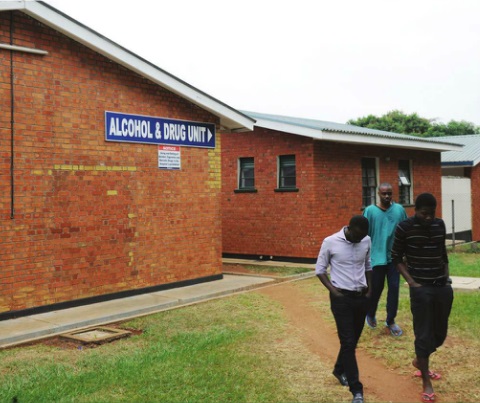
He said young adults aged between 18 and 36 made up a large proportion of people held on remand.
“In Luzira Remand Prison, about one in every three people on remand has a substance use disorder,” Dr Muron said.
He said offences associated with substance use included theft, burglary, trespass and assault.
Among prisoners sentenced to death, about 7% had consumed alcohol immediately before committing their offences, he said.
But Dr Muron stressed that the relationship between mental illness, substance use and crime was complex.
“Having a mental illness does not mean that you will commit a crime,” he said.
“ There are many other factors involved, including whether the person is receiving treatment, whether they have family support and whether there is substance use.”
He said some people with severe mental illnesses could come into contact with forensic psychiatric services after committing serious offences.
However, he cautioned against using such cases to generalise about everyone living with a mental health condition.
When can mental illness be a legal defence?
Uganda’s justice system presumes an accused person to be of sound mind unless there is reason to question their mental state.
Dr Muron said concerns about a person’s mental health could be raised during a police examination, by the defence during a trial or by the court itself.
But having a mental health diagnosis does not automatically amount to a legal defence of insanity.
The first question is whether the accused is fit to stand trial.
“Can they understand what is happening in court? Can they instruct their lawyer and meaningfully participate in their defence?” Dr Muron said.
The court can then consider the person’s mental state at the time the alleged offence was committed.
The key question is whether a mental disorder affected the person’s ability to understand what they were doing or to know that their actions were wrong.
If insanity is established, the accused can be acquitted on that ground and may be transferred to a mental health facility for treatment.
Where the legal threshold for insanity is not met, a person’s mental health can still be considered during sentencing.
Dr Muron said the timing of psychiatric assessment was important. “The closer you assess somebody to the time when the offence occurred, the better your ability to understand the mental state they were in at that time,” he said.
Stigma keeps people from treatment
For Dr Mpango, the bigger concern is what happens before a person ever reaches the criminal justice system.
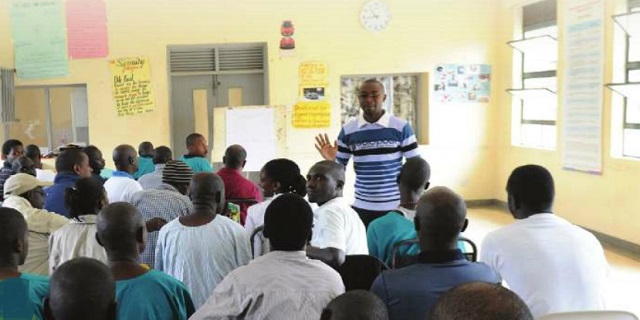
“Stigma turns a treatable problem into a hidden problem,” he said. People may delay seeking help because they fear being labelled “mad”, weak, dangerous or unemployable.
Families can also conceal mental health conditions because of concerns about how they will be viewed by their communities.
Dr Mpango said fewer than one in 10 Ugandans who need mental health services receive the care they require.
“That means we are leaving a very large number of people without the support they need,” he said.
“By the time some people finally come for treatment, their condition may have become much more severe.”
Dr Muron said people with severe mental illnesses were particularly vulnerable to deterioration when they lost social support or stopped treatment.
“A person can do very well on treatment and in a supportive environment,” he said.
“The risk increases when they default on treatment, lose support and their illness is allowed to progress without intervention.”
He said families and communities could also play an important role in preventing suicide.
“Many people experiencing depression communicate distress or suicidal thoughts before they act,” he said.
“If we listen, take those statements seriously and connect people to help, we can prevent some of these tragedies.”
Gaps in the justice system
Uganda’s criminal justice system also faces challenges in providing appropriate care for people with mental illness, Dr Muron said.
“There are people who have not been convicted of any crime but who remain in prison because there is nowhere appropriate to take them for treatment,” he said.
Some people can spend long periods on remand while waiting for psychiatric assessments or appropriate treatment.
Dr Muron said coordination between the Ministry of Health and the Justice, Law and Order Sector was improving, but shortages of funding, mental health professionals and treatment facilities remained a challenge.
He called for stronger capacity among police surgeons and other professionals involved in the initial assessment of people entering the justice system.
“If you do not identify a mental health problem early, the person can go through the whole system without receiving the care or assessment they need,” he said.
Prevention before punishment
Dr Mpango said mental health services needed to be brought closer to communities rather than relying mainly on hospitals.
“We need to identify problems early and make services available closer to where people live,” he said.
He called for greater access to treatment for substance use, psychological support and continuity of care.
Community-based workers, peer support and programmes that help people cope with trauma and regulate emotions could also play a role, he said.
“Sometimes what protects a person is not just medicine,” Dr Mpango said.
“It can be a supportive family, safe housing, meaningful work, a peer group or simply somebody who recognises that the person is struggling and helps them get care.”
Dr Muron said families, schools and communities also had a role to play, particularly in supporting young people.
“Prevention is not the work of one institution,” he said. “The family has a role. Schools have a role. Communities, health workers, police, workplaces and the justice system all have a role.”
Dr Mpango said the focus should shift from asking whether people with mental illness were dangerous to asking whether they were receiving help early enough.
“We should also be asking whether they are supported and what we can do to prevent a crisis before it happens.”