The Independent Uganda: You get the Truth we Pay the Price



Exim Bank has financed major projects across Uganda’s transport, energy and oil sectors, becoming one of the country’s most consequential infrastructure financiers.
Kampala, Uganda | IAN KATUSIIME | The Kampala–Entebbe Expressway is one of Uganda’s most visible infrastructure investments financed by China’s Export-Import Bank (Exim Bank), illustrating how Chinese lending has helped reshape the country’s transport network.
The 56-kilometre road connects the outskirts of Kampala to Entebbe International Airport, bypassing some of the capital’s notorious traffic congestion. Since opening to the public in August 2018, it has cut the journey to about 40 minutes under normal traffic conditions.
Traffic disruptions are relatively uncommon but can occur during presidential motorcades and weekend congestion. Poor lighting along sections of the road remains a safety concern, although maintenance has generally been regarded as satisfactory.
The project loan cost approximately $476 million, Exim Bank providing $350m about 73% of the total cost, while the Ugandan government financed the balance.
Often described as the world’s most expensive road, the expressway’s construction cost has attracted scrutiny. Comparisons with roads in Kenya and other countries show that the claim may not hold when you factor in project scope, engineering specifications and the costs included.
According to the Ministry of Works, the Kampala–Entebbe Expressway generates an average of Shs3.5 billion in monthly toll revenue, offering a glimpse into the returns from one of Uganda’s most prominent infrastructure projects.
Exim Bank has also financed two of Uganda’s major hydropower projects: $1.4bn for the 600MW Karuma hydropower plant and $482 million for the 183MW Isimba dam, the latter covering approximately 85% of the project’s cost.
Together, these investments raise a central question: how much economic value has Uganda gained from the infrastructure financed by Exim Bank, and how do those returns compare with the financial obligations attached to the loans?
Exim’s large footprint
Beyond roads and power generation, China Exim Bank has financed projects spanning Uganda’s aviation, oil, telecommunications and rural electrification sectors. The investments have targeted some of the country’s most important development constraints: inadequate transport infrastructure, unreliable electricity supply, limited digital connectivity and the high cost of moving goods and people.
Karuma was commissioned in September 2024, adding another 600MW to the national generation system and taking Uganda’s generation capacity to slightly above 2,000MW.
These investments have expanded the country’s ability to generate electricity, support industrial production and potentially export power to neighbouring countries. However, increased generation capacity does not automatically translate into affordable electricity or universal access: transmission infrastructure, distribution networks and the ability of households and businesses to pay remain critical.
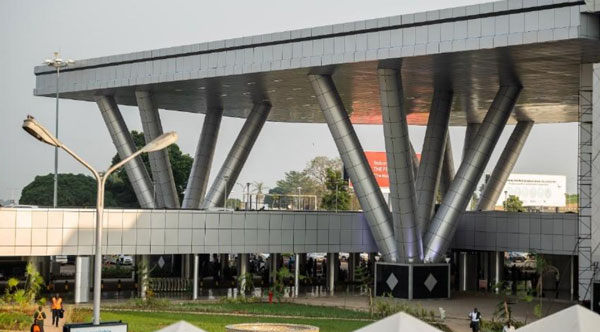
In aviation, Exim Bank provided approximately US$200 million towards the expansion of Entebbe International Airport. The investment was intended to modernise Uganda’s principal international gateway, improve passenger and cargo-handling capacity and support the country’s ambitions to become a regional transport and logistics hub.
For businesses, exporters and travellers, airport infrastructure is an important link to international markets. Its wider economic contribution, however, depends on passenger and cargo growth, the efficiency of airport operations and the ability to attract more airlines and routes.
The bank has also financed roads in the oil-producing Albertine region, including packages intended to improve connectivity around the emerging petroleum industry. Better roads can reduce transport costs, connect rural communities to markets and public services, and facilitate the movement of equipment and workers to oil-related investments.
Their benefits extend beyond the petroleum sector if farmers, traders and communities can use the improved transport links. But the developmental return depends on whether these roads stimulate wider economic activity rather than primarily serving industrial and extractive operations.
In telecommunications, Exim Bank is financing Phase V of Uganda’s National Backbone Infrastructure, a project valued at approximately US$150 million.
According to the Ministry of Finance’s January 2026 externally funded projects report, the project is designed to extend nearly 5,846 kilometres of optical fibre across 63 additional districts, connect 2,800 sites, establish 21 transmission sites and expand public Wi-Fi coverage.
It also includes an upgrade of the government data centre in Entebbe. The intended benefits include cheaper and faster connectivity, improved communication between government institutions and wider access to digital public services.
If effectively implemented, the network could support businesses, education, innovation and public administration, particularly outside Kampala. But it remains to be seen how extensively the infrastructure is used and whether affordable connectivity reaches ordinary citizens and businesses.
The broader development question is whether these investments are generating economic activity and social benefits commensurate with their financial costs.
In a 2021 study published in the journal Sustainability, researchers Tom Ogwang and Frank Vanclay examined four Chinese-financed infrastructure projects in Uganda; the Kampala–Entebbe Expressway, Karuma and Isimba dams; and the Malaba-Kampala section of the Standard Gauge Rail (SGR).
They concluded that Uganda had generally benefited from Chinese-funded infrastructure, challenging the notion that such lending necessarily amounts to a debt trap. However, they highlighted concerns over transparency, local business participation, employment, environmental and social safeguards, displacement and the distribution of project benefits.
Their findings suggest that the value of infrastructure should be judged not only by what is built, but also by who benefits, how the projects are managed and whether the resulting assets deliver lasting economic returns.
Exim’s financing model
China Exim Bank’s financing model comes with an important commercial condition: many of its infrastructure loans are tied to the use of Chinese contractors, equipment, technology and services.
This means that projects financed by the bank are generally implemented by Chinese companies, with a significant share of procurement sourced from China. Under the bank’s preferential export buyer’s credit arrangements, a Chinese contractor must typically have a signed commercial contract as part of the loan application.
The arrangement creates a two-way economic relationship. Uganda obtains financing for major infrastructure investments that might otherwise be difficult to undertake, while China secures overseas contracts for its construction companies, expands markets for its engineering and manufacturing industries, and strengthens the international presence of its state-owned enterprises.
In many cases, loan proceeds are paid directly to the Chinese contractors rather than transferred freely to the borrowing government.
The Kampala–Entebbe Expressway illustrates this model. The project was constructed by China Communications Construction Company (CCCC), through its subsidiary China First Highway Engineering Company.
Researchers Tom Goodfellow and Zhengli Huang, in their 2021 study of infrastructure development in Kampala and Addis Ababa, describe how the Chinese contractor helped advance the highway project, including by pursuing financing from Exim Bank.
They argue that Chinese construction companies can play a significant role not only in implementing projects but also in shaping which infrastructure investments are proposed and financed.
Sinohydro Corporation constructed Karuma Dam while Isimba was built by the China International Water and Electric Corporation (CWE).
The expansion of Entebbe International Airport was also undertaken by CCCC while Huawei Technologies executed the National Backbone Infrastructure project.
The performance of China Exim Bank-financed projects in Uganda has been mixed, with some delivering measurable economic benefits while others have struggled to translate their infrastructure capacity into proportional economic returns.
KEE’s tangible utility
For infrastructure analyst Pathius Akabanjuna, the Kampala–Entebbe Expressway is the clearest success story in terms of “tangible utility” and everyday economic impact, he told The Independent in an interview.
He says it handles an average of approximately 27,000 vehicle passages daily, more than twice the 13,000 originally projected at the design stage. It has also reduced the journey between Kampala and Entebbe International Airport from as much as two hours to approximately 40 minutes for many travellers.
“That is a real productivity gain for commuters, air travelers and even freight. However, the financial case might be weaker if the reported tolls average of about UGX 4 billion a month, appear to fall well short of what the loan repayment requires,” he argues.
The picture is more complicated in the energy sector. Akabanjuna considers the 183MW Isimba hydropower plant the better-performing of Uganda’s two major Chinese-financed dams. The plant reportedly generated 72% of its declared available capacity during FY2024/25.
Together with Karuma, he says the two facilities supplied approximately 27% of the electricity on Uganda’s grid in 2025. However, he says Isimba continues to have “outstanding defects” that require attention, raising questions about its long-term operational reliability.
Karuma presents a more contested picture. Although the megadam increased Uganda’s installed generation capacity to more than 2,000MW, Akabanjuna argues that the plant has yet to translate its full potential into economic output.
He cites findings by the Auditor General indicating that the plant generated only about 30% of its declared available capacity in the period under review, with the resulting transmission constraints contributing to more than Shs25 billion in deemed energy obligations.
“The Karuma-Tororo Transmission line has just broken ground this month and is intended to be completed in 2029. As such, Karuma may have delivered capacity on paper but has yet to deliver proportionate economic output,” he points out.
Beyond the performance of individual projects, Akabanjuna identifies a deeper challenge in Uganda’s infrastructure development: poor sequencing and integration of major investments.
He argues that Uganda has often prioritised the construction of headline infrastructure assets without making sufficient complementary investments to ensure they deliver their full economic value. In the energy sector, for instance, major hydropower dams were constructed before adequate transmission lines and integration substations were fully developed.
The result has been generation capacity that cannot always be evacuated to consumers, leaving the country with underutilised assets and financial obligations associated with surplus electricity.
Uganda’s installed electricity generation capacity has risen to approximately 2,048MW, while peak demand remains below 1,000MW. Akabanjuna argues that this imbalance illustrates the limitations of measuring energy security by generation capacity alone. Surplus electricity only becomes an economic asset when the grid can transmit it, consumers can access it and there is sufficient demand to absorb it.
In transport, he argues that the gains have similarly been concentrated along specific corridors. The Kampala–Entebbe Expressway has significantly improved access to the country’s main international airport, but it does not address some of Uganda’s wider trade and logistics constraints.
He adds that the financing structure of the projects also compounds the risk. “Revenue-linked loans such as the Expressway tolls, Airport handling and Power evacuation depend heavily on usage that has grown at a slower pace than debt service requirements.”
$2.4bn China debt
The scale of the bank’s involvement is also reflected in Uganda’s debt figures. According to the Ministry of Finance’s public debt report for FY2024/25, Uganda owed China Exim Bank approximately US$2.44 billion as at December 2024, making it the country’s largest bilateral creditor. The Chinese lender accounted for 70% of Uganda’s outstanding bilateral debt at the time.
The financial obligations are substantial. In the six months to December 2024, Uganda paid Exim Bank approximately $119.4 million in principal, US55.8 million in interest and US 3.5 million in commissions.
The figures illustrate the growing importance of the Chinese lender in Uganda’s infrastructure financing, but also the scale of the repayments associated with that relationship.
For Uganda, the Exim Bank model offers access to Chinese engineering expertise, construction capacity and financing, often enabling large projects to proceed more quickly than would otherwise be possible.
However, it also raises questions about competition, local participation and the extent to which Ugandan firms benefit from the expenditure. Where contracts are tied to Chinese companies, local contractors may have fewer opportunities to compete for major construction packages, while equipment, materials and technical services may be imported rather than sourced locally.
The implications extend beyond construction. Economic experts say if Ugandan companies are largely confined to subcontracting, labour supply and lower-value services, the country may capture less of the industrial and technological benefit of its infrastructure spending.
They argue that the most critical issue is how much technology transfer, skills development, local procurement and long-term maintenance capacity Uganda secures in return.
For China, meanwhile, the arrangement advances its commercial and strategic interests in Africa. It gives Chinese companies access to overseas markets, supports exports of Chinese machinery and construction materials, and reinforces the country’s position as a major infrastructure financier.
Exim Bank’s overseas lending is therefore both a development-financing instrument for recipient countries and an export-promotion mechanism for China.
The 56-kilometre Kampala–Entebbe Expressway, one of Uganda’s major infrastructure investments financed by China Exim Bank, has reduced travel time between the capital and Entebbe International Airport. The project cost approximately US$476 million, of which US$350 million was financed through an Exim Bank loan.
Entebbe International Airport, whose expansion has been partly financed by China Exim Bank. The project has involved improvements to airport facilities, including the runway and apron infrastructure, as Uganda seeks to strengthen its aviation capacity.