 The Independent Uganda: You get the Truth we Pay the Price



The name marks a milestone, but Uganda’s real oil test begins when the first barrel reaches the market
Kikuube, Uganda | JULIUS BUSINGE & AGENCIES | Uganda’s long-awaited entry into the global oil market has acquired a name, a commercial identity and, potentially, a new source of economic power.
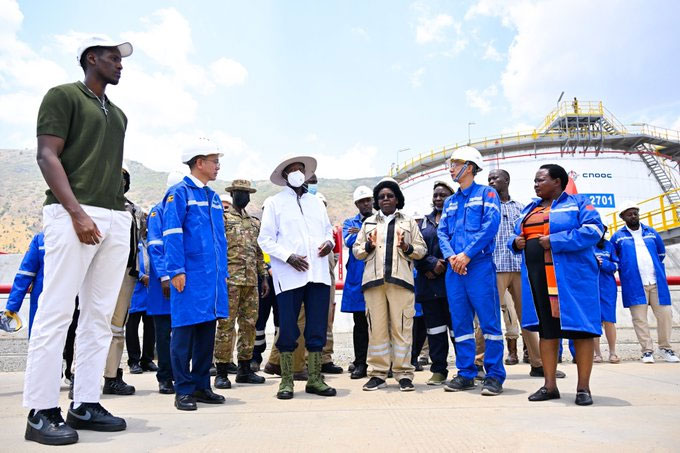
President Yoweri Museveni on Wednesday (Sept.2) named Uganda’s crude oil “Pearl Sweet” during a visit to the Kingfisher Development Area in Kikuube District, as the country enters the final stretch towards commercial production.
The name combines Uganda’s identity as the “Pearl of Africa” with the technical description of its crude. Uganda National Oil Company (UNOC) says the “sweet” classification reflects the crude’s relatively low sulphur content, a characteristic that generally makes crude more attractive to refiners than higher-sulphur alternatives.
But Uganda’s crude is not a straightforward light crude. The Petroleum Authority of Uganda (PAU) describes it as sweet and medium-to-heavy, with an API gravity ranging from 17 to 33 degrees. It is also highly waxy, with a pour point of about 40°C, meaning it can solidify at relatively high temperatures and therefore requires heated transportation infrastructure.
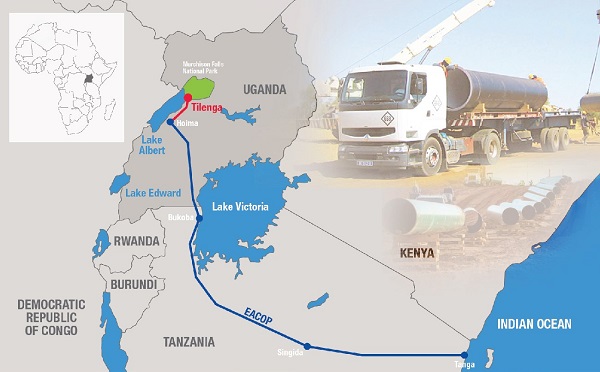
That characteristic helps explain the strategic importance of the 1,443-kilometre East African Crude Oil Pipeline (EACOP), which will carry the crude from Hoima to the export terminal at Tanga in Tanzania.
For Museveni, however, the naming ceremony was also a reminder that Uganda’s petroleum story may extend well beyond the 6.5 billion barrels already discovered.
“The 6.5 billion barrels of oil that were confirmed only cover 40% of the Lake Albert. We still have 60% to explore,” Museveni said.
He also praised CNOOC Uganda for moving quickly on the Kingfisher project and urged other partners to accelerate implementation.
“I want to thank CNOOC here because they have moved very fast. I want the others to also work very fast,” he said.
From discovery to production
The significance of “Pearl Sweet” lies in the fact that Uganda is finally moving from being an oil prospecting country to an oil-producing one.
Commercially viable petroleum deposits were confirmed in 2006, but nearly 20 years later Uganda is still preparing for its first commercial barrels.
The country originally anticipated production much earlier, with 2018 and later 2020 targets missed amid prolonged negotiations over field development, taxation, infrastructure and investment arrangements. A Final Investment Decision was eventually reached in February 2022, after which the Tilenga and Kingfisher projects and EACOP entered full-scale development.
Even after the FID, deadlines continued to move. Uganda’s latest attempt to start production by July 31, 2026 was missed after the Middle East conflict disrupted the movement of specialised equipment needed for the projects, according to PAU.
That history matters for investors and policymakers because every additional year before production delays revenues, extends financing costs and postpones the economic benefits expected from the industry.
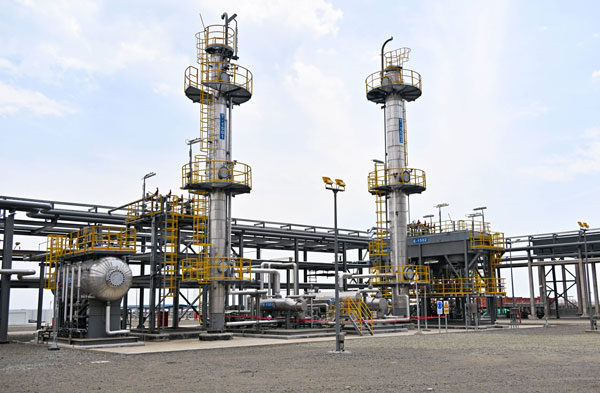
The current target is commercial production by the end of 2026, with peak output expected at about 230,000 barrels per day. TotalEnergies operates Tilenga, expected to produce about 190,000 barrels per day at peak, while CNOOC’s Kingfisher is designed to produce about 40,000 barrels per day.
The pipeline is now at an advanced stage, with more than 1,400 kilometres welded and major sections buried, according to EACOP data.
Growth, but at what price?
The economic stakes are enormous. Uganda’s 2026/27 national budget assumes Shs1.44 trillion in petroleum revenue and projects overall economic growth of 10.2% in the financial year, largely on expectations that commercial oil production will begin.
The World Bank is also forecasting a sharp acceleration, projecting growth of 10.4% in FY2026/27 as oil production starts before growth settles at around 6%.
The IMF, however, puts the near-term growth impact somewhat lower, projecting real GDP growth of 8.7% in FY2026/27 as oil production begins to contribute. It has urged Uganda to channel future oil revenues into growth-enhancing and social investments while protecting intergenerational wealth.
The difference between the forecasts is less important than the underlying message: oil is expected to provide a substantial temporary acceleration to an economy that has been growing at around 6% year – on-year.
But production alone will not determine whether Ugandans become substantially better off.
PAU estimates that the wider oil and gas development could generate about 161,700 direct, indirect and induced employment opportunities. Meanwhile, TotalEnergies says Tilenga and EACOP had created 34,021 direct jobs by July 31, 2026, exceeding the projects’ initial target of 15,330.
The policy challenge is ensuring that the jobs, contracts, technology transfer and supply-chain opportunities increasingly accrue to Ugandan companies and workers rather than leaving the country primarily as an exporter of crude.
Revenue accountability
The arrival of petroleum revenues also raises the question of how Uganda will manage a potentially volatile income stream.
Uganda is already a member of the Extractive Industries Transparency Initiative and has a legal framework requiring petroleum revenues due to government to be deposited into the Petroleum Fund.
The IMF has nevertheless emphasised the importance of stronger governance and anti-corruption institutions as oil production begins.
This is critical because oil revenue will initially be relatively small compared with Uganda’s overall budget. The Shs1.44 trillion expected in FY2026/27 represents only a fraction of the Shs84.39 trillion national budget.
The sensible economic strategy is therefore not to use petroleum receipts to permanently finance recurrent government consumption. Instead, oil income can help finance infrastructure, human capital, productive investment and debt management, while the non-oil economy continues to broaden the tax base.

Museveni has repeatedly argued that oil revenues should be invested in long-term infrastructure rather than luxury consumption. Finance Minister Henry Musasizi has similarly promised “bulletproof institutional guardrails” around oil revenues.
That promise will ultimately be tested through transparency over petroleum contracts, recoverable costs, government receipts, expenditure and the performance of the Petroleum Fund.
Refinery versus exports
Uganda’s petroleum strategy is also about deciding how much crude to export and how much value to retain domestically.
The country is pursuing a 60,000-barrel-per-day refinery at Kabaale in Hoima. The refinery is intended to produce petrol, diesel, LPG, kerosene, jet fuel and heavy fuel oil, while supporting a planned petrochemical industrial park.
This creates a strategic balance. EACOP gives Uganda access to international markets and foreign exchange, while refining offers opportunities for domestic value addition, energy security and industrial development.
Museveni said at Kingfisher that Uganda’s associated gas would not be flared. Instead, he said, gas from the field could generate up to 80MW of electricity, while other gas would be processed into LPG for cooking.
That approach could help Uganda address two problems simultaneously: expanding domestic energy access while reducing the environmental impact associated with flaring.
Yet the refinery itself must be commercially viable. Building refining capacity does not automatically mean cheaper fuel. Profitability will depend on crude quality, refinery utilisation, operating costs, product demand, financing, transport infrastructure and competition from established regional refineries.
The oil price risk
“Pearl Sweet” will enter a global oil market over which Uganda has virtually no pricing power.
Crude oil prices are determined largely by global supply and demand, inventories, OPEC and non-OPEC production, geopolitical disruptions, financial-market expectations and refinery demand. The U.S. Energy Information Administration says in its reports that crude grades are generally priced against international benchmarks, with adjustments for quality, transportation costs and market conditions.
Uganda’s low sulphur content could support the value of its crude, but its medium-to-heavy and waxy characteristics will also matter to buyers and refiners.
Recent market movements illustrate the risk. Brent crude traded as high as $118 a barrel in April 2026 before falling to $72 in June amid changing conditions in global oil flows, according to the EIA.
For Uganda, a prolonged period of low oil prices would mean lower export earnings, reduced government revenues and potentially weaker returns on the billions invested in petroleum infrastructure.
The World Bank has also warned that the global transition towards cleaner energy could lower hydrocarbon prices and increase the risk that some oil reserves become uneconomic to develop.
This creates a policy paradox. Uganda needs to monetise its oil while there is still strong global demand, but it must avoid building an economy that becomes dependent on hydrocarbons as the world shifts towards cleaner energy.
A narrow window
That is perhaps the bigger meaning behind “Pearl Sweet”.
The name gives Uganda’s crude an identity just as the country prepares to sell its first barrels. But branding alone will not determine its value.
The country will have to compete on crude quality, reliability, cost and market access while managing price volatility, climate pressures and the risk of resource dependence.
The oil projects themselves are expected to have a relatively limited operational emissions footprint by industry standards. TotalEnergies estimates Scope 1 and 2 emissions from Tilenga and EACOP at about 13 kilogrammes of CO₂ equivalent per barrel of oil equivalent, with annual emissions of about 0.8 million tonnes at peak production.
Yet Uganda cannot ignore the wider climate question. The World Bank has warned that climate change itself could reduce Uganda’s economic growth by as much as 3.1% by 2050 without stronger climate action.
For a country seeking to industrialise, expand electricity access and create jobs, the answer is unlikely to be choosing between oil and clean energy.
The more pragmatic strategy is to use the finite petroleum window to build infrastructure, human capital, manufacturing, renewable energy and competitive businesses that can survive after oil production declines.
That is the real test for “Pearl Sweet”: whether Uganda’s new crude grade becomes merely another commodity exported through Tanga, or the financial foundation for a more diversified and productive economy.
After almost two decades of waiting, Uganda is finally approaching First Oil. The harder assignment begins when the first barrel is sold.
******



I invite fellow Ugandans, and our brothers and sisters across the Nile Valley from Tanga to Cairo, to join me in celebrating a remarkable national achievement under President Yoweri Kaguta Museveni.
To understand the significance of this moment, we must place it within its proper historical context. The Uganda Railway of the colonial era was not built for our advancement. It served as a channel for extraction. In clear contrast, the Uganda Pipeline has been created to support national development, economic strength, and genuine self reliance.
Its meaning reaches beyond infrastructure. It stands in continuity with the great works of African civilisation, from the engineering mastery of the Pharaohs to the enduring presence of the Pyramids. These monuments remind the world of African capability, ambition, and resilience across the ages.
The pressures, complexities, and political currents surrounding this project were immense. Guiding it required exceptional steadiness and resolve. President Museveni held firm to this vision and carried it through to completion.
Warm congratulations on this historic achievement. It is a moment of pride for Uganda and for the wider Nile Valley family.