The Independent Uganda: You get the Truth we Pay the Price


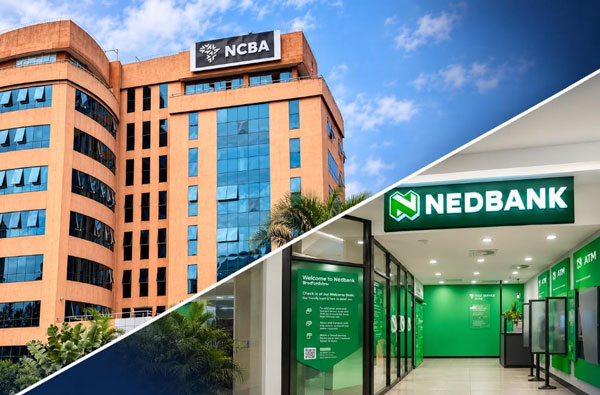
The South African lender’s takeover of NCBA offers a shortcut to regional growth, but established rivals will not give up customers easily
Kampala, Uganda | ISAAC KHISA | African banking has a new contender in the contest for East Africa’s customers. Nedbank, one of South Africa’s largest lenders, has completed its acquisition of a 66% stake in Kenya’s NCBA Group, buying an established regional network rather than building one from scratch.
The transaction, completed on October 19 after regulatory approvals, gives Nedbank control of a bank operating in Kenya, Uganda, Tanzania and Rwanda, with a joint venture in Ivory Coast. NCBA will retain its Nairobi headquarters, brand, local management and listing on the Nairobi Securities Exchange, while public investors will hold the remaining 34% stake.
For Nedbank, the attraction is straightforward. South Africa’s banking market is mature, while East Africa offers opportunities in corporate lending, infrastructure finance, trade and digital financial services. Buying NCBA gives the group an established customer base and a platform from which to pursue these opportunities.
The deal also brings Nedbank into a more crowded field. Standard Bank and Absa, its South African rivals, already have operations across the continent.
Nigeria’s Access Bank has expanded into Kenya through its acquisition of National Bank of Kenya. Meanwhile, local champions such as Equity Group and KCB Group have built formidable businesses around their knowledge of regional customers and their investments in digital banking.
Nairobi’s financial hub
Kenya’s appeal is not difficult to understand. Its financial sector serves as a gateway to neighbouring economies, and its banks have developed extensive digital services. But the very qualities that attract foreign lenders also make the market difficult to crack. Local banks have strong customer relationships, established distribution networks and experience navigating the region’s commercial and regulatory environments.
Nedbank is betting that NCBA’s local strengths can be combined with its own corporate and investment banking expertise. The enlarged group could offer companies operating across Southern and East Africa a broader range of financing, transaction banking and advisory services. Infrastructure projects, in particular, could provide opportunities to connect capital with the region’s demand for energy, transport and other essential investments.
“This landmark transaction establishes a significant presence for Nedbank in East Africa and marks a decisive step forward in our African growth strategy,” said Jason Quinn, Nedbank’s chief executive.
For NCBA, the new ownership could provide access to additional capital, expertise and products. Chief executive John Gachora said the partnership would allow the bank to pursue new opportunities and develop more sophisticated services.
“The name is the same, the people are the same, but the ambition and capabilities are tremendously magnified,” he said.
Shareholders appear to have welcomed the offer. Investors tendered 1.316bn NCBA shares, equivalent to 79.9% of the issued share capital, before excess applications were scaled back to meet Nedbank’s target of 66%.
Tough task a head
Yet buying a bank is easier than extracting the promised benefits. Nedbank must show that the acquisition can generate profitable growth, rather than simply increase its geographical reach. Cross-border lending and corporate finance may offer relatively clear opportunities, but expanding into new customer segments will require a careful understanding of local markets.
There is also a question of focus. Nedbank has previously held a stake in pan-African lender Ecobank, an investment that did not deliver the growth it had hoped for. The NCBA transaction is different because it gives Nedbank direct control of a regional banking group, but that does not eliminate the risks of operating across several economies and regulatory systems.
The acquisition will not immediately dislodge the continent’s biggest banking groups. Standard Bank has a much broader African footprint, while Equity and KCB remain deeply entrenched in East Africa. Nedbank’s task is to use NCBA’s existing relationships to win more business, without disrupting the operations that made the bank attractive in the first place.
NCBA shares are scheduled to be suspended from trading from on or about October 21 to November 2 to allow reconciliation of the share register. Settlement and transfer of shares are scheduled for November 3.