 The Independent Uganda: You get the Truth we Pay the Price


U.S. sanctions have targeted Ugandan leaders over rights abuses, corruption, and opposition repression
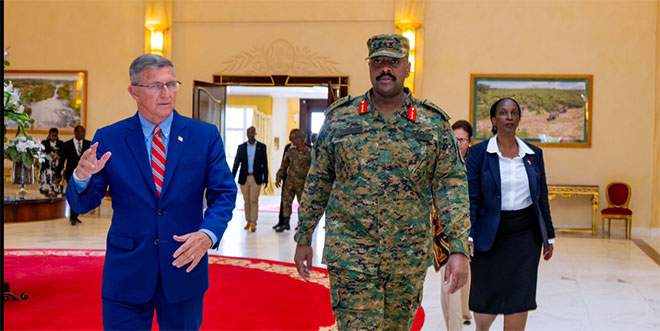
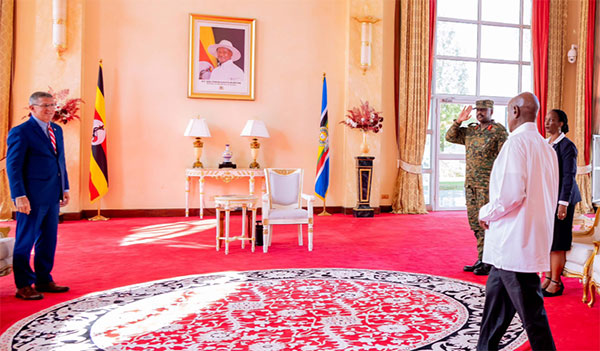
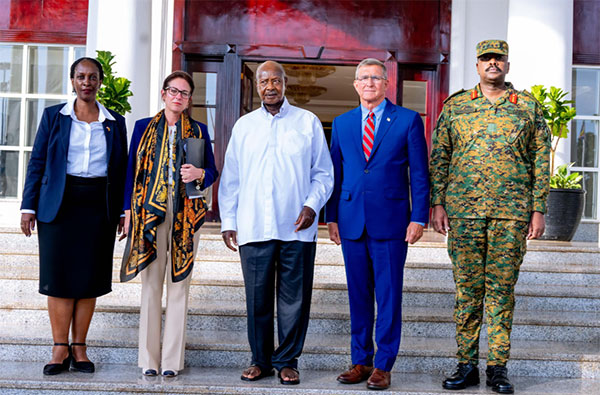
COVER STORY | IAN KATUSIIME | Last week, a retired U.S. general drew widespread attention in Kampala with a rare, high-profile visit, moving with unusual access through Uganda’s senior political and military circles. During his stay, he met President Yoweri Museveni at State House Entebbe, held discussions with Chief of Defence Forces Gen. Muhoozi Kainerugaba, and addressed senior military officers. Analysts suggested the visit raised questions about whether Kampala might be quietly exploring backchannels to Washington, even as U.S. sanctions continue to target senior officials.
Retired General Michael Flynn, who briefly served as National Security Advisor to former President Donald Trump in 2017, continues to maintain strong ties to Trump and the Make America Great Again (MAGA) movement that returned him to the White House in 2024. Flynn’s 36-year career in U.S. national security included a tenure as Director of the Defence Intelligence Agency before his retirement in 2014, as well as operational deployments in Afghanistan and Iraq. Today, he heads Flynn Intel Group, an intelligence and lobbying firm typical of retired senior American officers.
Uganda’s Ambassador to the United States, Robie Kakonge, is understood to have orchestrated the visit. Since taking up her post in January 2023, Kakonge has earned a reputation as one of Uganda’s most effective envoys during a period of tense U.S.-Uganda relations. She regularly participates in congressional events, U.S. federal programmes, and academic engagements, quietly keeping lines of communication open between Kampala and Washington amid rising sanctions pressure.
Observers of U.S.-Uganda diplomatic ties were struck by the timing of Flynn’s visit. Unlike other senior U.S. generals under the Africa Command (AFRICOM), Flynn engaged directly in Kampala, despite the U.S. military’s previous avoidance of the country. In September 2025, Gen. Dagvin Anderson, Commander of AFRICOM, toured East and Horn of Africa countries—including Kenya, Ethiopia, and Djibouti—but notably skipped Uganda, a long-standing partner in counterterrorism operations against the Somali extremist group Al Shabaab. AFRICOM, headquartered at Kelley Barracks in Stuttgart, Germany, oversees U.S. military operations across 53 African nations, providing strategic oversight, intelligence, and training support for African partners.
During his visit, Flynn met President Museveni at State House, Entebbe, where the discussions were described by the Ugandan leader as covering “matters of mutual interest.” On 14 March, Flynn met Gen. Muhoozi at the Special Forces Command headquarters to discuss security matters. The following evening, Muhoozi hosted a dinner attended by Flynn, Ambassador Kakonge, Gen. Moses Rwakitarate—former defence attaché to Scandinavian countries and now a consultant at BlackRock Security—and businessman Toyota Nzeire, the president’s brother.
At the dinner, Gen. Muhoozi reportedly thanked Kakonge for facilitating the visit, highlighting the novelty of Uganda actively investing in lobbying efforts in Washington—a practice uncommon among East African nations outside Kenya and Rwanda.
U.S. lobbying in Africa
Kenya has long leveraged U.S. lobbying to secure diplomatic advantages. After the appointment of Meg Whitman, former Hewlett-Packard CEO, as U.S. Ambassador to Kenya in 2022, Nairobi launched an aggressive engagement campaign in Washington. Whitman promoted “Brand Kenya” to investors and policymakers, culminating in a 2024 state visit by President William Ruto and Kenya’s designation as a major non-NATO ally—a landmark in U.S.-Kenya relations.
Rwanda has also invested in lobbying, hiring firms such as American Global Strategies to facilitate high-level engagement in Washington. In September 2023, President Paul Kagame met with representatives from the firm, founded by former U.S. National Security Advisor Robert O’Brien.
The Democratic Republic of Congo (DRC) has recently entered the lobbying arena, seeking military and diplomatic support against the M23 rebels while offering access to critical minerals such as cobalt and lithium. Analysts suggest these efforts influenced recent U.S. sanctions targeting Rwanda’s military leadership, including Chief of Defence Staff Gen. Mubarak Muganga, for alleged support to the M23 rebel group. Reports indicate the DRC has engaged lobbying firms including Ballard Partners to foster closer U.S. ties.
Most governments retain lobbying firms registered under the Foreign Agents Registration Act (FARA). These firms represent foreign governments in Washington, arranging meetings with Congress, the State Department, and Pentagon officials, shaping public narratives, and providing strategic advice on sanctions compliance. Think tanks such as the Centre for Strategic and International Studies (CSIS) are also known to engage in similar advocacy.
Flynn’s extended visit has sparked speculation that Uganda may be exploring new strategies to restore military-to-military cooperation with the United States—a cornerstone of their counterterrorism collaboration in Somalia. Historically, U.S.-Uganda military cooperation has centred on the African Union Mission in Somalia (AMISOM), now the African Union Support and Stabilisation Mission (AUSSOM), where Uganda’s troop presence has gradually declined over two decades. Gen. Muhoozi has hinted that Uganda may further reduce its commitment as troop drawdowns continue.
AFRICOM’s operations in Africa, which include joint exercises, intelligence sharing, and logistical support, have long been pivotal in combating terrorist networks in East Africa. However, the focus has shifted in recent years, with U.S. officials increasingly cautious about engaging partners under sanctions or those seen as violating human rights norms. Flynn’s visit, conducted outside the formal AFRICOM chain of command, represents a departure from the usual protocol, allowing for more informal channels of engagement.
2026 election fallout
Flynn’s visit coincided with a volatile period in Uganda’s domestic politics following the 2026 election. In January, President Museveni secured an eighth term with 71.6% of the vote, defeating opposition leader Robert Kyagulanyi, also known as Bobi Wine of the National Unity Platform (NUP). The election period saw heightened violence and crackdowns on opposition figures.
Kyagulanyi fled Uganda on 16 March, citing fear for his life. His wife, Barbie Kyagulanyi, and their children also left the country after soldiers allegedly attacked their home in Magere, outside Kampala, searching for her husband. Security forces continue to maintain a presence at Kyagulanyi’s former residence, which has effectively been transformed into a military outpost. Roadblocks and checkpoints have been in place across Kampala for months as security forces conduct operations targeting NUP members. Hundreds of party cadres were reportedly detained or “disappeared” during and after the election.
Gen. Muhoozi has intensified threats against Kyagulanyi via social media, claiming the army is pursuing the opposition leader. A controversial tweet suggesting U.S. embassy involvement in Kyagulanyi’s escape prompted a response from Senator Jim Risch, chairman of the Senate Foreign Relations Committee, who said the general had “crossed a red line.” Risch warned that the United States might reconsider security partnerships with Uganda, including sanctions and military cooperation.
U.S. sanctions
Since 2019, a series of U.S. sanctions has targeted Ugandan leaders for human rights abuses, corruption, and the repression of opposition groups. These sanctions include travel bans to the U.S. and asset freezes within American jurisdiction, with wider implications due to compliance requirements among Western nations.
Those sanctioned include: Gen. Kale Kayihura, former Inspector General of Police, for brutality against opposition members; Maj. Gen. Abel Kandiho, former Chief of Military Intelligence, for torture of opposition figures; Johnson Byabasahija, Commissioner of Prisons, sanctioned in 2023 for alleged inmate abuse; and Speaker of Parliament Anita Among, sanctioned in 2024 for corruption and embezzlement of public funds.
In April 2021, U.S. Secretary of State Anthony Blinken announced sanctions against several unnamed Ugandan political leaders for their roles in suppressing opposition during the presidential elections. In December 2023, Blinken expanded visa restrictions to include current or former officials deemed responsible for undermining Uganda’s democratic processes or oppressing marginalized populations, extending restrictions to some family members.
Strategic implications
Flynn’s visit took place against a complex backdrop of U.S.-Uganda relations marked by sanctions, domestic political unrest, and regional security concerns. Analysts suggest the general’s trip could signal the beginnings of a quieter diplomatic engagement, allowing Kampala to explore alternatives for military and economic cooperation while navigating U.S. sanctions.
Uganda’s security partnership with the U.S. has long been anchored on counterterrorism operations in East Africa, particularly the fight against Al Shabaab in Somalia. Yet the changing composition of African Union forces and Uganda’s political landscape—including Gen. Muhoozi’s statements on troop withdrawals—may complicate the continuation of such programmes.
Meanwhile, Uganda has not traditionally invested heavily in lobbying in Washington, unlike Kenya, Rwanda, or the DRC. The coordinated effort by Ambassador Kakonge to host Flynn suggests Kampala is now experimenting with soft power and backchannel diplomacy, potentially to mitigate the impact of sanctions and preserve strategic military ties.
Observers also note the symbolic importance of Flynn himself, a figure closely tied to Trump-era policy and a vocal proponent of U.S. engagement in Africa. His presence in Kampala, away from the formal structures of AFRICOM, may provide Uganda with informal access to policymakers and military officials that standard channels cannot.
The visit highlights the nuanced and sometimes opaque nature of U.S.-Uganda relations, balancing strategic security interests against political sanctions and domestic unrest. Flynn’s meetings with President Museveni, Gen. Muhoozi, and senior military and diplomatic figures underscore the lengths to which Uganda may go to maintain influence and cooperation with Washington, even as formal channels remain constrained.
As Uganda navigates the aftermath of a contested election and increasing U.S. scrutiny, the visit serves as a reminder that diplomacy often occurs in unofficial and personal networks, with retired officials like Flynn serving as unconventional yet potentially influential intermediaries.
Whether this engagement will translate into tangible changes in U.S. policy or sanctions relief remains uncertain. What is clear, however, is that Uganda is actively seeking new pathways to safeguard its strategic interests, signalling that backchannels, personal diplomacy, and unconventional engagement may now play an increasingly central role in East African geopolitics.

It’s possible that Gen. Flynn was lobbying Uganda to back USA in its international adventures and so on and so forth. Doesn’t have to be a “one lane traffic” affair always. Africa is growing enough to warrant being lobbied and incentivised. If not, tuli ku ki?