The Independent Uganda: You get the Truth we Pay the Price


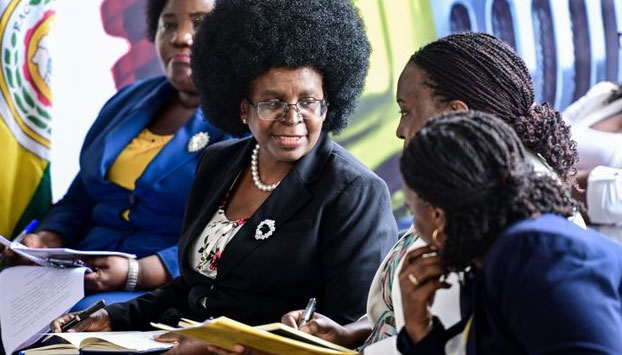
Kampala, Uganda | URN | The minister of energy has apologized to electricity consumers for weeks of widespread electricity outages across Kampala and other parts of the country.
Addressing journalists at the Uganda Media Centre on Wednesday, Dr Monica Musenero Masanza partly blamed the crisis on the failure to adequately communicate to consumers about the impending disconnections meant to repair the distribution network.
She acknowledged that the intermittent blackouts have disrupted households, businesses, industries and public institutions.
Musenero maintained that the outages are largely the result of ongoing investments to modernise Uganda’s ageing electricity transmission and distribution infrastructure rather than a shortage of electricity generation.
“We hear you. We are with you. Before the intensification of the outages, we made an effort to communicate, but from the response it is clear that we did not do it well. For that, on behalf of the sector, I apologise,” Musenero said.
She explained that Uganda currently generates enough electricity to meet demand, but the country’s transmission and distribution infrastructure has struggled to keep pace with rapid growth in electricity consumption, industrial expansion and new customer connections.
Providing an overview of the sector’s performance, the Managing Director of the Uganda Electricity Distribution Company Limited (UEDCL), Eng.
Jocelyne Rwabwogo Rwakakooko, said Uganda now has approximately 2.7 million electricity customers, with national electricity access standing at 62 percent.
She added that more than 76,000 new customers have been connected to the national grid since January this year alone, while over 500,000 applicants are still awaiting electricity connections.
“The growing customer base, coupled with increased industrial activity and the government’s drive to expand electricity access, has placed unprecedented pressure on substations, transformers and transmission lines, many of which were not originally designed to handle today’s demand,” Eng. Rwakakooko said.
Against this backdrop, the ministry identified four major factors behind the ongoing outages. Foremost among them is the Kampala Metropolitan Transmission System Improvement Project, funded by the Japan International Cooperation Agency (JICA), alongside sections of the electricity transmission and distribution network that are operating beyond their optimal capacity.
The project, now 91 percent complete, involves the construction and upgrading of substations, reinforcement of critical transmission lines and deployment of a mobile substation to improve electricity supply across the Greater Kampala Metropolitan Area. The government expects the works to be completed by August 8, 2026.
Other causes cited include routine maintenance of critical electricity infrastructure, which requires planned shutdowns to ensure long-term system reliability, as well as persistent vandalism of electricity towers, transformers, conductors and poles that continues to undermine stable power supply.
To address the challenges, the government announced a series of immediate interventions, including fast-tracking ongoing transmission projects, reinforcing overloaded substations and feeders, replacing ageing transformers, procuring additional mobile substations and increasing investment in preventive maintenance.
Officials said the interventions are already yielding results, with industrial feeder availability improving to 99.7 percent, alongside better network reliability, reduced system losses, improved revenue collection and faster response to electricity faults.
Government also revealed that it has secured a substantial stock of electricity meters and other essential network materials to accelerate new customer connections and speed up restoration works.
The Chief Executive Officer of the Electricity Regulatory Authority, Eng. Ziria Tibalwa Waako, said the sector’s ongoing investments are guided by the Electricity Act, 2022, which provides for the development, regulation and operation of electricity generation, transmission, distribution and supply while requiring licensed operators to provide safe, reliable and efficient electricity services.
She added that the National Energy Policy, 2023 prioritises universal access to affordable, reliable and sustainable electricity through expanded transmission infrastructure, rehabilitation of ageing assets and improved service reliability to support Uganda’s socio-economic transformation.
“Timely outage notices, predictable maintenance schedules and transparent customer engagement help minimise disruption to businesses and households while maintaining public confidence in utility providers,” Eng. Tibalwa said.
The government’s investments are also aligned with the Fourth National Development Plan (NDP IV), which identifies reliable electricity infrastructure as a critical enabler of industrialisation, manufacturing competitiveness, digital transformation and inclusive economic growth.
While acknowledging the inconvenience caused by the ongoing blackouts, government insists the disruptions are temporary and necessary to build a stronger, more resilient electricity network capable of supporting Uganda’s growing economy and future energy demand.