The Independent Uganda: You get the Truth we Pay the Price


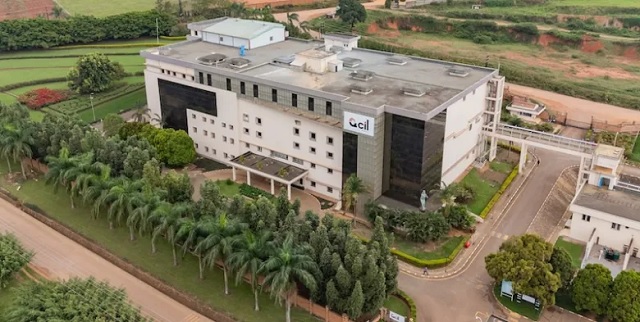
The pharmaceutical company is among a select group of manufacturers preparing to produce an experimental once-monthly pill aimed at expanding HIV prevention options
Kampala, Uganda | THE INDEPENDENT | Uganda’s Quality Chemical Industries Ltd. (QCIL) has secured an early manufacturing licence from Merck & Co. for an experimental once-monthly HIV prevention pill, positioning the East African drugmaker at the centre of efforts to expand pharmaceutical production on the continent.
QCIL is one of seven generic manufacturers selected under royalty-free, non-exclusive voluntary licensing agreements covering 129 low- and middle-income countries. The Ugandan company is also one of only three manufacturers from sub-Saharan Africa included in the initial licensing round, alongside firms in Kenya and South Africa.
The agreements are intended to enable manufacturers to prepare for commercial production of alimatravir—an investigational once-monthly oral pre-exposure prophylaxis (PrEP) medicine—before it receives regulatory approval, potentially shortening the time between approval and patient access in developing markets.
The move marks a shift in how multinational pharmaceutical companies are approaching technology transfer, bringing African manufacturers into the first wave of production planning rather than waiting until after medicines have reached high-income markets.
“Recognizing the urgent, unmet needs in HIV prevention, we are acting early to enable rapid, broad and sustainable access to alimatravir, an investigational once-monthly oral PrEP option, in low- and middle-income countries,” Merck Chief Executive Officer Robert M. Davis said in a statement.
Africa CDC Director-General Jean Kaseya said the licensing arrangement represents more than expanded access to HIV prevention medicines.
“People across Africa need more options to prevent HIV. A once-monthly pill could provide a different choice for people in how to protect themselves, subject to successful trials and regulatory approval,” he said. “Africa must continue to expand its role across the health innovation value chain, from supporting research ecosystems and clinical trial capacity to manufacturing and access.”
Uganda is also participating in EXPrESSIVE-10, a Phase III clinical trial evaluating the medicine among adolescent girls and young women in Uganda, Kenya and South Africa, giving the country a role in both the development and prospective manufacture of the drug.
The announcement comes as global HIV prevention efforts struggle to achieve scale. About 1.2 million people acquired HIV worldwide in 2025, while only 3.5 million people were using oral PrEP in 2023—well short of the global target of 20 million users by 2030.
Alimatravir remains an investigational medicine and has not been approved by regulators. For QCIL, the licensing agreement reinforces a broader expansion strategy aimed at transforming the company from a regional supplier of essential medicines into a diversified pharmaceutical manufacturer serving African and international markets.
The company announced last month that it had begun construction of a new manufacturing facility at its Luzira plant in Kampala. The expansion is expected to double production capacity within two years and introduce injectable medicines to its portfolio. The project is being financed through a combination of retained earnings and bank borrowing.
QCIL also completed what it says is Africa’s only dedicated Hydroxyurea manufacturing facility, making it the continent’s sole producer of the sickle cell disease treatment. During the year, it launched 15 new products spanning antibiotics, antimalarials, antihypertensives, antidiabetics, antifungals and allergy medicines, while adding a paediatric antiretroviral therapy to its HIV portfolio.
“QCIL was founded on a simple conviction: that Africa’s health challenges deserve African solutions,” Chairman and Co-founder Emmanuel Katongole said at the company’s annual general meeting. “For over twenty years, that conviction has guided every decision we have made.”
The expansion is translating into stronger earnings. Revenue for the year ended March 2026 rose 8.8% to Shs290.5 billion, while gross profit margin widened to 46.7% from 40.6%, reflecting improved manufacturing efficiency, lower raw material costs and a more profitable product mix.
Operating profit climbed 24.2% to Shs73.8 billion, and net profit increased 38.8% to Shs56.4 billion, helped by stronger operating performance, tighter working capital management and the recovery of previously impaired receivables owed by the Government of Zambia.