The Independent Uganda: You get the Truth we Pay the Price


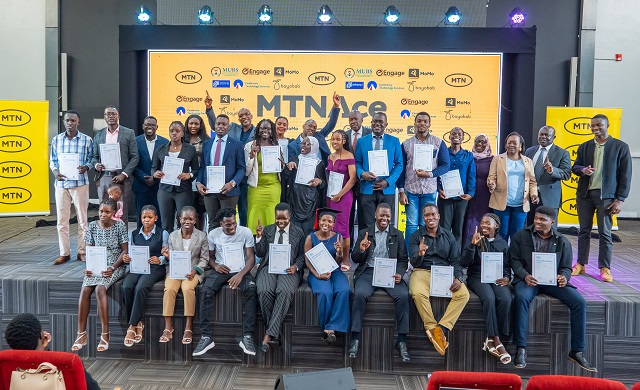
Kampala, Uganda | PATRICIA AKANKWATSA | Uganda may have built digital infrastructure across much of the country, but a wide gap between connectivity and the ability to use the internet productively is increasingly shifting attention from access to skills.
That challenge was at the centre of the graduation of 503 young people from MTN Uganda’s ACE digital-skilling programme, with government and private sector leaders arguing that the next phase of Uganda’s digital transformation will depend less on laying infrastructure and more on equipping people to use it.
The latest cohort brings the number of young people who have completed the programme to more than 1,190.
Participants, including persons with disabilities and refugees, were trained through a hybrid learning model in areas including computer and online essentials, digital marketing, e-commerce, cybersecurity and artificial intelligence.
But the graduation also highlighted a larger question facing Uganda’s digital economy: what happens when connectivity expands faster than the skills required to turn it into jobs, businesses and productivity?
Amos Mpungu, an assistant commissioner at the Ministry of ICT and National Guidance, said Uganda’s connectivity infrastructure now reaches 96% of the country, but only 22% of the population is actively using the internet.
“That leaves us with a very big gap,” Mpungu said. “For many years, we have concentrated on building infrastructure and digitalising services, but infrastructure alone does not create value. People must have the skills to use it.”
He said the gap was increasingly becoming a human capital challenge rather than simply an infrastructure problem.
From access to skills
Uganda is pursuing an ambitious plan to expand its economy to $500 billion by 2040, with ICT, science, technology and innovation identified as among the sectors expected to support that transformation.
The country’s youthful population adds urgency to the effort.
Three-quarters of Ugandans are below the age of 30, presenting the country with a large pool of potential workers, entrepreneurs and innovators, but also increasing pressure to create opportunities for young people entering the labour market.
“The opportunity before us is to ensure that our young population is equipped not only to participate in the digital economy, but also to shape it,” Mpungu said.
He said programmes such as ACE complement government efforts to build a digitally empowered population capable of applying technology to business and community challenges.
According to Mpungu, 1,800 people applied for the latest programme, 700 were admitted and 503 completed the training.
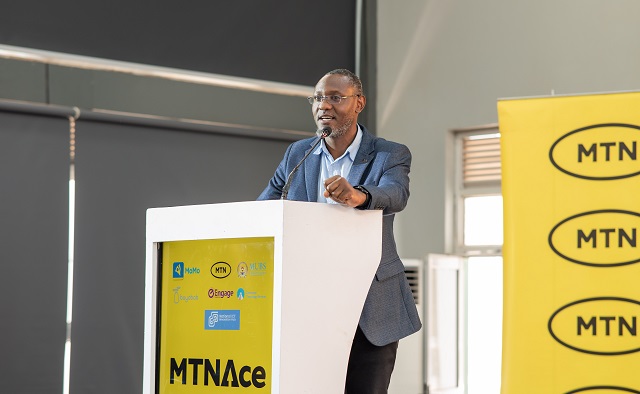
“The fact that you are here means you have gone through the process and completed it,” he told the graduates, adding that digital skills should be judged by what people can do rather than the certificates they hold.
The programme included training in software-related skills, artificial intelligence, data management and cybersecurity, alongside other areas of digital and enterprise development.
Beyond the certificate
Rotarian George Egadu, Chairperson of the Board of Trustees of MTN Foundation, said the programme was designed to help young people turn access to technology into economic opportunities.
“At MTN Foundation, we believe that investing in young people is an investment in Uganda’s future,” Egadu said.
“Digital access creates the opportunity, but it is skills that enable people to turn that access into livelihoods, businesses and solutions.”
He said the 503 graduates bring the cumulative number of people who have completed the programme to more than 1,190, forming part of the Foundation’s wider investment in human capital and digital inclusion.
Egadu, however, cautioned graduates against treating the certificate as the end of their journey.
“Technology is changing very quickly. What you know today may not be enough tomorrow,” he said. “You must continue learning, asking questions and experimenting.”
He challenged the graduates to look beyond employment.
“Do not only ask who is going to employ you,” he said. “Ask yourself what problem you can solve, what you can create and what opportunity you can build for yourself and for others.”
The argument reflects a growing policy push to turn Uganda’s young population from job seekers into entrepreneurs and innovators.
Mpungu similarly urged graduates to apply their skills to sectors where technology could address practical economic challenges.
“You do not have to begin with something big,” he said. “Start with one problem, solve it for one group of people and grow from there.”
Measuring the return
The ACE programme is part of MTN Foundation's wider social investment portfolio, funded through 1% of MTN Uganda’s net profit.
The Foundation focuses on economic empowerment, education, health and humanitarian response.
In 2025, the Foundation invested more than Shs5.1 billion in programmes that reached more than 60,000 people across Uganda.
Egadu said the Foundation’s programmes are based on the view that economic and social challenges are interconnected.
“A young person without skills may struggle to find employment. Without income, a family may struggle to keep children in school,” he said. “When we invest in one area, the benefits can extend beyond one individual.”
An independent assessment of MTN Foundation’s economic empowerment projects implemented between 2022 and 2024 found that 88% of youth participants secured employment after training, while 93% reported improved business performance. More than 22 startups were supported.
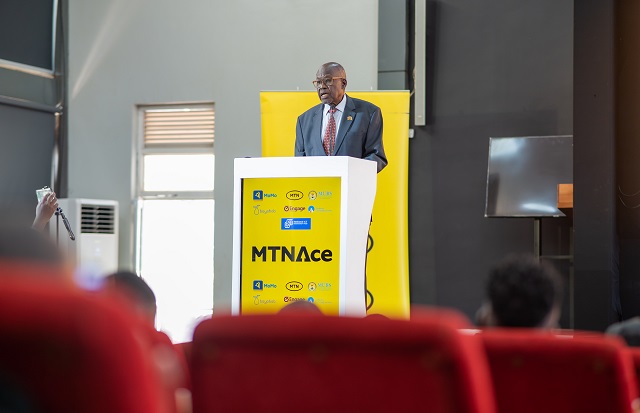
Egadu said such figures should be viewed beyond the statistics.
“Behind every percentage is a person whose circumstances may have changed—a young person earning an income, an entrepreneur improving a business or someone finding a solution to a problem in their community,” he said.
The next step
The graduates will now be eligible to progress to the ACE Career & Enterprise track, which offers more advanced digital and entrepreneurship training aligned with MTN’s Ambition 2030 strategy.
The next phase is expected to move participants beyond basic digital literacy towards applying their skills in employment, business and enterprise.
For Uganda, the graduation comes as the debate over digital transformation is moving beyond the number of kilometres of fibre laid or the geographical reach of mobile networks.
The more difficult question is whether the people connected to those networks have the skills to use them productively.
As Mpungu told the graduates, Uganda's digital future will not be determined by technology alone.
“The technology is available,” he said. “The question is what we are going to do with it.”