The Independent Uganda: You get the Truth we Pay the Price


SPECIAL FEATURE | THE INDEPENDENT | For a teacher putting aside part of a monthly salary, a young professional making the first serious savings of their career, a couple building a business or a group of friends contributing to an investment club, wealth can feel like something that belongs to the future.
But investment managers say the decisions made when people are still building their financial base can determine how much wealth they eventually create.
The question, therefore, is not only how much money a person has today. It is what they are doing with the money they have.
Uganda’s investment landscape is changing as more people move beyond traditional saving and begin looking for ways to make their money work for longer-term goals.
Capital Markets Authority figures cited in recent reporting show that assets held in collective investment schemes have grown sharply in recent years, reaching more than Shs6 trillion by March 2026, with more than 220,000 funded investor accounts.
The growth points to a simple change in behaviour: more Ugandans are becoming interested in putting their money into professionally managed investments rather than leaving all their savings idle.
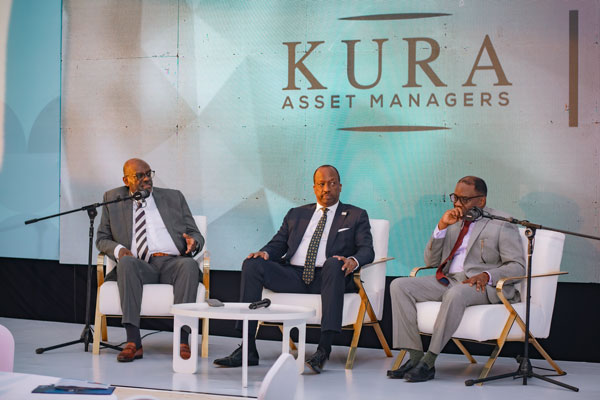
KURA Asset Managers, which recently entered Uganda’s investment management market, believes this change should be accompanied by a change in how people think about wealth.
Its Chief Executive Officer, Ronald Kasolo, says the company sees wealth as a journey rather than a destination.
“Our opportunity is therefore bigger than introducing another asset-management company. It is to deepen participation in Uganda’s investment markets and help more individuals, families and institutions convert today’s capital into sustainable wealth for tomorrow,” Kasolo says.
“This is the thinking behind our positioning: Kapital for Generations. We want investment management to become an intentional part of how Ugandans build, preserve and transfer wealth across generations,” he adds.
That journey begins with creation, followed by growth, preservation and eventually the transfer of wealth to the next generation.
The distinction matters because a person does not need to be wealthy before beginning to think about wealth creation.
A young employee may begin with a modest amount. A small business owner may invest part of the profits from the business. Members of an investment club may pool their contributions. A family may begin putting aside money specifically for a long-term objective.
Over time, those decisions can become part of a much larger financial plan.
KURA says this is the gap it wants to address: helping investors move from simply accumulating money to managing it intentionally.
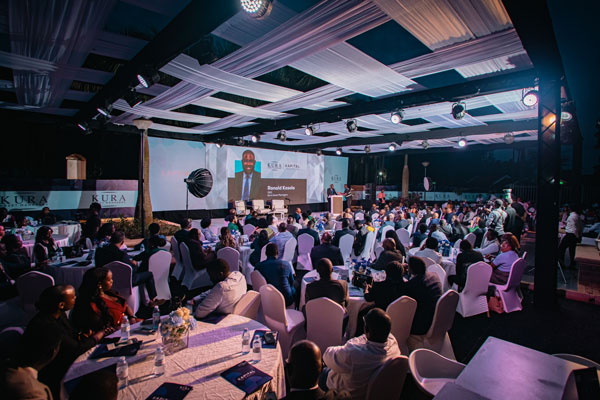

The company’s stated market includes individual investors, families, institutions, corporates, SACCOs and investment clubs. It says the common need across these groups is access to investment solutions that are professional, transparent and appropriate to different stages of wealth creation.
“Our focus is to meet investors where they are-whether they are starting, growing, preserving or transferring wealth to the next generation,” Kasolo noted.
That does not mean every investor should pursue the same investment. Someone saving for a short-term need has different requirements from a parent planning for university fees in 10 years. A business owner may have different priorities from a family looking to preserve wealth for the next generation.
The basic principle is to give every shilling a purpose.
Some money may be needed for immediate expenses. Some may provide a financial cushion. Other money can be invested for longer-term goals.
This is where professional fund management enters the picture.
Instead of every individual having to identify and manage investments on their own, a fund manager manages pooled money according to an investment strategy, with diversification and risk management forming part of the process.
KURA says its own investment philosophy is based on capital preservation, disciplined risk management and sustainable long-term returns.
The company also stresses that it sees itself as a steward of other people’s money, meaning investment decisions should be deliberate and aligned to the investor’s objectives.
For ordinary Ugandans, the message is perhaps less complicated than the language of financial markets sometimes makes it sound.
Building wealth is not necessarily about making one spectacular investment.
It can begin with a habit: setting aside money, giving it a purpose, investing consistently and allowing time to work.
The bigger ambition is to ensure that what one generation builds does not end with that generation.
It becomes a stronger starting point for the next.
That is the thinking behind KURA’s “Kapital for Generations” positioning, a belief that the goal of investing should ultimately be bigger than watching a balance grow. It should be about building something that lasts.