The Independent Uganda: You get the Truth we Pay the Price


The succession has exposed the uneasy meeting of tradition, family and modern law
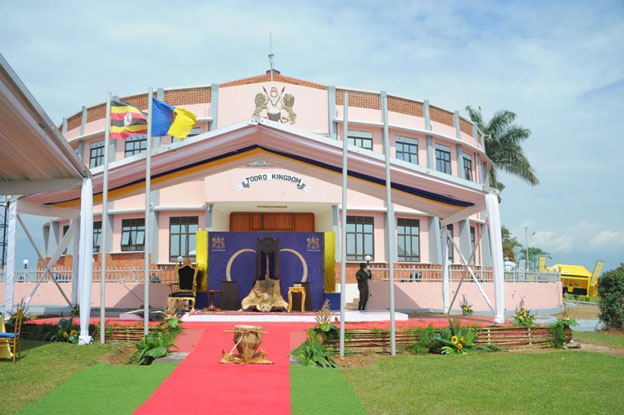
COVER STORY | THE INDEPENDENT | The royal palace in Fort Portal is preparing to receive a new occupant. At Karuziika Palace, preparations are under way for the installation of Prince Edward Rukidi Kijanangoma as the new Omukama, or king, of Tooro, one of Uganda’s traditional kingdoms.
The ceremony on Sept.29 will bring together traditional leaders, government officials, diplomats, religious leaders and members of the public. President Yoweri Museveni is expected to attend as chief guest.
But behind the ceremony is a story that has been marked by grief, disagreement and a succession dispute following the death of the previous king, Oyo Nyimba Kabamba Iguru Rukidi IV.
The transition has been unusually closely watched because of a question that emerged after Oyo’s death: who should inherit his throne?
The answer has now been settled through the traditional institutions of the kingdom. But the events that led to the selection of the new king have left a complicated legacy.
Preparing for a new king
The final preparations are taking place in Fort Portal, the main town of Tooro in western Uganda.
The royal palace is being cleaned and prepared for the installation. Palace elders and traditional custodians have been guiding the king designate through the customs associated with becoming Omukama.
Among the preparations is the restoration of the royal drums, which were turned upside down following Oyo’s death as a sign of mourning. They will be turned upright again as part of the installation ceremony, marking the beginning of a new reign.
The main public events will take place over two days. On the evening of Sept.28, Prince Kijanangoma is expected to leave Rwengoma Palace in a procession towards Karuziika.
He will pass through Mugabante, where he is expected to take part in a traditional mock battle and emerge victorious.
He will then enter Karuziika Palace through Omusanga, the main entrance, before being taken to the royal throne. Some of the traditional rituals inside the palace will not be made public.
The following day, Sept.29, the public ceremony will begin with a church service at St John’s Cathedral in Fort Portal before moving to Karuziika Palace for the formal installation. The new king will take the name Edward Rukidi Nyabongo I.
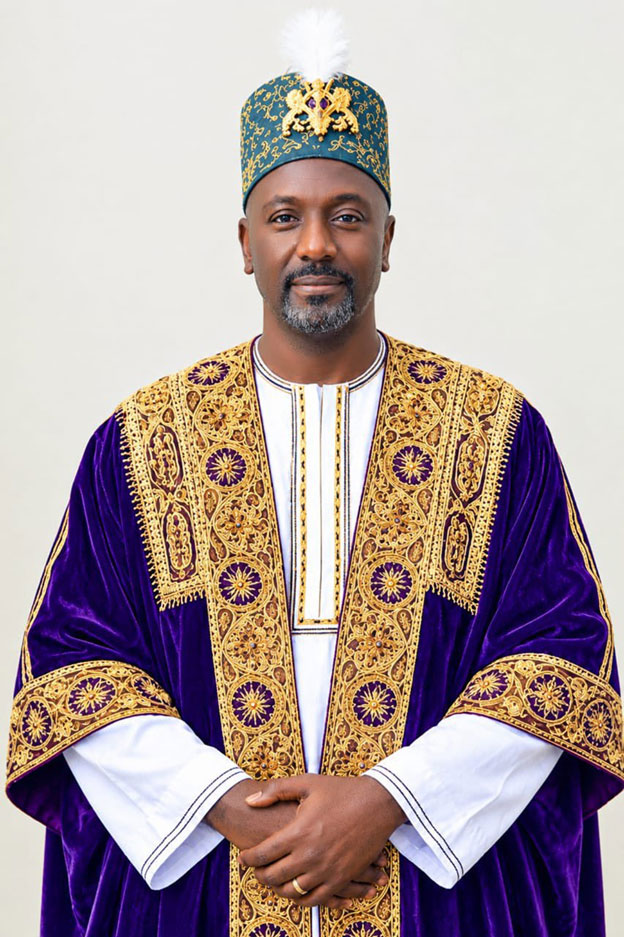
The government has referred to the event as a coronation, although much of the process involves traditional rites associated with the installation of an Omukama.
The king who died at 34
To understand why the transition has attracted so much attention, it is necessary to look back at the man whose death created the vacancy.
Oyo became king in 1995, when he was only three years old. His father, Omukama Patrick Matthew Kaboyo Olimi III, had died, leaving the child to inherit the throne.
Oyo’s coronation attracted international attention because he was so young. For years he was described as the world’s youngest reigning monarch.
But as he grew older, the young king developed a public role beyond the unusual circumstances of his childhood.
He promoted education, youth empowerment, agriculture, tourism, conservation and health initiatives. He became a familiar figure in Uganda and represented Tooro at national and international events.
His reign lasted more than three decades. Then, on August 27, Oyo died in the United States while receiving treatment for cancer. He was 34.
His death brought an end to one of Uganda’s most recognisable royal stories. It also raised the question of succession.
The succession question
The death of a king in Tooro is not followed by an automatic transfer of power from father to son. The Babiito are the royal clan of Tooro and play a central role in selecting the Omukama.
But soon after Oyo’s death, another possibility emerged. Members of his immediate family said that Oyo had a young son.
The child was reportedly living in Texas in the United States and was not publicly identified.
Oyo’s mother, Queen Mother Best Kemigisa, and his sister, Princess Ruth Komuntale, argued that the child should be considered in the succession process. They also said Oyo had left a will concerning the succession.
The claim complicated what might otherwise have been a relatively straightforward traditional process.
It raised questions about the relationship between customary succession and a possible written instruction left by a former king.
The dispute became public. The Babiito royal clan, however, continued with its traditional process. A 21-member succession committee was formed. On Sept.9 the committee selected Prince Edward Rukidi Kijanangoma as the next king.
The decision was subsequently endorsed by the Tooro Supreme Council, known as the Rukurato Rw’Obukama Bwa Tooro.
The government later confirmed that it had received the resolutions supporting the process and that preparations for the coronation could proceed.
The burial of Oyo
While the succession debate was unfolding, Tooro still had to bury its king. Oyo’s body was returned to Uganda on Sept.4.
He was received at Entebbe International Airport by President Museveni and other officials before being taken to Fort Portal. On Sept.12, thousands of people gathered for his funeral.
The ceremony began at St John’s Cathedral before his body was taken to the Karambi Royal Tombs, where Tooro’s kings are buried.
Traditional rulers and representatives from other royal houses attended. Government officials, religious leaders and members of the public also gathered to pay their respects.
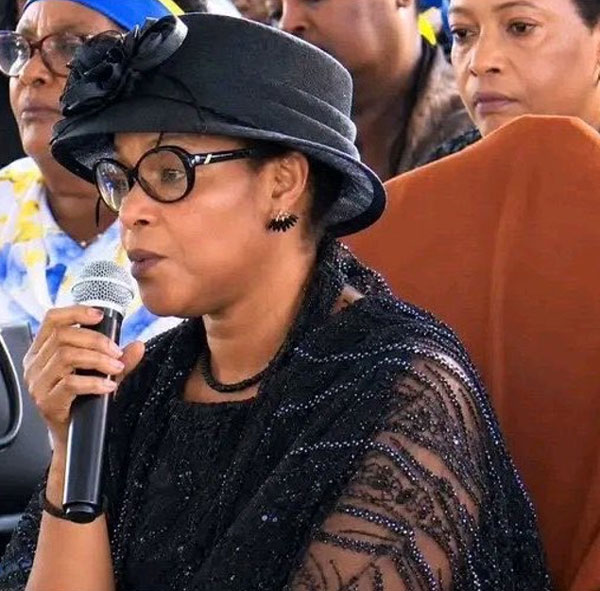
There were calls for unity. But the most significant moment of the burial came towards the end. At Karambi, as Oyo’s coffin was lowered into the grave, Prince Edward Rukidi Kijanangoma stepped forward.
He threw nine coffee berries into the grave. The gesture formed part of the traditional symbolism surrounding the transfer of royal authority.
Shortly afterwards, the head of the Babiito royal clan, Charles Kayondo Kamurasi, presented Kijanangoma as Oyo’s successor.
A king had been buried. A new one had effectively been named. But the disagreement over the succession had not disappeared.
The succession debate eventually attracted the attention of Uganda’s central government.
Attorney General Sam Mayanja gave a legal view on the situation and said preparations could continue because no formal court challenge had been registered.
The government also emphasised the importance of following Tooro’s customs, traditions and applicable laws.
The dispute was unusual because traditional kingdoms in Uganda have cultural rather than executive powers.
The Omukama does not run the government of Uganda. Instead, the monarchy’s role is largely connected to culture, identity, heritage and community affairs. Yet the institution remains important to many people in the region.
That is why the question of who occupies the throne carries significance beyond the royal family itself.
The making of Nyabongo I
The man chosen to succeed Oyo is very different from the king he replaces. Oyo inherited the throne as a child. Kijanangoma is an adult.
He has worked as a journalist and broadcaster at the Uganda Broadcasting Corporation (UBC TV) and has spent much of his life outside the spotlight that accompanied Oyo from childhood.
Now he is preparing to enter a very different world. Traditional elders and palace custodians have been introducing him to the customs and expectations of kingship.
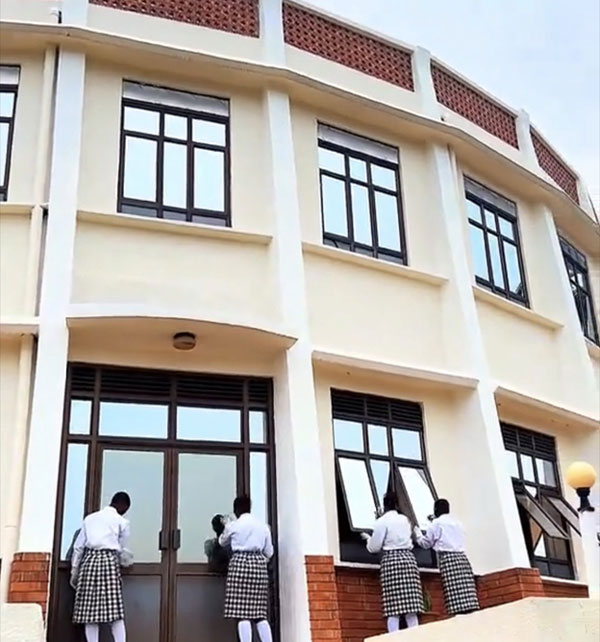
The preparation is not simply about the public ceremony. There are rules governing the royal household, traditional rituals and the behaviour expected of an Omukama.
The palace itself is also being prepared. Karuziika must move from being a mourning space to the centre of a new reign.
This is reflected in the treatment of the royal drums. After Oyo’s death, they were turned upside down.
When Nyabongo I is installed, they will be turned upright. The symbolism is simple. The mourning period is ending. The kingdom has a king again.
What will happen on Sept.28?
For those interested in Tooro’s traditional customs, the night before the public ceremony will be particularly important.
The king designate is expected to leave Rwengoma Palace and travel towards Karuziika. The journey will include a stop at Mugabante. There, he will participate in a traditional mock battle.
The ritual represents the king’s ability to overcome opposition before taking his place on the throne.
After the mock battle, he will proceed to Karuziika. He will enter through Omusanga, the palace’s main entrance, and be led to the throne.
Further rituals will take place inside the palace. Some are closely guarded traditions and will not be publicly explained.
The public will instead see the visible elements of the ceremony, including the procession, traditional performances and the eventual appearance of the new king.
The following morning will be more familiar to a wider audience. There will be a church service at St John’s Cathedral. Afterwards, the procession will move to Karuziika Palace.
There, Edward Rukidi Nyabongo I will be formally installed as Omukama of Tooro. Representatives of other traditional kingdoms, government officials, religious leaders, diplomats, members of Parliament, business leaders and academics have also been invited.
The ceremony is expected to attract large crowds in Fort Portal. Organisers have estimated the cost at about Shs925 million and have been raising funds to support the event.
Security has also been increased around key royal locations. For many people in Tooro, the ceremony will be an opportunity to witness a tradition that is rarely seen. For the royal family, it will mark the formal end of a difficult period.
The legacy of King Oyo
But even as the new king takes the throne, Oyo’s presence will remain. His 31-year reign was unusual by almost any measure.
He became king before he was old enough to understand what the title meant. He grew up in public.
He became a symbol of Tooro’s attempt to preserve its traditions while adapting to a modern Uganda.
His family has also discussed plans to preserve his legacy through several projects.
These include a King Oyo museum, an international stadium and a research and teaching hospital with a focus on cancer and HIV research.
His Bugaaki farm has also been considered for development as a centre for agricultural education and community outreach. The new king has indicated that projects associated with Oyo should continue.
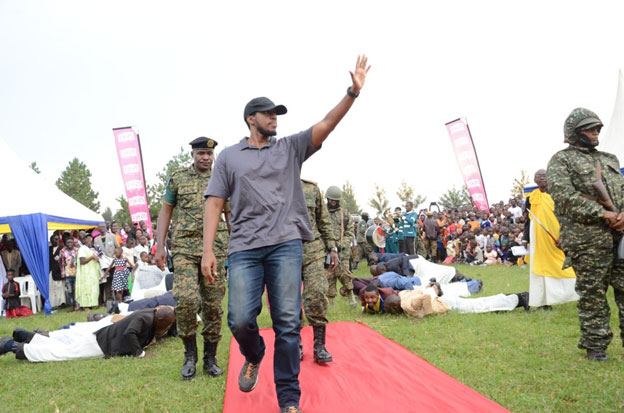
“The late King Oyo had accomplished a lot of good things,” Nyabongo has said. “All his great projects will not stop because he is not here. We shall take them on and develop them.”
That promise gives the new reign an immediate responsibility. It must honour the past while establishing its own identity.
The succession dispute has also left questions that cannot be answered by a coronation ceremony alone.
The royal family was divided over the identity of Oyo’s successor. His mother and sister questioned the selection of Kijanangoma and raised the issue of Oyo’s alleged son.
The Babiito clan and the Tooro Supreme Council proceeded with Kijanangoma’s selection. The government has recognised the process and allowed the installation to proceed.
The result is that Tooro now has a clearly designated new king. But the events of the past month have shown how closely tradition, family and modern law can intersect when a hereditary institution faces an unexpected transition.
Nyabongo I will therefore begin his reign with two inheritances. One is the cultural and historical weight of the Tooro monarchy. The other is the unfinished emotional and institutional business left by Oyo’s death.
Beyond the ceremony
On Sept.29, the focus will be on the throne. The cameras will follow the procession. The drums will sound. The new king will appear in royal dress. Guests will gather at Karuziika Palace.
There will be speeches, prayers and traditional rituals. For a few hours, the history of Tooro will be on display.
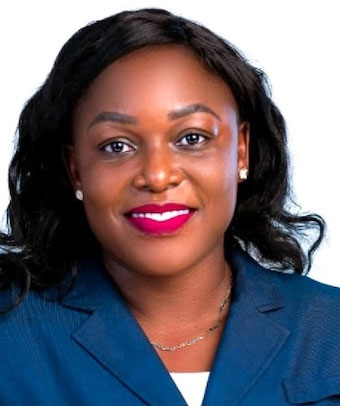
But when the crowds go home, the more difficult part of the transition will begin. Rebecca Amoding, the wife of Tooro’s king-elect Edward Rukidi Nyabongo I, will retain her official status as queen despite being from outside the kingdom.
However, her marriage to the new king does not automatically confer Tooro clan status on her or determine whether her children can inherit the throne, according to Babiito Clan spokesman Rev. Fr. Dr Charles Oyo.
Oyo says the king’s marriage to a woman from outside Tooro does not conflict with the kingdom’s traditions, but stressed that maternal clan lineage remains central to succession.
His clarification raises questions about the cultural status of any children born to Nyabongo I and Amoding who is from the Iteso ethnicity.
“She will be like any other wife of the king,” Oyo said on the sidelines of a press conference in Kampala on Sept.24.
He said the critical requirement for succession is that an heir must be born to a mother belonging to one of Tooro’s recognised clans. This could mean that, if he desires to do so, the new king may need to marry another woman from one of the recognised clans, or have a male child with a woman from one of the kingdom’s “sacred” clans, to ensure the child is eligible to inherit the throne.
Also, the Omukama has no executive authority over Uganda’s government. His influence comes instead from the cultural institution he represents and from the relationship between the royal house and the people of Tooro.
For Nyabongo I, that means building his own connection with a kingdom whose population is overwhelmingly young and whose future is being shaped by education, technology, business and migration.
He will also need to preserve the traditions that make the institution distinctive.
And, perhaps most importantly, he will have to help the kingdom move beyond the divisions exposed by the succession dispute.
The nine coffee berries thrown into Oyo’s grave at Karambi marked the passage from one reign to another.
But the transition is not complete simply because a new king has been named. It will be complete when the new king has begun to define his reign. For now, Fort Portal is waiting. The palace is being prepared.
The royal drums are waiting to be turned upright. The procession is being organised. The throne is ready.
And on Sept.29, Edward Rukidi Nyabongo I will step into it, beginning a new chapter in the long history of Tooro.