The Independent Uganda: You get the Truth we Pay the Price


SPECIAL REPORT | Behind a viral ice-cream moment in Moscow was a carefully assembled diplomatic gathering. Russia sought to deepen ties with African governments and institutions; African leaders, in turn, pressed for a partnership that delivers more than political declarations, Ronald Musoke reports.
Several African presidents picking up wrapped ice creams in a Moscow lobby provided one of the more unexpected images of the Third Russia-Africa Summit. The short video, filmed after a plenary session, circulated widely on the summit’s final day. It was an ordinary moment at an otherwise formal gathering — and an easy one to remember.
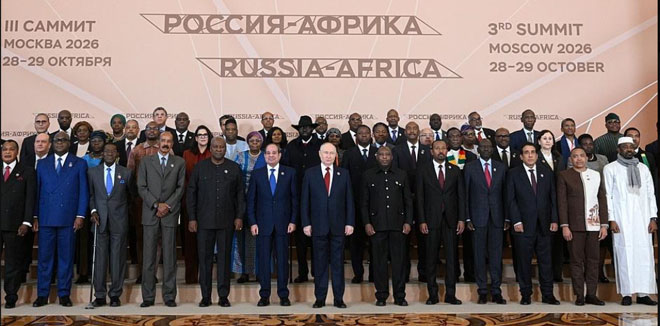
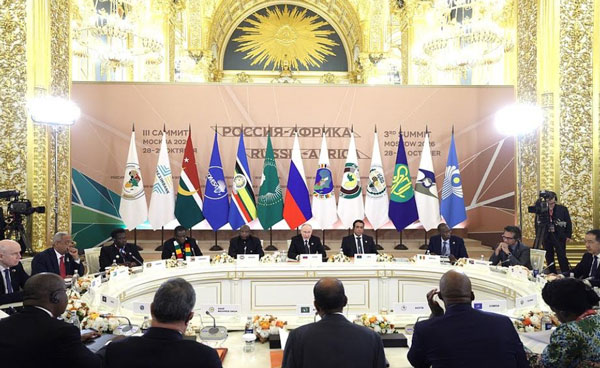
But the summit, held on Oct.28-29, was about considerably more than ice cream. At the Grand Kremlin Palace, Russian President Vladimir Putin, 74, was in good company as he hosted a carefully assembled group of African leaders and representatives of the continent’s major institutions. The choice of attendees, the bilateral meetings and the agreements signed alongside the main sessions pointed to a deliberate strategy: Moscow is seeking to strengthen its relationships not only with individual African capitals, but also with the organisations shaping the continent’s political and economic integration.
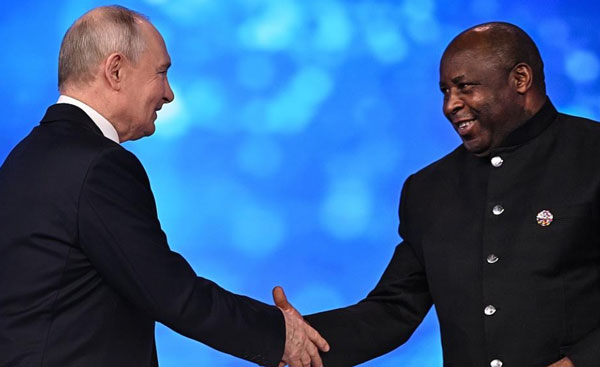
The gathering was co-chaired by Putin and Burundi’s President Évariste Ndayishimiye, who was also attending in his capacity as the current Chairperson of the African Union (AU). That dual role gave the summit an important continental dimension.
The attendance was broad. Representatives of almost 50 African countries took part, including heads of state and government and senior officials. In his closing remarks, President Putin said 21 African leaders had attended, alongside high-level delegations from the overwhelming majority of the continent’s states and the heads of virtually all leading African integration bodies.
Among the presidents were Egypt’s Abdel Fattah el-Sisi, Kenya’s William Ruto, Congo-Brazzaville’s Denis Sassou-Nguesso, Namibia’s Netumbo Nandi-Ndaitwah and Ethiopia’s Prime Minister Abiy Ahmed. Their presence brought together countries with different political priorities, economic interests, regional roles, and even geopolitical rivalries.
The institutional representation was just as significant. The summit included top leaders and representatives from the African Union Commission, the African Continental Free Trade Area (AfCFTA), the East African Community (EAC), the Common Market for Eastern and Southern Africa (COMESA), the Economic Community of Central African States (ECCAS), the Intergovernmental Authority on Development (IGAD), and the Southern African Development Community (SADC).
The summit was not simply a gathering of presidents for ceremonial speeches and photographs. Russia was engaging with the structures through which African countries coordinate trade, diplomacy and regional development. For Moscow, building relationships with these bodies offers a route to wider continental engagement. For African institutions, it provides another opportunity to attract partners and pursue cooperation across national borders. The question for observers, however, is whether the political warmth and institutional activity can translate into practical gains for African economies and the 1.3 billion African citizens.
A partnership with a political message
The summit was held under the theme: “For Peace, Security and Development,” and its central political message was the need for a multi-polar world in which African countries exercise greater influence and are not treated as subordinate to powerful states.
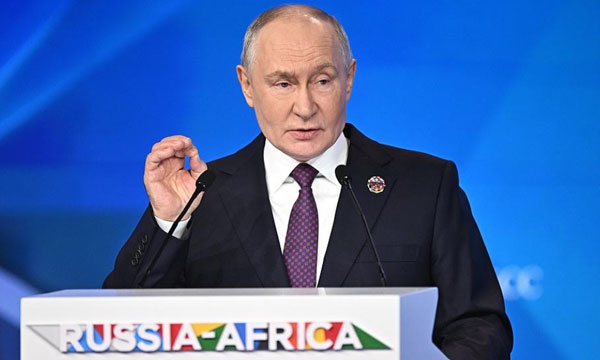
Putin presented Russia as a longstanding partner in Africa’s struggle against colonialism and in the continent’s pursuit of independence. He invoked the legacy of Tanzania’s first president, Julius Nyerere, recalling his words that “independence means relying on one’s own strength.”
Russia, Putin argued, supported African sovereignty and the right of countries to choose their own political and economic systems. He also backed calls for greater African representation in international decision-making, including permanent representation on the United Nations Security Council and a stronger voice in international financial institutions.
The message resonated with a longstanding African demand, which is that the continent should have greater influence over decisions affecting its people, economies and security. But the language of sovereignty and equality also serves Russia’s wider diplomatic interests. Moscow is seeking partners at a time of strained relations with Western governments and growing competition over global influence.
The summit’s final declaration reinforced this political alignment. Adopted on Oct. 29, it reaffirmed the principles of the UN Charter, sovereign equality, territorial integrity and non-interference in the internal affairs of states. It also called for a more balanced international order and opposed what it described as contemporary forms of colonialism.
For African leaders, these principles are familiar and important. The challenge is ensuring that they apply consistently in practice, including in relations with powerful partners. President Ndayishimiye used his position as AU Chairperson to reiterate Africa’s desire to diversify its partnerships and strengthen its own capacity. He welcomed the summit’s political declaration and the new Russia-Africa Partnership Forum Action Plan for 2027–2029, describing the plan as an operational framework for the next three years. But he also made clear that political solidarity alone would not be enough.
“Africa’s young people are dynamic and demanding, and they expect tangible results from the implementation of these documents,” he said. They want scholarships, more ambitious energy initiatives and digital solutions, he added.
His message was direct: the Russia-Africa relationship needs to produce visible improvements in people’s lives. “Russian investors should come to Africa and invest there to help us,” he said. “We must work together to build mutually beneficial cooperation.”
Ndayishimiye also called for a shift away from a relationship centred largely on the exchange of commodities. Africa, he argued, needs greater value addition, stronger regional value chains, transport links, healthcare cooperation and technology transfer. The objective should be creating a partnership that supports industrial development rather than simply expanding trade in raw materials.
That emphasis on implementation was one of the summit’s most important themes. It was also a reminder that African leaders are not approaching external partnerships as passive recipients. They have their own priorities and are increasingly seeking arrangements that support regional integration, economic transformation and greater control over strategic resources.
The regional institutions matter
The participation of African integration bodies was among the clearest signs of Russia’s diplomatic approach. The summit’s official account said cooperation frameworks were signed with the EAC, the AfCFTA Secretariat, COMESA, the AU Commission, ECCAS and SADC. These organisations operate across different regions of the continent and cover a wide range of priorities, from trade and customs cooperation to political coordination and regional development. Engaging them gives Russia access to conversations that extend beyond one bilateral relationship. It also allows Moscow to present itself as a partner in Africa’s broader integration agenda.
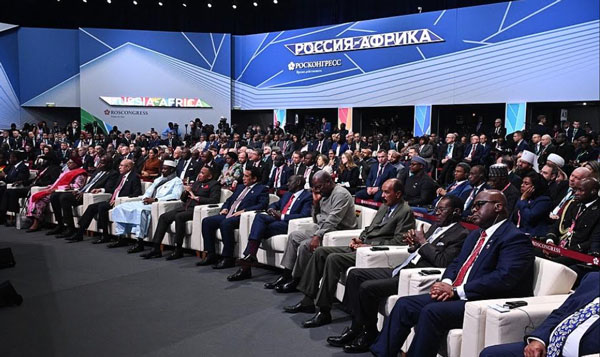
The AfCFTA, in particular, represents an ambitious effort to create a single continental market. Cooperation with its Secretariat could offer Russia a channel for discussing trade rules, market access and commercial opportunities across a wider African market. The regional economic communities, meanwhile, are important to the practical work of connecting economies and reducing barriers between neighbouring countries.
The summit also brought African regional organisations into discussions with representatives of the Eurasian Economic Union (EAEU) and the Commonwealth of Independent States. Putin described closer alignment between African and Eurasian integration processes as an opportunity to increase trade and investment.
Russia’s own economic bloc offers preferential tariff arrangements to African exporters. Putin said 47 African countries are eligible for the EAEU’s tariff preferences, with customs duties reduced to zero for 32 of them. The proposal is attractive in principle: African producers could gain better access to markets beyond the continent. But the value of such arrangements will depend on whether businesses can use them, whether trade flows become more balanced and whether African countries can expand the range of goods they export.
The agreements signed at the summit were extensive. The Kremlin puts the total at approximately 150 bilateral and multilateral documents. These included agreements to establish intergovernmental commissions with Kenya, the Democratic Republic of the Congo, Niger, Senegal and South Sudan. Intergovernmental cooperation agreements were also signed with Mali, Namibia, Nigeria, Uganda, the Central African Republic and Ethiopia.
The subjects covered included science and technology, higher education, healthcare, transport, agriculture, road infrastructure, information and communications technology, nuclear energy and other areas. Three main documents were adopted: the Moscow Declaration, a declaration on cooperation in the civilian application of artificial intelligence, and the Russia-Africa Partnership Forum Action Plan for 2027–2029.
The number of agreements suggests a busy diplomatic process. But the real test will be whether they lead to funded projects, functioning institutions and measurable benefits. A signed document is a starting point, not proof that a project will be delivered.
Trade, food and investment
Economic cooperation was central to Putin’s pitch. He said Russia’s trade with African countries had exceeded US$27 billion in the previous year, representing a 50% increase since the last Russia-Africa summit in 2023.
He also said 85% of financial settlements in Russia-Africa trade were being conducted in national currencies, including the Russian rouble. This, he argued, would make commercial relations less vulnerable to external financial pressures.
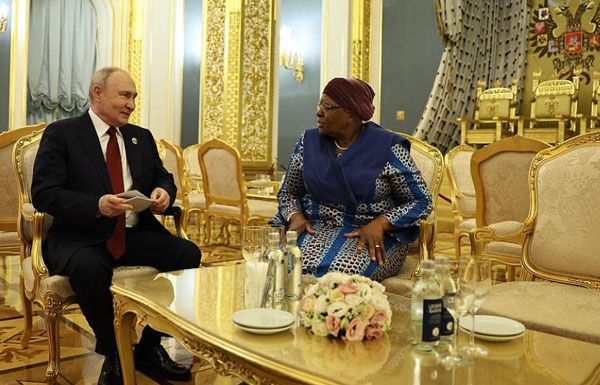
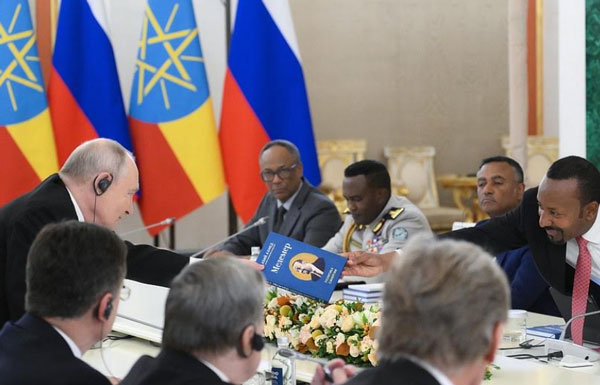
Food and fertiliser supplies featured prominently. Putin said Russia had supplied more than 18 million tonnes of grain to Africa in 2025 and another 13 million tonnes in the first nine months of 2026. Russian exports of mineral fertilisers, he added, had reached approximately 1.5 million tonnes in 2025 and exceeded 2.2 million tonnes in 2026 by the time of the summit.
Putin also promoted Russian involvement in energy, mining, logistics, digital services, healthcare and education. He said almost 40,000 African students were studying at Russian universities and that more than 300,000 had graduated over the last 60 years. For the 2026–2027 academic year, he said, the scholarship quota had been increased by 5,500 places.
These are significant areas of potential cooperation. Yet the economic relationship remains a test of whether political goodwill can be converted into broader industrial and productive capacity in Africa. Increased trade is welcome, but its value to African economies depends on what is being traded, how much value is created locally and whether investment supports jobs, skills and technology transfer.
President Ndayishimiye’s call for Russian investors to come to Africa was therefore important. He was asking for more than purchases of African commodities or the sale of Russian goods. He wanted investment that could help build industries and strengthen regional supply chains.
Bilateral deals, different priorities
The summit’s bilateral meetings also offered a closer look at how countries are pursuing their own interests within the wider partnership. Kenya’s President William Ruto held talks with Putin on trade, agriculture, education and international affairs. Putin said trade turnover between the two countries had almost doubled between January and August 2026, with increased supplies of Russian agricultural products. He also highlighted fertiliser exports and the allocation of 70 state scholarships for Kenyan students in civilian fields for the following year.
Ruto, in turn, stressed the longstanding relationship between the two countries. He noted that Russia had been the second country to recognise Kenya’s independence and referred to the history of diplomatic relations dating back to 1963.
The discussions reflected Kenya’s interest in expanding commercial ties while maintaining its wider diplomatic relationships. The two sides also signed documents aimed at strengthening cooperation, including the establishment of an intergovernmental commission. For Kenya, the key issue will be whether the talks translate into a more diversified trading relationship and practical investment.
Ethiopia’s Abiy Ahmed discussed energy, agriculture, industrial cooperation, science, healthcare and education with Putin. Putin said bilateral trade had exceeded US$1.3 billion between January and September 2026, more than double the total for the whole of 2025.
Prime Minister Abiy placed particular emphasis on nuclear cooperation. He called for dates to be set for feasibility work and for discussions on financing, while also stressing the need to train Ethiopian engineers and regulators. He said cancer diagnosis and treatment should become a practical priority within nuclear cooperation. The exchange illustrated the scale of the ambitions being discussed, but also the practical questions that major energy projects raise: financing, technical capacity, regulation and long-term sustainability.
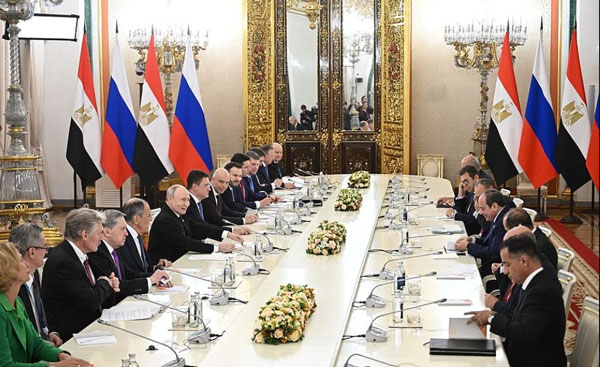
Egypt’s el-Sisi also focused on nuclear energy. The flagship project is the El Dabaa Nuclear Power Plant, which Putin said was progressing according to schedule. President El-Sisi described it as the most significant undertaking in the bilateral relationship and said Egypt wanted to meet its payment obligations and maintain the project timetable.
The Egyptian president also raised possible cooperation on additional power units after 2030, a research reactor, a testing centre and small modular reactors. The discussions show how nuclear energy has become a major component of Russia’s economic engagement with Africa, although projects of this scale require substantial financing and long-term commitments.
For Congo-Brazzaville, President Denis Sassou-Nguesso emphasised the need to turn agreed objectives into action. Putin referred to a plan for comprehensive cooperation for 2026–2028, following the eighth meeting of the two countries’ intergovernmental commission in Brazzaville.
President Sassou-Nguesso said the commission had helped give fresh impetus to cooperation and that the two sides had agreed on specific measures and goals. He made a point that went to the heart of the summit’s wider challenge: “You have identified specific goals, and now we must work towards achieving them.”
Namibia’s President Netumbo Nandi-Ndaitwah, who celebrated her birthday during the summit, discussed opportunities in mining, agriculture, fisheries and information and telecommunications. Putin acknowledged that trade between the two countries remained modest and said there was room for growth. He proposed that the intergovernmental commission focus on specific areas to produce practical results.
Uganda’s agreement
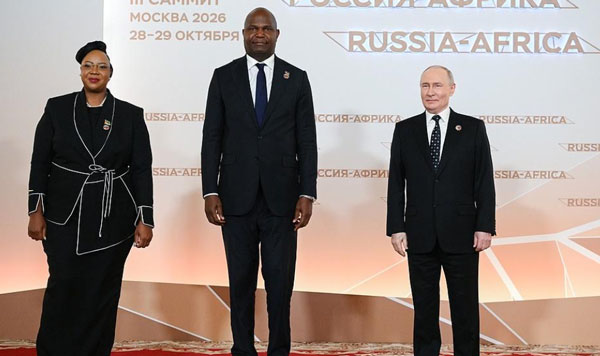
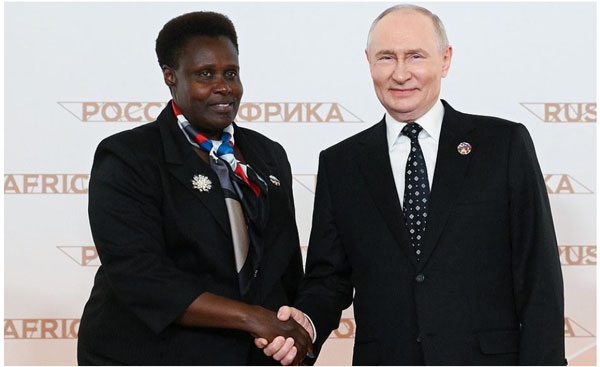
Uganda, which was represented by Vice President Jessica Rose Epel Alupo, was among the countries that concluded a bilateral agreement with Russia during the summit. The two governments signed an agreement allowing holders of diplomatic and service passports to travel between them without visas.
The agreement was signed in Moscow on the sidelines of the summit by Uganda’s Minister of State for Foreign Affairs, Haruna Kyeyune Kasolo, and Russia’s Deputy Minister of Foreign Affairs, Georgy Borisenko.
It is intended to ease travel for government officials, diplomats and public servants undertaking official business, and to create more favourable conditions for official visits between Kampala and Moscow. The exemption will enter into force 30 days after both governments complete their internal procedures and notify each other through diplomatic notes.
The difficult and unanswered questions
Yet, for all the summit’s emphasis on friendship, sovereignty and mutual benefit, the relationship also faces difficult questions. One of the most sensitive concerns involves reports that thousands of African nationals have been recruited to fight in Russia’s war against Ukraine after being promised civilian employment or other opportunities.
Amnesty International raised the issue directly before the summit. In an open letter dated October 27, 2026, the organisation urged African leaders attending the Moscow meeting to raise the alleged recruitment and trafficking of African nationals with Russian authorities.
The letter referred to Amnesty’s September 10 briefing, titled, “Russia: Trafficking of Foreign Nationals to Fight in Ukraine.” It described testimonies from African and other foreign nationals who said they had travelled to Russia after being promised well-paid civilian work or the prospect of citizenship, only to find themselves recruited into the military and sent to the front line. It also referred to migrants and refugees in Russia who were allegedly pressured or coerced into military service.
Amnesty argued that some of the reported practices could amount to human trafficking under international law. It called on African governments to demand that Russia stop recruitment practices involving deception and exploitation, investigate alleged abuses and protect the rights and safety of foreign nationals. The organisation’s warning to African leaders was pointed: “For you as African leaders, silence on this issue would be a profound disservice to the people of your countries.”
The issue presents an uncomfortable test for a partnership built around sovereignty and respect. African governments have a responsibility to protect their citizens abroad, including those who migrate in search of work and opportunity. They also have a responsibility to raise concerns when their nationals may be exposed to exploitation.
But the Moscow Declaration does not address the allegations in detail. That absence, on its own, does not establish whether the matter was raised in private discussions. But the concerns deserve attention beyond the summit, particularly from governments whose citizens may be affected.
There are other questions too. Russia’s trade figures and investment claims need to be judged not only by their headline value but by the actual benefits they deliver. African countries need to know whether projects will create local jobs, develop skills, support domestic industries and strengthen infrastructure. They also need clarity on financing, technology transfer and the terms attached to major projects.
The same applies to security cooperation. Putin said Russia had concluded intergovernmental agreements on military and military-technical cooperation with 45 African countries. Such arrangements may meet real security needs, but they should be assessed against the priorities of African governments and institutions, including the African Union’s emphasis on African-led solutions to the continent’s conflicts.
From declarations to delivery
The Moscow summit ended with a commitment to continue regular Russia-Africa meetings. The new Partnership Forum Action Plan, running to 2029, is intended to provide a framework for turning the political commitments into programmes and projects.
President Ndayishimiye’s closing remarks offered a useful measure of what should come next. He said the partnership needed to combat technological dependence, promote innovation, strengthen African initiatives and create greater added value. He also stressed that young Africans expected tangible outcomes, not simply declarations.
That is the standard by which the summit should be judged. Russia has made a determined effort to deepen its presence in Africa through political engagement, trade, education, energy and security cooperation. The decision to bring together national leaders and continental and regional institutions in Moscow showed that its approach is not confined to individual bilateral relationships. It is also an attempt to establish a more durable place in Africa’s diplomatic and economic landscape.
African governments, meanwhile, have their own reasons for engaging Moscow. They want more options, investment, access to markets, technology, training and support for their development priorities. They are entitled to pursue those interests while holding all partners to the same standards of transparency, accountability and mutual benefit.
The ice-cream video may have provided the summit’s most memorable image to millions of Africans, but analysts The Independent talked to for this article say, the more important story lies in the agreements signed, the priorities raised and the expectations set out by African leaders. The real measure of the Moscow summit will not be the warmth of the reception, or the number of documents exchanged. It will be whether the promises produce investment, jobs, infrastructure, skills and stronger African economies.