The Independent Uganda: You get the Truth we Pay the Price


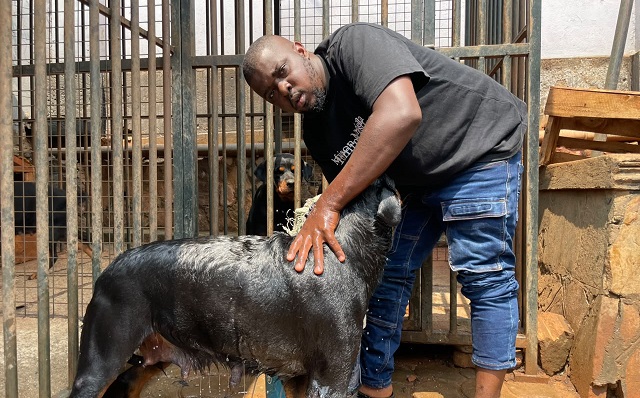
Kampala, Uganda | THE INDEPENDENT | By the time most people are waking up in Buwate, a bustling suburb of Kampala, Sharif Ssemwanga is already with his four-legged companions. They are more than pets or guard dogs. They are the foundation of a business that has earned him the nickname “Uncle Dogs’ and turned him into one of Uganda’s best-known dog breeders.
For Ssemwanga, dog keeping is not simply about breeding puppies for sale. It is a lifestyle built on patience, discipline and an unwavering love for animals.
“I cannot miss a day without touching a dog,” he told The Independent. “My two dogs even wake me up every morning by knocking on my bedroom window.”
Today, he manages about 60 dogs and dreams of expanding his kennel to 1,000 in the coming few years. His ambition also includes developing a four-acre canine centre in Kalagala, Luwero District, where dogs can be bred, trained and showcased to visitors from across Uganda and beyond.
From a boy who picked stray dogs off Kampala’s streets to a businessman supplying some of the country’s most influential people, Ssemwanga’s journey shows how an unusual passion can become a rewarding enterprise.
Humble roots
Born in 1994 on Mawanda Road and raised in Kamwokya, Ssemwanga grew up in a Muslim family. His childhood home stood behind Kampala Animal Clinic, exposing him to dogs almost every day.
“I was born in a place surrounded by dogs. Our home was behind the animal clinic and interacting with them became a hobby. From that time, I developed a strong relationship with dogs,” he said.
His business journey started almost by accident in 2009 when a British expatriate living on Kanjokya Street gave him a German shepherd.
That single dog changed his life.
He later sold it to musician Robert Kyagulanyi Ssentamu, popularly known as Bobi Wine, for Shs800,000. Although he shared half of the money with his aunt, the experience convinced him that dog breeding could become a business.
“I was like, this is a business,” he recalled.
Like many young entrepreneurs, however, success did not come overnight.
“After getting money, I ate all the money and got finished,” he said with a laugh.
Determined to start again, he picked up three stray dogs from Kifumbira in Kamwokya and slowly rebuilt his dream.

Business passion
Although Ssemwanga holds diplomas in water engineering and solar installation, he chose to pursue his passion for dogs instead of following a conventional career.
He insists that anyone hoping to succeed in dog breeding must first love animals.
“If you don’t love dogs as a hobby, you cannot make money in dogs because dogs cannot produce every day, but they have to eat every day,” he told The Independent.
That philosophy has shaped his business.
Besides breeding dogs, he offers grooming, cleaning and training services. In his early years, grooming alone earned him about Shs10,000 per dog, helping sustain the business while he expanded his breeding programme.
As demand increased, his client list grew to include football coach PK Bbosa, businessman Godfrey Kirumira, entrepreneur Sudhir Ruparelia, the Kasiwukira family, businessman Innocent Muhoozi and many other dog enthusiasts.
His reputation also led to a partnership with fellow breeder Martin Ssebunya, who imported dogs and entrusted their care to him.
Together, they organised dog walks and later launched an annual dog festival in 2022, creating a platform where breeders and dog lovers could interact, market their animals and exchange knowledge.
Popular breeds
Uganda’s appetite for quality dogs has grown significantly in recent years, driven by rising urbanisation, concerns over home security and an increasing appreciation of pets as companions.
According to Ssemwanga, the German shepherd remains the country’s most popular breed because of its intelligence, loyalty and ability to provide both security and companionship.
A pure German Shepherd puppy typically sells for about Shs750,000, although prices can reach Shs1.2 million depending on pedigree.
Belgian Malinois are also becoming increasingly popular, particularly among security agencies because of their intelligence, discipline and work ethic.
Rottweilers remain attractive to buyers looking for powerful guard dogs, provided they receive proper training and socialisation from an early age.
For families with children, Ssemwanga recommends smaller, friendlier breeds such as Maltese, while premium breeds including Golden Retrievers can fetch up to Shs3 million per puppy.
He also keeps an eye on emerging trends, noting that rare breeds such as the Tibetan Mastiff and the Kangal are attracting growing interest despite their high prices and demanding temperament.
For first-time dog owners, however, his advice is simple.
“I always recommend the German Shepherd. It is easier to manage, very loyal and gives you both security and companionship,” he said.


Costly venture
Behind every healthy puppy is a considerable investment.
Feeding, vaccinations, veterinary care and maintaining quality breeding stock require substantial financial commitment.
Ssemwanga currently manages around 60 dogs, although at one stage he cared for as many as 80 animals with support from friends who supplied rice and meat to help meet feeding costs.
Pure breeding dogs imported from Europe can cost between Shs12 million and Shs15 million each, making quality genetics one of the biggest investments in the business.
Disease prevention is equally critical.
Parvovirus remains one of the greatest threats to puppies, while routine rabies vaccinations are essential for both animal and human safety.
“For any breeder to succeed, vaccination is key. It can start from about Shs50,000 per puppy depending on your relationship with the veterinary doctor,” he said.
According to him, puppies should begin vaccination at about five weeks of age to improve their chances of survival.
Years of working with dogs have left visible bite scars on his body, but he says he has avoided serious health complications because his animals are routinely vaccinated.
Bigger dreams
Far from slowing down, Ssemwanga is expanding.
He now operates a breeding farm in Kalagala, Luwero District, while working towards establishing what he describes as a “zoo for dogs” on four acres of land.
His long-term goal is to increase his kennel from 60 dogs to 1,000 by 2030 and create employment for at least 20 people.
“I want to own like a thousand dogs,” he told The Independent. “The space I have is now little, so I am saving money to buy more land.”
His entrepreneurial spirit has also inspired him to introduce one of Uganda’s first funeral services for dogs, recognising that many owners increasingly regard their pets as members of the family.
“If a dog is part of the family members, when it dies, you call me,” he said. “I’ve just opened up a place where to bury dogs.”
Despite the growing market, Ssemwanga believes Uganda’s dog breeding industry still has enormous untapped potential.
He argues that breeders need to work together more closely to benefit from government support and professionalise the sector.
“Government can help us, but we are not cooperative,” he said. “There is no way the government can help you without coming together as a group.”
He also encourages aspiring breeders to be patient and disciplined rather than chasing quick profits.
“If you can, do your thing alone. And you have a plan. And you have a dream. You can push it alone,” he said.
As more Ugandans embrace dogs for companionship, security and even lifestyle, Ssemwanga believes demand will continue rising.
For anyone looking for a loyal family companion, a reliable guard dog or professionally bred puppies, Uncle Dogs has built a reputation founded on experience, quality breeding and genuine passion.
For Sharif Ssemwanga, every wagging tail is proof that what started as a childhood hobby has become a thriving business—and one that still has plenty of room to grow.