The Independent Uganda: You get the Truth we Pay the Price


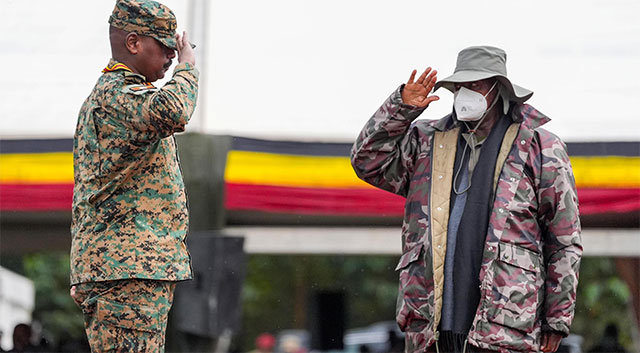
COMMENT | DR JUDE KAGORO | In Uganda, power does not merely reside in State House, Parliament, or the Constitution. It circulates through symbols, networks, uniforms, proximity, and perception. Some individuals command authority not because they formally hold office, but because society has already invested them with what Pierre Bourdieu would call symbolic and socio-political capital — the kind of legitimacy that appears natural, unquestionable, and deeply embedded within the political culture itself. In Uganda’s case, few institutions produce this capital more effectively than the military.
To understand how Gen. Muhoozi Kainerugaba’s influence took shape, it helps to see the “Muhoozi Project” not as a narrow succession plot but as a broader strategy for building durable legitimacy. The project represented a deliberate, long-term effort to accumulate authority through military professionalism, careful elite engagement, strategic public visibility, and a nuanced grasp of political psychology. Muhoozi seemed to understand early that lasting authority in Uganda depends less on formal titles than on shaping national imagination and earning institutional trust. By the time General David Sejusa warned publicly in 2013, many of those foundations were already embedded in the country’s political landscape.
At the time, however, many dismissed Sejusa’s claims. His complicated and often unstable relationship with President Yoweri Museveni made him appear unreliable to sections of the political class. To many observers, his allegations sounded exaggerated, perhaps even paranoid. Yet from my own study of Uganda’s civil-military relations during my PhD research, I had already concluded as early as 2009 that Muhoozi Kainerugaba was already being structurally positioned for the presidency. I vividly remember debating this argument with former colleagues at Makerere University, including Dr Paddy Musana, Dr Alex Nkabahona, and others, many of whom felt I was overstretching the evidence.
To understand Muhoozi’s rise, one must first understand Uganda’s political architecture. Since the late 1960s, when Obote enabled the military to acquire political significance, the Ugandan state has been profoundly shaped by militarized legitimacy. Military rank, combat history, uniforms, and proximity to the security establishment evolved into what Bourdieu would describe as ‘legitimate culture’ – socially recognized markers of authority that command instinctive respect. In Uganda, the military is not merely a security institution; it is also a producer of political value and social prestige. Association with it generates trust, influence, discipline, and access to elite networks. President Museveni refined this architecture with remarkable strategic foresight by steadily building a professional liberation force from the FRONASA years of the 1970s through the NRA of the 1980s and 1990s into today’s UPDF, a foundation upon which Muhoozi’s political and institutional stature has naturally emerged.
These dynamics also help explain why Bobi Wine’s initially inflated political momentum rapidly lost some of its earlier force once the excitement of populist mobilization encountered the deeper realities of Uganda’s power structure, whereas Dr Kizza Besigye remained politically consequential for much longer because his own historical association with the bush war, the military establishment, and the founding networks of the NRM gave him a form of symbolic legitimacy that could not easily be dismissed and which still retains resonance within sections of Uganda’s political spectrum today.
Muhoozi appears to have understood this logic exceptionally well. For years, he cultivated ambiguity. He remained simultaneously visible and elusive – close enough to power to signal importance, yet distant enough to preserve mystery. This strategic ambiguity reflects a sophisticated management of symbolic capital. By limiting overexposure, he allowed public curiosity, elite speculation, and political mythology to grow around him. One figure who has mastered this circulation of power through controlled visibility is General Salim Saleh, whose influence in Uganda often operates through silence, informal networks, and carefully sustained mystery. Most Ugandans encounter Saleh less through direct public engagement than through stories, rumours, and elite whispers, a phenomenon that paradoxically magnifies his perceived authority. As Robert Greene argues, excessive familiarity diminishes authority because people eventually normalize and demystify you. Mystery, by contrast, magnifies power. Muhoozi rarely openly declared presidential ambitions in the early years, but his silence itself became politically productive. Ugandans kept guessing, and in politics, uncertainty often generates more power than certainty.
By around 2020, however, the ambiguity gradually transformed into clearer political signalling. Muhoozi’s tweets, public engagements, military reorganizations, and expanding networks increasingly suggested deliberate positioning for national leadership. Interestingly, before this shift became explicit, ordinary citizens had already begun constructing a political mythology around him. One striking example was Mugasha Gilbert, commonly known as Jomo, who created a WhatsApp group titled Uganda’s Next President and used Muhoozi’s image as the group profile picture. At the time, Muhoozi was not publicly involved in such mobilization, nor was Jomo known to be part of his inner circle. Yet the group grew rapidly and organically, especially during a period when few WhatsApp spaces existed for serious political discussion. This demonstrated that the idea of Muhoozi’s future leadership had already begun circulating within the public imagination long before formal declarations emerged.
Today, Muhoozi occupies a peculiar political position. He often communicates through humor, sarcasm, and seemingly casual tweets, yet behind that performative informality lies considerable institutional authority. He has reorganized the military establishment, consolidated networks of loyalty, and emerged as one of the most consequential political actors in Uganda. Increasingly, political elites pay close attention to his statements, interpreting them as signals of future political direction.
Recently, I attended a social gathering attended by several former ministers and retired generals. What fascinated me was not merely the content of their speeches, but the consistent effort by nearly all speakers to associate themselves with Muhoozi, even when the subject matter had little to do with him. Remarkably, Muhoozi himself was absent from the event. Yet his symbolic presence dominated the room.
This is where Michel Foucault’s idea of the panopticon becomes particularly useful. Foucault argued that power becomes most effective when individuals internalize surveillance — when people behave as though they are constantly being watched, even in the absence of the observer. Muhoozi’s political presence increasingly functions in precisely this way. Politicians now speak and act as though his gaze is permanently upon them. Loyalty must constantly be signalled, even when he is physically absent.
The behavior of former speaker Anita Annet Among also reflects this emerging political reality. I am told she has been working hard to remain in Muhoozi’s good books, illustrating how political actors increasingly orient themselves toward what they perceive to be the next center of power. This is how symbolic capital reproduces itself: once enough elites begin acting as though a future authority is inevitable, that inevitability itself starts acquiring political force.
One important factor often overlooked is that Muhoozi was born and socialized within the inner architecture of state power itself. Unlike many political actors who are overwhelmed by proximity to authority once they ascend, power is unlikely to shock or psychologically destabilize him because he has operated around it his entire life. He understands its language, rituals, insecurities, and networks almost instinctively. Increasingly, even many opposition figures appear to engage with Uganda’s political future as though Muhoozi’s eventual presidency is not merely possible but structurally probable. In private conversations, public rhetoric, and elite behavior, there is a subtle but growing subconscious acceptance that he already represents the next major center of power in Uganda.
Muhoozi is already presidential, and the most important development is that a significant section of Uganda’s political elite already behaves as though his authority is unavoidable. And in politics, perception is often the first stage of reality.
*****
 Dr. Jude Kagoro | Institute for Intercultural and International Studies | Bremen University, Germany