The Independent Uganda: You get the Truth we Pay the Price


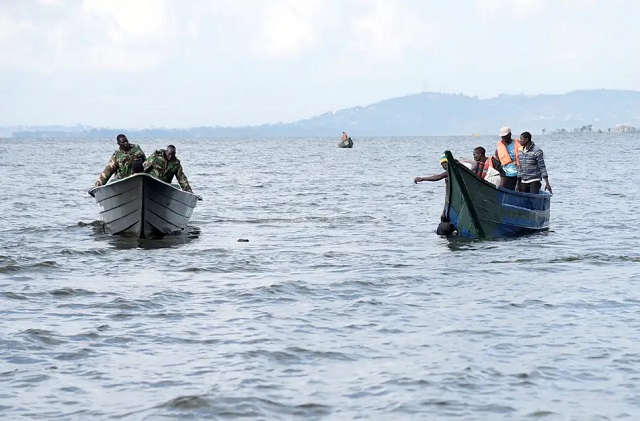
The corporation is investing in resilience, source protection, and sustainable water management
SPECIAL FEATURE | JULIUS BUSINGE | Uganda’s National Water and Sewerage Corporation (NWSC) is increasingly positioning itself at the frontline of the country’s response to climate change as environmental degradation, prolonged droughts, flooding, and rapid urbanisation place mounting pressure on national water resources.
For years, climate variability has disrupted water availability across several parts of Uganda, affecting rivers, wetlands, lakes, and underground aquifers that support millions of households, farms, and industries. Rising temperatures, shifting rainfall patterns, and growing human encroachment on fragile ecosystems have further complicated water abstraction, treatment, and distribution systems, raising both costs and operational risks for utilities.
Against this backdrop, NWSC, one of Uganda’s largest public utilities, says the protection of water sources has now moved from an environmental consideration to a central pillar of its long-term survival and service delivery strategy.
The corporation currently provides water services in 287 towns and sewerage services in 18 towns, reaching approximately 20 million people across the country. Under its Strategic Plan 2025 to 2030, NWSC aims to extend coverage to about 26 million Ugandans over the next five years while simultaneously strengthening environmental sustainability and climate resilience across its operations.
The utility’s evolving environmental agenda reflects a growing institutional recognition that climate change is no longer a distant risk but a present and intensifying operational challenge shaping water security nationwide.
Climate pressure and a fragile resource base
Uganda is often described as a water-rich country, endowed with major lakes, rivers, wetlands, and groundwater systems. But that abundance is increasingly deceptive. In practice, the country’s water systems are under strain from both climatic and human pressures that are reshaping availability and quality.
In recent years, rainfall patterns have become more erratic, with some regions experiencing prolonged dry spells while others face sudden flooding events. These fluctuations disrupt raw water abstraction and increase the cost of treatment. Higher temperatures also accelerate evaporation and affect reservoir stability in certain catchment areas.
At the same time, environmental degradation has intensified. Wetlands are being encroached upon for settlement and agriculture, forests in catchment zones are being cleared, and soil erosion is increasing sediment loads in rivers and lakes. Informal urban growth has further complicated the situation, with settlements expanding into buffer zones that were previously natural filters for water systems.
For NWSC, these trends translate into higher operational costs, reduced raw water quality in several locations, and increased vulnerability of supply systems to climatic shocks. The utility increasingly describes these pressures as structural rather than temporary, requiring long term adaptation rather than short term fixes.
Source protection as operational strategy
NWSC now argues that sustainable water supply begins with protecting the country’s natural water sources. This marks a shift from a purely infrastructure driven approach to one that integrates environmental stewardship into core utility operations.
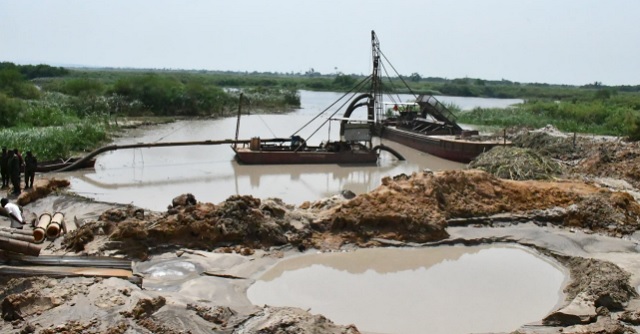
The corporation has identified environmental degradation, wetland destruction, deforestation, pollution, soil erosion, and unregulated human activity in catchment areas as some of the most significant threats to reliable water supply.
According to its environmental strategy, lakes, rivers, streams, and wetlands are increasingly under pressure due to rapid urbanisation and population growth. In response, NWSC has expanded source protection and micro catchment restoration programmes in several regions, including Arua, Gulu, Mbale, and Bushenyi.
These interventions include restoration of degraded buffer zones, tree planting in catchment areas, stabilisation of riverbanks, erosion control measures, construction of small scale check dams, and soil conservation initiatives aimed at reducing sedimentation in raw water sources.
Beyond technical interventions, the corporation has also invested in community engagement. Awareness campaigns and participatory programmes are encouraging local involvement in environmental protection, particularly through tree planting and catchment stewardship activities involving schools, youth groups, and local communities. The aim is to embed long term behavioural change alongside physical restoration.
NWSC says these initiatives are designed not only to improve water quality but also to strengthen the long term reliability and sustainability of water supply systems.
Infrastructure expansion under climate constraints
Climate pressures have also accelerated NWSC’s investment in infrastructure designed to withstand changing environmental conditions.
The corporation notes that shifting weather patterns and rising water demand require systems capable of operating efficiently under both prolonged dry seasons and extreme rainfall events.
Over the past five years, NWSC has delivered several major water and sewerage infrastructure projects across the country. Among the most significant is the Katosi Water Treatment Plant, which produces up to 160 million litres of water per day, significantly boosting supply to the Greater Kampala metropolitan area.
Other key investments include the Nakivubo Wastewater Treatment Plant and the Kinawataka pre treatment and lifting station, both of which are designed to reduce pollution loads entering Lake Victoria and improve urban sanitation outcomes.
Outside the capital, NWSC has expanded water supply systems in rapidly growing towns and municipalities such as Gulu, Hoima, Sembabule, Kyankwanzi, Bushenyi, and Kalungu. These projects reflect Uganda’s ongoing urban transition and the increasing demand for reliable water services in secondary cities.
Wastewater management has also become a growing priority. The corporation currently treats approximately 40 million litres of wastewater daily through a combination of centralised and decentralised sewerage systems operating across different towns. This is increasingly seen as critical not only for sanitation but also for environmental protection and public health.
Strategic direction and climate integration
NWSC’s climate and environmental agenda is embedded in its broader Strategic Plan 2025 to 2030. The strategy is anchored on the vision of “Water for All, for Health, and Prosperity” and explicitly recognises climate change as one of the most significant risks to future service delivery.
The plan prioritises environmental protection alongside infrastructure expansion, operational efficiency, improved customer service, and financial sustainability. Within this framework, climate resilience is treated as a cross cutting requirement rather than a standalone programme.
According to NWSC, climate change has intensified operational risks through prolonged droughts, flooding, and degradation of water catchment areas, making source protection a critical investment priority.

The corporation is also mobilising financial resources to develop climate resilient infrastructure using mixed technology systems, including decentralised water supply solutions capable of withstanding variable weather conditions. It also plans to scale up successful pilot environmental projects to other operational areas across the country.
NWSC Managing Director, Silver Mugisha, has consistently emphasised that modern water utilities can no longer focus solely on engineering and distribution systems without integrating environmental sustainability and climate resilience into core operations.
The corporation’s sustainability agenda aligns with Uganda Vision 2040 and the United Nations Sustainable Development Goals, particularly those relating to clean water and sanitation, climate action, and ecosystem protection.
Financial and operational constraints
Despite progress, NWSC continues to face significant financial and operational challenges that could affect the pace of its climate and infrastructure agenda.
Environmental conservation and climate adaptation projects require substantial and sustained investment. However, the corporation continues to grapple with delayed government funding, unpaid water bills, and rising infrastructure costs.
Parliamentary reports have previously indicated that unpaid government water bills exceeded Shs 116 billion, placing pressure on cash flow and limiting the utility’s ability to finance expansion and maintenance programmes.
Operational inefficiencies also remain a challenge. Illegal connections, vandalism of infrastructure, and non revenue water losses continue to undermine efficiency and reduce potential revenue.
To address these constraints, NWSC has strengthened engagement with government ministries, expanded public private partnership initiatives, and secured support from development partners including the World Bank and the French Development Agency. These partnerships are helping to finance water infrastructure expansion, sanitation systems, and environmental sustainability initiatives.
However, the financing gap for long term climate adaptation remains significant, particularly as such investments are increasingly required as permanent components of utility operations rather than one off projects.
Future outlook: water as climate infrastructure
Looking ahead, NWSC argues that protecting water sources is fundamental to Uganda’s long term social and economic development. The corporation maintains that water security cannot be achieved without stronger environmental conservation, improved land use management, and deeper community participation in ecosystem protection.
Increasingly, NWSC’s role is expanding beyond traditional service delivery. The utility is becoming part of Uganda’s broader climate adaptation and environmental resilience framework, reflecting the growing intersection between infrastructure and ecology.
As urban populations continue to rise and climate risks intensify, the corporation’s efforts to restore catchments, protect wetlands, modernise infrastructure, and promote sustainable water management are likely to become central to securing Uganda’s future water supply.
In this evolving landscape, water is no longer just a utility output. It is a climate sensitive resource whose security depends on the health of entire ecosystems. For NWSC, that shift defines both its greatest challenge and its most important mandate.