The Independent Uganda: You get the Truth we Pay the Price


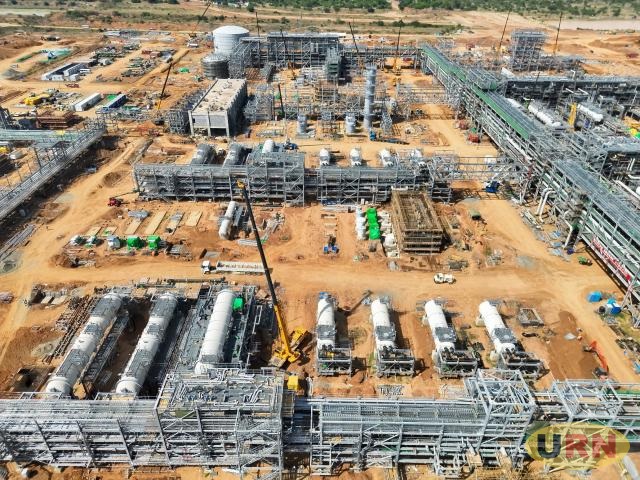
Kampala, Uganda | URN | As the country prepares for first oil, a debate is emerging over whether the country needs petroleum-specific methane regulations or a broader national framework to control one of the world’s most potent greenhouse gases before commercial production begins.
The government expects first oil before the end of September this year. But as the country moves closer to production, questions are growing over how Uganda should regulate methane emissions from the oil and gas sector while also addressing emissions from agriculture, waste management and other activities.
At the centre of the debate is whether Uganda should develop specific methane regulations for petroleum operations or adopt a wider framework covering short-lived climate pollutants, including methane, black carbon and hydrofluorocarbons (HFCs).
Methane, although it remains in the atmosphere for a shorter period than carbon dioxide, has a much stronger warming effect in the near term.
Scientists estimate that methane has more than 80 times the warming potential of carbon dioxide over its first 20 years in the atmosphere.
The debate comes as the Ministry of Energy and Mineral Development develops a draft Methane Emissions Abatement Roadmap and a National Action Plan for Short-Lived Climate Pollutants.
The draft documents have been reviewed by the Civil Society Coalition on Oil and Gas (CSCO), the Natural Resource Governance Institute (NRGI) and other environmental experts.
Under the proposed measures, oil and gas operators would be required to avoid routine flaring and venting of gas unless authorised by the Petroleum Authority of Uganda (PAU) in consultation with the National Environment Management Authority (NEMA).
Companies would also be required to justify any release of gas into the atmosphere, reinject gas into oil fields where possible, monitor leaks and regularly report emissions and operational data.
Caroline Aguti, Assistant Commissioner for Health, Safety and Environment at the Ministry of Energy and Mineral Development, said the measures are based on the recognition that methane emissions already exist even before commercial oil production begins.
She said Uganda’s approach should focus on building a responsible and low-emission energy sector rather than waiting until production starts.
“We are positioning the energy and extractive sector towards responsible, low-emission production. There are provisions within our laws that address environmental protection and climate change. The discussion now is how those provisions translate into practical actions that reduce methane emissions,” Aguti said.
However, Aguti cautioned against treating methane only as an oil and gas challenge.
She argued that while petroleum production will increase methane-related risks, Uganda must also address emissions from other sectors that contribute significantly to the problem.
“This conversation should not only focus on oil and gas. We need to think about methane across agriculture, waste management, household energy and petroleum because all these sectors contribute to emissions,” she said.
Aguti’s position reflects a wider policy question facing Uganda: whether methane regulation should be embedded within petroleum laws or developed as part of a national climate framework.
A September 2025 study commissioned by NRGI found that although Uganda has institutions and laws governing the petroleum sector, the existing legal framework does not provide specific guidelines for methane emissions reduction.
The study, led by climate researcher Dr Michael Mbogga of Makerere University, recommended that Uganda establish dedicated regulations and incentives before commercial oil production begins.
Mbogga said Uganda has an opportunity to introduce methane reduction measures before its petroleum industry becomes fully operational, unlike older oil-producing countries that must retrofit existing systems.
“We need to begin asking what incentives exist for companies that are doing the right thing instead of waiting until production is underway,” he said.
He noted that while companies have started individual climate initiatives, these efforts require coordination under a national strategy. “UNOC has plans to plant millions of trees while TotalEnergies has undertaken greenhouse gas assessments for the Tilenga project. Those are important initiatives, but they need to become part of a coordinated national strategy on methane emissions management,” Mbogga said.
The need for such coordination is becoming more urgent as projections show methane emissions from Uganda’s oil and gas sector could rise significantly once production begins.
Under a business-as-usual scenario, methane emissions from oil and gas activities could increase by nearly 95 percent by 2040, while black carbon emissions could more than triple without additional mitigation measures.
But Paul Twebaze, an environmental governance expert who participated in consultations on the draft roadmap, believes the proposed framework still lacks clarity on implementation.
Twebaze also questioned the identity and purpose of the proposed document, arguing that clarity is needed before implementation begins.
“When you read through the document, you begin asking yourself: what exactly is this? Is it a roadmap, an action plan, an inventory or simply a report? We need clarity because implementation depends on having a document with clearly defined objectives, responsibilities and timelines,” he said.
For Twebaze, methane management should be approached as a national environmental challenge rather than a narrow petroleum issue.
Studies in Uganda indicate that agriculture, particularly livestock production, currently contributes the largest share of methane emissions, followed by waste management and other agricultural activities.
Oil and gas emissions are expected to become more significant once production starts, but experts caution that focusing only on petroleum could leave other major sources unaddressed.
“Air pollution and climate change are among the biggest environmental issues facing Uganda today. If we continue with business as usual, emissions will continue increasing. That is why this roadmap is important, but it has to be practical and implementable,” Twebaze said.
Aguti agrees that implementation will require stronger technical capacity, particularly in measuring, monitoring and reporting methane emissions.
“We need capacity. We need to build that capacity together so that regulators, civil society and other stakeholders understand what methane management requires,” she said.
The methane debate is also linked to Uganda’s commitments under the Paris Agreement and its Nationally Determined Contributions (NDCs), which require reductions in greenhouse gas emissions across different sectors. Uganda’s oil sector adds another layer to the challenge.
According to the Ministry of Energy and the Petroleum Authority of Uganda, the country has estimated natural gas reserves of about 605 billion cubic feet, including approximately 259 billion cubic feet of associated gas expected to be separated during crude oil processing.
The government plans to use the gas for electricity generation, industrial applications, and liquefied petroleum gas (LPG) production instead of releasing it into the atmosphere.
Officials say the use of natural gas could also help reduce dependence on charcoal and firewood. Domisiano Owor, an Environment Officer responsible for monitoring at the Petroleum Authority of Uganda, said Uganda is entering oil production at a time when climate considerations have changed how petroleum projects are designed.
“We are developing this resource when climate change is one of the most critical global issues. But we also have an advantage because we are not the first country to produce oil. Others have done it before us. There are lessons to learn, and we are leveraging those experiences to ensure that Uganda develops its petroleum resources with the lowest possible emissions,” Owor said.
He said methane management has been considered from the early stages of project development, including engineering designs and environmental monitoring systems.
“When we review project designs, emissions management is one of the critical considerations. Facilities have been designed to minimise emissions, optimise operations and utilise associated gas instead of wasting it through routine venting or flaring,” he explained.
According to Owor, operators in the Tilenga and Kingfisher projects are investing in technologies such as sensors, drones and continuous monitoring systems to detect fugitive emissions.
For some experts, Uganda’s advantage is that it is developing its petroleum industry at a time when global standards on methane management are becoming clearer.
Beyond environmental protection, they argue that methane reduction also presents an economic opportunity. Capturing gas that would otherwise be released or flared can improve efficiency, increase energy availability and reduce waste.
As the clock ticks to the unknown date in September 2026, the central question remains whether the country will regulate methane through a petroleum-specific framework or create a broader national system that addresses emissions across the economy.
The decision could shape how the country balances harnesses its petroleum resources with its climate commitments for years to come.