 The Independent Uganda: You get the Truth we Pay the Price


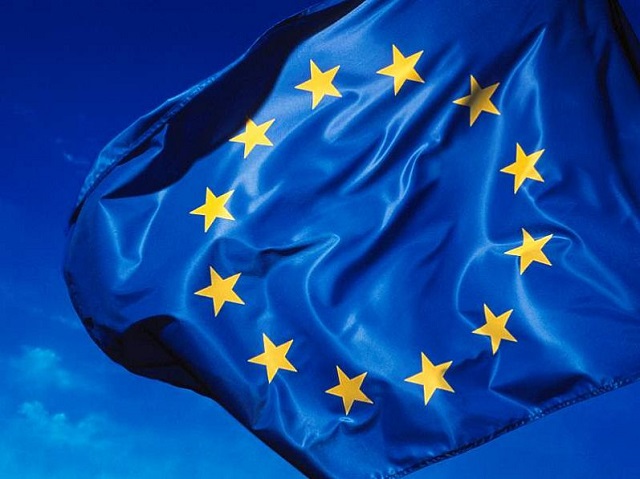
The costs and consequences of isolation by the very continent that globalized the world
THE LAST WORD | Andrew M. Mwenda | I have written before that Europe is facing an existential crisis and a creeping irrelevance. It has moved from a strategic dependence on the American security umbrella to a non-strategic and self-defeating subservience to US foreign policy. Nowhere is this crisis more evident than in the war in Ukraine. But the other part is a growing isolationism of Europe. This is most ironic because it is Europe that gave birth to globalization through its openness that led it to integrate other societies into its international system. If the world today is a global village, it is because European conquest did it. Today, Europe is closing itself off from the world.
For instance, if you are an African seeking to travel to Europe for study, tourism, or business, you are likely to find no appointment for a visa for the next three months. I understand Europe’s fear of migrants seeking to scavenge on its social welfare system. But there are ways to block such people while making it easy for those not seeking to immigrate to get visas. For instance, people who have travelled to Europe more than three times over the last two years or ten times over the last ten years should not be denied an appointment for three months, not even a week. They should be allowed to apply and get visas online. Europe should have their record of entry and exit in its migration database. We are not living in the 15th century.
The consequences for Europe are obvious. In 1990, over 80% of Uganda’s exports went to Europe, and 40% of our imports were from the same continent. In 2025, only 8% of our exports and less than 6% of our imports come from Europe. In 2000, Western countries funded 55% of Uganda’s total budget and 100% of the development budget. Today, most development finance is coming from China, India, Turkey, and the Gulf states. Of course, these developments are resulting from structural changes in the global economy: the shift of manufacturing to China, the growth of other economies with sufficient funds to finance infrastructure development, and the expansion of our economy to fund a larger share of the budget.
But this is only part of the story. The bigger part is Europe has become paranoid of other peoples, especially from developing nations. This has been the major driver of its insularity. Every African is seen as seeking to migrate to Europe to clean their toilets. It does not matter who this African is. It could be the richest businessperson, the most prominent cleric, an accomplished professional, etc. The fear of migration has led Europe to erect barriers that are self-defeating. Those seeking to migrate to Europe, when they get a chance, cannot return home even if they wish to because they are afraid they will not be allowed back. So, they pile up as illegal immigrants.
The other is arrogance, the misguided belief that Europe has superior values that everyone else should follow. Historically, foreign policy has been about how national interests are negotiated in the international system. That is the role of diplomacy. With the cynical and hypocritical leadership of the USA, Europe has been arguing that the basis of foreign policy should be values as defined by and in the West. Those countries that do not agree with Western values, however arbitrarily defined, are ostracized; their leaders are blocked from travelling to Western countries, their businesspersons are denied opportunities, and their wealth in the West is confiscated.
This is absurd. Let us begin with fear of immigrants. Singapore is richer than any European country in per capita income, except for Ireland. And so is Hong Kong, Macau and, to an extent, Malaysia. Yet Ugandans do not need visas to travel to these countries in Asia, and those that do have not decided to stay there. Instead of punishing millions of genuine travellers with absurd visa policies, just make it difficult for economic refugees to stay in Europe illegally. Europe is a dying continent with little to give except its legacy. Its economies are stagnant, population is shrinking (and hence the need for migrants), its buildings are old and murky, and its infrastructure is ancient. The only attraction of Africans to it is legacy and our historic ties.
This brings me to the rising star of the world, China. If an African tourist asked me which cities they should visit, I would say those in China. Why? If you want to see the marvels of modern architecture and top-notch infrastructure like high-speed trains, advanced airports, and production lines for the most advanced technological products, Chinese cities far outpace European cities. The only marvels in Europe, when it is not art stolen from Africa and Asia in their museums, are old buildings, streets made of stone, and old canals. You visit Europe to see the past; you visit China to see the future.
Why is China winning? If you are a Ugandan who wants to go to China as a trader or tourist, you don’t have to line up for a visa, and it takes only two days. And if you have the money, you can get an express visa in eight hours. What are the results? In 1990, Uganda was importing zero goods to China. In 2000, we imported goods worth $30 million from China, and in 2024, that number had reached $2.1 billion. It is hard to trade with someone you cannot visit. European visa restrictions make it difficult for Ugandans to import stuff from Europe. And there are still many European products Ugandans want to import: furniture, ceramic tiles, textiles, etc.
Yet for historic, cultural, and linguistic reasons, Africans prefer Europe to China. I find this baffling because China, whatever its weaknesses, is more open to Africans. It is easier for African students to apply and be admitted to Chinese universities than European ones. And ironically, in China, African students in China are taught in European languages and a European curriculum. Strategically, it is best for African students to study in Chinese universities. This is because in the next twenty years, China will be the world power; its universities will be the most dominant in the world.
Yet despite this apparent future, a large section of African parents and their children still prefer Europe and North America to China. And it is an advantage that the West is squandering every day, literally forcing those who admire its education system to choose China. This is a classic case of shooting oneself in the foot.
***

amwenda@ugindependent.co.ug

“You visit Europe to see the past; you visit China to see the future.” Yeah! Europe is going down faster than foreign traffic can slow down, but China’s rise won’t make anything easier for Africans. From one master to another. Africa, do your own stuff! Play the West against the East and vice versa until you’ve got the perfect balance for an own centre of gravity. Without that, some of us aren’t excited about anything.
These are my views about Europe ,China and USA.
1.Interms of trade Europe and USA care more of quality and standards so they will not allow agricultural products that were produced with harmful pesticides or drugs into thier nations.
2.Every Nation has come to the realization that trade and business is key.
3.For visa entry and restriction to Europe and USA 95% of all applicants once granted UK,Caniadian or USA visas will not return its only those in the acamedia,the old and the wealthy who return they actually spend less days in thses Nations.
4.Quality is what makes USA,Germany,Britain proud.Tbeir cars,drugs,clothes,shoes,food,ICT products,Aviation products,Educatio, are still the best.
5.China manufacures every product that Europe does but they have grades and classes of products for both the European and the Third World markets.What is morally not ok which is ok in the business World is why do they produce products that dont last for the African market?for example if one bought a chinese made shoe it would last 3 months while USA or European made onw would last 2 years.this also applues to thier electrical appluances.
China being a world super power? NEVER. I rest my case.
The tragedy is that Europe’s downfall is not inevitable – it is self-inflicted.
Its retreat into insularity, overreliance, and strategic subservience on U.S. foreign policy, and counterproductive visa barriers that alienate precisely those Africans most inclined to partner with it.
While Europe clings to a values-based posture that often reads as condescension, China advances through pragmatic openness, streamlined access, and infrastructure-driven engagement. The irony is stark: Europe, once the architect of globalization, now undermines its own influence by treating potential students, entrepreneurs, and allies as security threats.
This analysis underscores a critical paradox: a continent with a shrinking population and a need for global engagement is instead building barriers, potentially sacrificing long-term economic and strategic relevance for short-term political expediency.
Unless it reclaims strategic autonomy and recalibrates its approach to the Global South, Europe risks cementing its role as a museum of bygone power – admired, but increasingly irrelevant.