The Independent Uganda: You get the Truth we Pay the Price


There is therefore a possibility that the projects could compete for crude supplies and regional markets
Kampala, Uganda | THE INDEPENDENT | East Africa is moving towards a new era in oil refining, with major projects planned in Kenya and Uganda and another proposed in Tanzania as governments seek to reduce the region’s dependence on imported petroleum products.
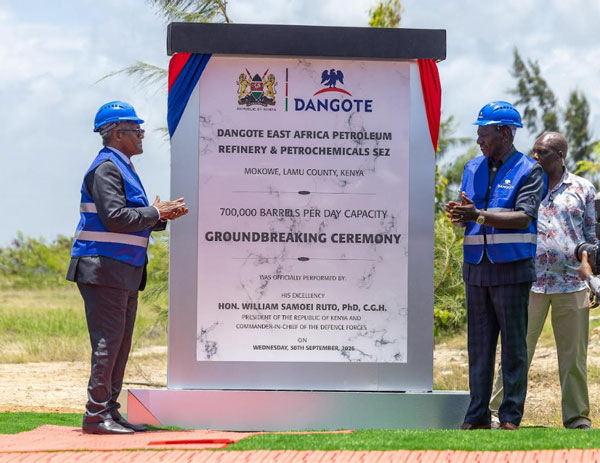
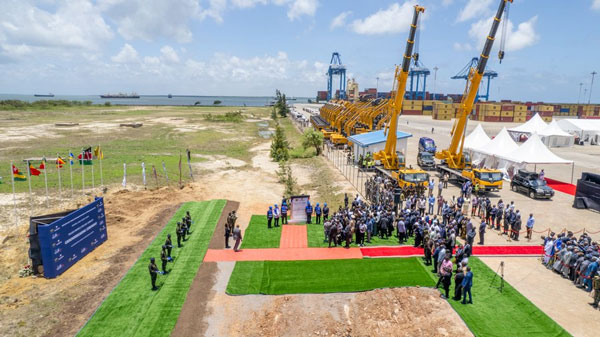
The latest development is the planned US$16bn Dangote refinery at Lamu on Kenya’s Indian Ocean coast, where construction was formally launched on Sept.30.
The facility is expected to process up to 700,000 barrels of crude oil a day and could create about 60,000 jobs. It is expected to supply fuel to Kenya and other countries in the region.
But this would not be Kenya’s first refinery. The country previously operated the Kenya Petroleum Refineries Limited facility in Changamwe, Mombasa, which was commissioned in 1963 and became the country’s main oil refinery.
The plant, once jointly owned by the Kenyan government and foreign investors, stopped refining crude in 2013 after years of financial and operational difficulties.
It has since been used mainly as a petroleum storage facility. The Lamu project therefore marks a return to large-scale refining in Kenya, although on a much bigger proposed scale than the old Mombasa facility.
The project is being backed by Nigerian industrialist Aliko Dangote, whose company already operates a 650,000 barrel-a-day refinery in Nigeria.
The Lamu project is being presented as more than a Kenyan investment. Afreximbank, which has invested heavily in African industrial projects, says the refinery could help strengthen regional energy security and allow more of the value from African crude to remain on the continent.
“By refining more of what we produce on the continent, we retain greater value from our natural resources, create jobs and strengthen the trade links between African economies,” said George Elombi, the bank’s president and chairman.
A region with several plans
Kenya’s refinery is not the only project taking shape. Uganda has long planned a 60,000 barrel-a-day refinery at Hoima in the country’s oil-producing Albertine region.
The government says the refinery will produce petrol, diesel, LPG, kerosene and jet fuel, as well as provide feedstock for petrochemical industries.
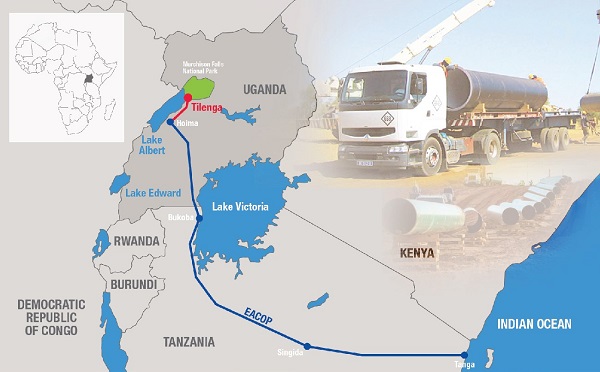
Uganda is also preparing to begin commercial oil production. Its crude is expected to be transported through the East African Crude Oil Pipeline to Tanzania’s port of Tanga.
Ugandan President Yoweri Museveni has said the country remains committed to having its own refinery, arguing that it will serve the domestic market and neighbouring areas.
The government has signed an agreement with UAE-based Alpha MBM Investments for the Hoima refinery, which is expected to be developed with a capacity of 60,000 barrels a day. Uganda’s final investment decision is still being worked towards.
Tanzania, meanwhile, is considering a separate refinery at Tanga. Uganda, Tanzania and energy trader Vitol signed a memorandum of understanding in August covering a wider energy hub at Tanga, including a proposed refinery, storage facilities, pipelines and other infrastructure.
Tanzania’s petroleum authorities say technical work on the proposed refinery has begun, including feasibility studies and work related to land requirements.
The project would potentially process crude from Uganda and other producers in the region.
From exporting crude to refining it
The plans represent a significant shift in how East African countries view their oil resources. For years, much of the region’s petroleum demand has been met by importing refined products, largely from outside Africa.
That leaves countries exposed to movements in global oil prices, shipping disruptions and geopolitical events far from East Africa.
The disruption of major shipping routes, including around the Red Sea and Bab el-Mandeb, has highlighted the risks associated with long supply chains.
Afreximbank says expanding refining capacity could help countries conserve foreign exchange, shorten supply chains and increase trade between African economies.
Its assessment is that refining crude within Africa would also allow more of the economic activity associated with oil to remain on the continent.
That includes refining, storage, transportation, engineering, manufacturing and petrochemicals.
But the emergence of several refineries also raises questions about whether the region can support all of them.
Competition or complementarity?
The proposed facilities differ significantly in scale. The Lamu refinery would have a capacity more than 11 times that of Uganda’s planned facility.
Tanzania’s proposed refinery is still at an earlier stage and its final capacity and financing arrangements have yet to be established.
There is therefore a possibility that the projects could compete for crude supplies and regional markets. But governments have presented them as potentially complementary. Uganda’s position is that a domestic refinery would secure part of its fuel supply while allowing the country to develop petrochemical industries around its own oil resources.
The Tanga project, meanwhile, could serve a wider regional market, taking advantage of the port’s position and its connection to Uganda through the East African Crude Oil Pipeline.
Kenya’s Lamu refinery would have a much larger market and could serve countries across East and Central Africa.
Dangote has said the Lamu facility is intended to process crude from African producers, including Uganda, while supplying refined products to regional markets.
One of the biggest challenges will be ensuring that the refineries have enough crude to operate efficiently.
Uganda is moving towards commercial production, while South Sudan is already an oil producer. Kenya has oil resources but does not currently produce crude on a scale that could supply a refinery of Lamu’s proposed size.
The proposed regional refining model therefore depends on infrastructure connecting producers with refineries and then linking those refineries to consumers.
That makes pipelines, storage terminals, ports and roads almost as important as the refineries themselves.
Uganda’s crude will travel through the 1,443km East African Crude Oil Pipeline to Tanga, while Lamu is being developed as part of the Lamu Port-South Sudan-Ethiopia Transport corridor.
The infrastructure could eventually create competing routes for crude and refined products across the region.
A test for African industrialisation
For Afreximbank, the significance of the projects goes beyond fuel. The bank says Africa needs to move away from exporting raw materials and importing finished products.
Its support for Dangote’s businesses illustrates that approach. Since 2015, Afreximbank says it has invested about US$15bn in the Dangote Group, including financing for the company’s Nigerian refinery.
The bank has also established a US$3bn revolving facility intended to support intra-African petroleum trade, helping buyers source more refined products from refineries operating on the continent.
The argument is that a larger African refining industry could create a market in which crude oil is produced, processed, transported and traded within the continent.
For East Africa, however, the next challenge will be making sure the infrastructure is economically viable.
Three refineries could give the region greater energy security and create new industrial supply chains.
But they will also need crude, capital, reliable infrastructure and markets large enough to absorb their output.
The race to build refining capacity has therefore begun. The bigger question is whether East Africa can turn its separate refinery ambitions into a connected regional energy market.