The Independent Uganda: You get the Truth we Pay the Price



Despite rapid growth and heavy investment, Mombasa and Dar es Salaam remain gateway ports rather than global hubs, as geography keeps East Africa just outside the main currents of world shipping
NEWS ANALYSIS | IAN KATUSIIME | Geography, economists often say, is destiny. For East Africa, it may also be a constraint.
The region, home to more than 300 million people, a fast-growing consumer base and a widely recognised agricultural powerhouse, is increasingly the subject of a quiet but persistent debate among trade analysts: whether its location on the global map is limiting its ability to fully integrate into the world’s most lucrative maritime trade routes.
East Africa exports tea, coffee, flowers, spices and cereals to Europe, North America and Asia. It is often described as a food basket of global significance. Yet despite its economic potential, its geographical position is sparking renewed scrutiny.
The region lies roughly 2,000 to 3,000 kilometres from the Gulf across the Red Sea and Arabian Sea. To reach southern Europe, maritime routes extend much further, with the Mediterranean adding another 3,000 to 5,000 kilometres depending on destination. In global shipping terms, these distances matter. They determine not just cost, but relevance.
Ports at the edge of global flows
As a result, the Port of Mombasa, the main maritime gateway to East Africa, finds itself in a paradoxical position. It is busy, strategically vital and deeply embedded in regional trade systems, yet structurally removed from the world’s main maritime arteries.
At the Port of Mombasa, cranes rise over harbours that should be roaring global hubs, gateways not just for Kenya but for an entire inland crescent stretching into Central and Eastern Africa going all the way to the Atlantic Ocean in Kinshasa.
Cargo streams from manufacturing hubs across Asia and beyond funnel into the Port of Mombasa, carrying everything from fuel to finished goods that sustain Kenya’s economy and supply much of East Africa’s hinterland.
The same applies to the Port of Dar-es-Salaam, which plugs into East Africa from the Indian Ocean and elsewhere. But geography appears to dull the edge of these two buzzing points of entry: longer sailing times, thinner shipping routes, and higher costs make them less attractive as transshipment centers, leaving capacity underutilized and ambitions partially deferred.
The paradox is striking: these ports sit at the heart of some of the fastest-growing markets in the world, backed by expanding rail and road corridors, but remain just far enough from the main currents of global trade that their full promise is never quite realised, their potential waiting, almost impatiently, for a map that deals them a better hand.
Mombasa: economic lifeline and structural ceiling
From the Port of Mombasa, ships push out into the Indian Ocean and sail for days, sometimes weeks, before they even brush the main arteries of global commerce, their journeys lengthened by distance, cost, and time.
Yet within East Africa, Mombasa is indispensable. Mombasa is one of the engines of Kenya’s economy, contributing an estimated 4.7% to Kenya’s GDP. The overwhelming majority of the country’s imports—fuel, machinery, foodstuffs, construction materials—flow through Mombasa, and a large share of exports like tea, coffee, and horticulture head out the same way. Without it, Kenya’s economy would quite literally stall.
Then there is its regional function. Mombasa serves as the maritime lifeline not just for Kenya, but for landlocked neighbors like Uganda, Rwanda, South Sudan, and parts of Democratic Republic of the Congo. Transit cargo generates significant fees: port charges, customs duties, and logistics services, which feed directly into Kenya’s revenues and strengthen its position as a regional economic hub.

On top of that, the port is a key contributor to government income. Import duties and taxes collected at Mombasa make up a substantial portion of Kenya’s fiscal revenue. In many ways, it functions as one of the country’s biggest tax collection points.
But Mombasa also anchors East Africa’s infrastructure and industrial growth. Projects like the Standard Gauge Railway (SGR) and highway corridors linking Mombasa to Nairobi and beyond exist largely because of the port’s importance. Industrial zones and manufacturing clusters have grown around these corridors, all feeding off the steady flow of goods.
Yet despite all this advantage, there is an inevitable longing of what more could be achieved had geography been kinder to this region of 324 million people. Analysts constantly ponder on how much could be unlocked if East Africa had a ready market say 20km away ready to gobble up its coffee, tea, flowers, spices and cereal (sorghum, maize).
The Tanger Med contrast
The example that usually comes to mind during geopolitical debates when the contrast with the Port of Mombasa comes up is Tanger Med, the strategic port in northern Morocco perched at the edge of the Strait of Gibraltar.
Tanger Med commands one of the busiest shipping lanes on Earth and its location has granted Morocco a slew of geostrategic advantages.
The port is just 14km away from Spain and by extension, the European Union; a market place of 450 million. As a result, a number of global industrial giants like Renault, Bosch, DHL, Huawei, and Siemens quickly set up shop to tap into the logistical opportunity Tanger Med offered.
Inaugurated in 2007 by King Mohammed VI, Tanger Med is Africa’s largest and most modern port, acting as a major transshipment hub linking Europe, Africa, and the Americas.
Tanger Med is designed as a mega hub where giant container ships drop cargo that’s quickly redistributed onto smaller vessels heading into Europe, West Africa, or the Mediterranean. It’s plugged into global networks run by major shipping lines like Maersk and Mediterranean Shipping Company (MSC). Mombasa handles some transshipment, but it’s still primarily a gateway port serving Kenya and its landlocked neighbors, not a global redistribution hub.
The industrial platform of Tanger Med reportedly consists of 1100 companies and can handle about 9 million twenty-foot equivalent units (TEU) containers. It is here that analysts chew further on the contrasts between Kenya and Morocco; two countries at opposite ends of the spectrum.
Morocco has 38 million people while East Africa’s largest economy has 58 million people per 2026 estimates. Kenya is also significantly larger than Morocco covering 224,081 compared to Morocco whose area is only 172,413 square miles.
But it is in trade and commerce where the difference stands out. Container giants glide past the Strait of Gibraltar, which handles 10% of international maritime traffic—an estimated 100,000 vessels annually—that made the construction of Tanger Med a strategic goal for the desert nation, economic experts say.
The port’s proximity to Europe attracted Renault and Stellantis, turning Morocco into Africa’s leading automotive manufacturing and export hub. Morocco exports 1 million new vehicles per year.
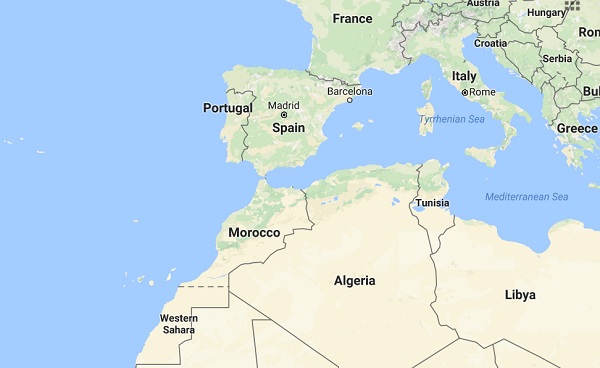
The experts say it is here that lies the stark contrast with Kenya and the East Africa region’s dilemma: while others trade by proximity, East Africa must trade by endurance, its ambitions stretched across oceans before they can even reach the marketplace.
Diplomatic dividends of geography
There were other pay offs: Morocco garnered significant diplomatic influence when it became a primary partner for Western powers and NATO in securing maritime trade and monitoring “chokepoint” risks. It provides critical intelligence and “maritime situational awareness” for the entire region.
Reports say that Morocco’s role in managing irregular migration across the 14km stretch is a major pillar of its relationship with the EU, particularly with Spain, giving Rabat substantial bargaining power in bilateral negotiation.
In 2022, the Pan-African Parliament (PAP) described Tanger Med, the biggest port in Africa and the Mediterranean, as the key to unlocking Africa’s intra-trade potential. A delegation of the PAP, led by Chief Fortune Charumbira, visited the Moroccan Port as part of its official visit to the Kingdom of Morocco.
A press release by the African Union said that The African Parliamentarians also discussed the status of implementation of the African Continental Free Trade Area (AfCFTA) and toured Africa’s ports and various busiest Border Posts to gauge the readiness of infrastructure systems and have a greater appreciation of issues on the ground.
“Members of the PAP delegation in Morocco were informed that Tanger Med has worldwide access to almost 180 ports and 70 countries across five continents, with handling capacities of : 9 million containers, exports of 1 million new vehicles, transit of 7 million passengers and 700,000 trucks on an annual basis,” the statement said.
Infrastructure as destiny
Development analysts say another reason that sets Morocco apart is the infrastructure investment the country has made that has bolstered industrial clustering for the strategic port. These include highways, airports and rail corridors.
Rail infrastructure in particular has been transformative.
First, they say the rail extends the port inland at high speed and low cost. They argue that dedicated freight lines link Tanger Med directly to Morocco’s industrial heartlands—places like Casablanca and Kenitra—so containers don’t sit around waiting for trucks. They move in bulk, on schedule, and at scale.
In addition the rail feeds the port with industrial output. Factories—especially automotive plants like those tied to Renault—are plugged straight into rail corridors that run into the port’s terminals. That means cars, parts, and components can roll off assembly lines and onto ships with minimal friction.
But Morocco also paired its freight rail with high-performance passenger links like Al Boraq: Africa’s first true high speed rail which dramatically cut travel time between the cities of Casablanca, Rabat and Tangier.
As a result, countries like Kenya have been advised to invest in rail as an intermodal transport solution to achieve economies of scale akin to those in Morocco. And there is some evidence of progress.“Rail transport of containers between Mombasa and Nairobi continues to gain momentum. In October 2024, the SGR moved 640,000 tonnes of freight in a single month, its highest level since operations began, equivalent to 23,000 trucks,” wrote Caroline Trefault, the Intermodal Africa Manager at MSC, in an article in The East African.
MSC is the world’s largest container shipping company based in Switzerland. Trefault said in many African markets, trade growth is constrained less by maritime capacity than by inland connectivity. “Long distances and limited infrastructure place pressure on supply chains, particularly along corridors linking landlocked countries to seaports.”
She added that as volumes increase, these challenges become more pronounced. “Rail, where operational and strategically integrated, offers capacity, consistency, and an alternative to road-centric transport. Where infrastructure exists, trains can carry volumes that would otherwise require dozens of trucks, ease roadway congestion and enhance cargo flow sustainability.”
A structural disadvantage?
A Kenyan trade economist Sitati Wasilwa said East Africa’s geographical location away from major maritime routes is a structural disadvantage that no policy shift can realistically overcome in response to a question by The Independent on the comparison of the two regions on the continent.
“Mediterranean countries generally have a decent interconnected ecosystem of seaport infrastructure that is regionally and globally strategic and this facilitates the high productivity and turnover at Tanger Med,” Wasilwa said.
“What’s critical to note is Tanger Med’s structural functionality as a hub facilitating inter-vessel freight transfer from larger shipping vessels to smaller ones. On the contrary, the port of Mombasa is mostly an end point for imports or loading point for exports. It’s not entirely a transitory hub,” he added.
He said that what matters is how close or distant a country is from where major maritime routes are. And stresses that the port of Mombasa is unlikely to ever reach the heights of Tanger Med in terms of freight turnover and revenue generated.
“Can this be rectified by policy? Realistically, this is a complex phenomenon that policy is unlikely to successfully address. Policy can only go as far as addressing the logistical inefficiencies at ports. But geographical peculiarities are consequently natural issues that can hardly be rectified by policy,” he said.
Wasilwa stated perhaps the only bright spot for the port of Mombasa, but in the very long-term, is the development of maritime routes linking the Red Sea and the Indian Ocean.
“So, for the port of Mombasa to develop and be almost at par with Tanger Med, it’s largely dependent on externally-driven economic growth and less on Kenya’s economy. Unfortunately, Mombasa is likely to remain an import and export point and not a transitory one given the geographical dynamics.”