The Independent Uganda: You get the Truth we Pay the Price


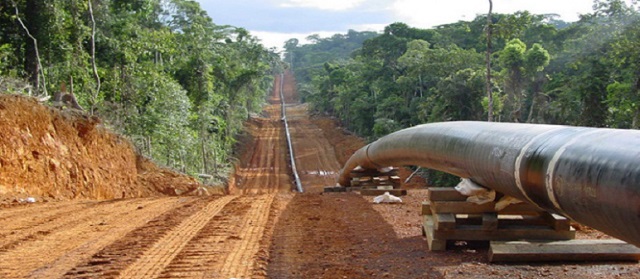
Kampala, Uganda | THE INDEPENDENT | In Arusha, Tanzania, Lubega John Nsamba represented her ailing father, John Mary Nsamba, whose land along the East African Crude Oil Pipeline (EACOP) had been acquired without what the family considered fair compensation.
Over a month after his burial near the pipeline, his fight for justice continues through the courts. John Mary Nsamba had resisted compensation, believing the valuation of his crops violated Uganda’s Constitution and failed to account for long-term livelihood loss.
When domestic avenues yielded little relief, he joined other Project Affected Persons (PAPs) in petitioning the East African Court of Justice (EACJ), alongside NGOs like AFIEGO, CEFROHT, Natural Justice, and the Centre for Strategic Litigation.
The petition sought to halt the human rights, environmental, and climate risks associated with EACOP—but the court dismissed the case on technical grounds.
“We thought maybe there, someone would listen. Now we don’t know where to go,” said Lubega.
For thousands along Uganda’s oil corridor, it was yet another door closing. In Kyotera district, farmer Cosmas Yiga walks through a patch of land that once bore 56 mango trees, now cleared for the pipeline corridor.
“A coffee tree was valued at 80,000 shillings, yet one tree can produce more than 100,000 shillings in a year,” Yiga said. “If a tree produces about 10,000 fruits in a season, sold at roughly 250 shillings each, that could amount to 2.5 million shillings annually.”
Officials insist compensation followed approved frameworks, but residents argue that figures fail to capture the loss of perennial crops that would have supported livelihoods for years.
“These are perennial crops. You remove them once, but they would feed us for years,” he added. Whenever it rains, some of the households experience severe floods, which tend to destroy homes and crops.
Letters have been written to the oil and gas developers; there has been no tangible response, no solution. Bernard Barugahara, formerly a Community Development Officer in Bulisa, described flooding as a direct consequence of oil operations.
“Being a flat area, when land is raised for drilling, water runs down and overflows into community lands. Even systems installed to capture water sometimes overflow. This has become a big problem,” he said.
“That’s why we have pushed, I personally, we have pushed for those things. And that’s why it has now reached the Minister of Water to have the committee of NEMA, of local government, and the Minister of Energy, Minister of Water.” Said Barugahara.
“We told them, you demarcate. Since the water has started finding its way, put the marks. If a community member digs beyond the marks, then don’t compensate, because the person has encroached. But before the marks, then you have to compensate this person.”
He also criticized inadequate tree replacement programs as developments go on. “Thousands of trees have been destroyed by pipelines and flow lines. Indigenous trees resistant to local weather are not being replanted. Meanwhile, 96 percent of Bulisa households still rely on firewood.”
In some areas in Bulisa and Nwoya communities have complained about a surge in elephant-crop raids and wildlife -human conflicts.
Wathum Frederick Edie, from Bulisa Paralegals, framed the issue as a human-wildlife-oil conflict. “The oil companies entered the elephants’ territory. The noise, lights, and activity disrupted natural habitats. People are now in closer contact with wildlife. We have lost six people,” he said.
TotalEnergies plans to drill over 426 wells, which will include 200 water injector wells and 196 oil producer wells on 31 well-pads located in Nwoya and Buliisa districts. The developer has explained that it deployed a state-of-the-art automated rig known as the “walking rig”.
The rigs stand at about sixty meters high in the middle of the national park. It is painted with beige color to resemble the surrounding Savannah grasslands.
The source speaking on condition of anonymity explained that the rigs were fitted with technologies to minimize the noise in the national park and its surroundings. For Wathum, that is not enough explanation.
“I’m 67 years old. I was born in Bulisa. I married a woman from Bulisa. My children are Bagungu. And I will die, I will be buried in Bulisa. I’ve never all my life…slept with an elephant.” Said Wathum, “To me, I think that oil companies went to the empire of the elephants. Because if you’re on your way going to Pakwach, there are those forests of palm trees. Those palm trees were planted by them, not by human beings.”
He also blamed oil operations for worsening floods: “The companies dig holes to manage water, but when these overflow, gardens and crops are destroyed. We have been working with the companies to clear drainage, but as of now, these measures have not been fully implemented. I can say that not all floods are from oil developments, for instance, when you go to Butiaba, the floods are from the Lake.”
Petroleum Authority Executive Director Ernest Rubondo, in November, presented the authority’s achievements in regulating Uganda’s oil sector.
“Since we are a regulatory agency, the key aspect of our work is ensuring that development in the country’s oil and gas sector complies with the law and international best practice,” he said.
According to Rubondo, Uganda is cited globally as a benchmark in balancing oil development with sensitive ecosystems. “All waste generated from petroleum operations is managed at state-of-the-art facilities, including thermal desorption units rare even internationally,” he said.
He added that environmental and social frameworks, including land acquisition, resettlement, and oil spill preparedness, have been implemented to prevent harm to communities.
“Some of the criticisms from international anti-fossil fuel campaigners were genuine, others were misleading,” he said. “We had to stay the course, rely on rigorous environmental assessments, and maintain transparency. Today, Uganda’s petroleum projects are technologically advanced and among the least carbon-intensive in the world.”
According to EACOP authorities, theproject required the acquisition of 6,400 hectares of land, impacting 19,262 households. It said 99.3% of the affected households had signed compensation agreements, 99.2% had been paid as of January 31st, 2026.
Among those who did not sign the compensation agreement is Jealous Mugisha, one of the 42 persons subject to the Court Application.
“We didn’t have an interest in cash compensation. The land was for the family; we asked for land for land. The equal size. The process has been on since 2018, when they stopped us from using that land.
And sometimes I call it a miracle or a wonder, the government of Uganda to take the money for the land in the court of law,” he said. In December 2023, 42 households in Hoima were sued to obtain vacant possession for Tilenga and EACOP projects.
The families rejected compensation as inadequate. Justice Jesse Byaruhanga ruled against them in four days. “We suffered an unfair judgment,” said Julius Asimwe.
“Cases we filed since 2014 remain undetermined, yet a case against us was concluded in four days. So you can imagine that. We have been asking ourselves, has our government been taken over by the devil?”
Despite assurances by the authorities and the oil and gas developers, figures and community voices point to persistent gaps:
“We fought in court to have our rights recognized. The judgment may have favored the government, but the truth is on the ground,” said John Nsamba.
Dickens Kamugisha from AFIEGO emphasized the constitutional dimension: “Section 6 of the Compulsory Land Acquisition Act allows the government to deposit compensation in court if landowners reject it. But Article 26 of the Constitution requires fair and adequate compensation before acquisition. This has not happened for many families, and they continue to wait for justice.”
The oil developments promise billions in revenue and regional integration, but along the route, development is measured by trees cut, floods endured, and families relocated.
PAU points to regulatory achievements, thousands compensated, and hundreds resettled. Yet, for affected communities, the questions remain: Why do floods persist despite environmental safeguards? Why are indigenous trees and resilient ecosystems not being restored? Why are constitutional rights to compensation still contested? How are human-wildlife conflicts managed when oil operations encroach on natural habitats?
“The oil will flow soon,” said Nsamba. “Whether a sense of closure flows with it remains uncertain.”
The tension between official claims of regulation and community realities lies at the heart of Uganda’s oil corridor story, a reminder that mega-projects require not just technical oversight, but justice, transparency, and accountability at every stage.
****
URN