 The Independent Uganda: You get the Truth we Pay the Price


COMMENT | ANTHONY NATIF | November 25th to December 10th 2025 is a period earmarked for 16 days of activism worldwide against gender-based violence.
Locally, the 16 days of activism are led by UN Women Uganda and are being held under the theme “UNiTE to end Digital Violence against All Women and Girls”. GBV is a serious human rights threat that affects one in three women.
It’s also a threat that’s been so normalized and isn’t short of defenders in the name of “our culture”.
Not even the passage of the “Beijing Declaration and Platform for Action” has helped stem the tide. This year marks the 30th anniversary of that declaration, but violence hasn’t waned.
In Uganda, this violence not only plays out in our homes and online but also in the criminal justice system.
According to a 2021 report funded by the Embassy of the Netherlands in Uganda (see frames 2&3 on X), 5% of Uganda’s prison population are women, and of these, at least 86% are on domestic violence-related charges.
Oftentimes, the victim ends up on the wrong side of the criminal justice system; a double punishment.
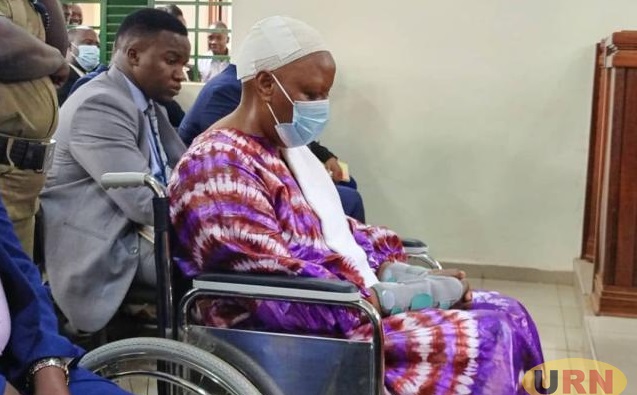
The ongoing court case of Uganda versus Molly Katanga might be instructive: here’s a 55-year-old, relatively successful woman locked up for two years now for, apparently, killing her husband.
Long before her trial, she was branded a murderer by a fierce online campaign led by her own sister-in-law and amplified by the press. Talk about digital violence! (See frame 4 on @TonyNatif on X)
Domestic Violence and the Law: The Case of Molly Katanga (and thousands of Ugandan Women)
According to @unwomenuganda (really the whole globe) November 25th to December 10th 2025 is a period earmarked for 16 days of activism against Gender Based Violence.
It is being held… https://t.co/SeFzvZ7dj7 pic.twitter.com/hAtD17ZCW2
— Anthony Natif (@TonyNatif) November 25, 2025
The trial starts, and some state witnesses show up in court and say this lady suffered multiple beatings at the hands of her husband that left her on the verge of death.
She had her skull cracked, limbs broken in several places and even lost a finger. This, according to Uganda Police Head of Medical Services, the respected Dr Moses Byaruhanga.
Then, the lead investigator in this case, Bibiana Akong, a woman, shows up in court and says she found this lady in the ICU at IHK, seated on her bed, tweeting away on her phone, with a ladder waiting outside the ICU window to facilitate her escape. No images. No videos. Just “trust me, Judge”. Fanciful stuff.
Another witness, Aisha Birungi, a Scene of Crime Officer with more than 30 years of experience, says she found Katanga in the same hospital with all arms bandaged all the way to the fingertips. So much for tweeting away!
Then the Police head of Forensics, Andrew Mubiru tells court that they found this lady’s blood splashed all over the floor, the doorknob and door edge where he found her blood and hair (perhaps because her head was banged there), on the bathroom sink and on the ceiling. Asked how her blood could have gotten to the ceiling, he responded, “Maybe she urinated there”. In Court!!
Then, to witness 24, Detective Sergeant David Beteise, he’d been told by the people at the Katanga residence that she had been beaten and cried for help. When he showed up in court, he went with, “There was a scuffle.”
It only took the intervention of presiding Judge Rosette Kania to get this witness to admit that Mrs Katanga had indeed been beaten badly. (See frame 1 on @TonyNatif on X)
Her defense attorney, Elison Karuhanga, has accused the state of having a pact of silence on the violence she suffered (just so they can secure a conviction). It’s a mess, but this doesn’t seem unique to her. It’s a problem up and down this country’s criminal justice system.
The existence of a very progressive Domestic Violence Act (2010) hasn’t helped much. No one seems to care. It’s just about sloganeering and ticking boxes.
Over the next 16 days, you’ll see a lot of this from diplomats, government officials, civil society actors, activists etc. And then…silence. Till next year.
As my Public Square EA colleagues and I have repeatedly said, we need to do more to “Empty The Jails”. Giving the domestic violence act more prominence might help, as would training officials up and down the police-to-prison pipeline on the GBV nuances in alleged crimes.
We are incarcerating victims.
*****
ADAPTED FROM X @TonyNatif


