The Independent Uganda: You get the Truth we Pay the Price


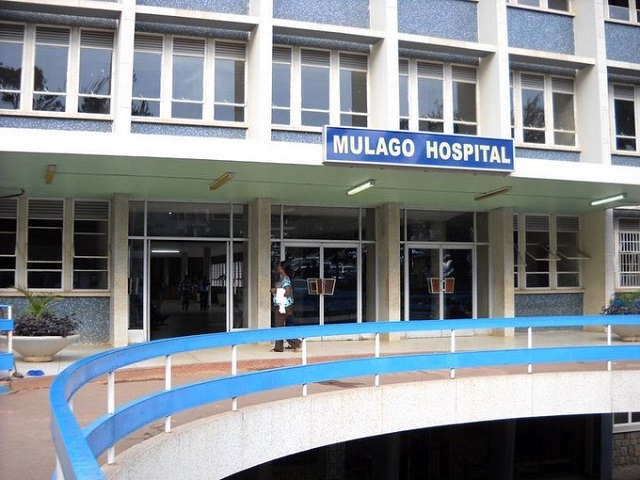
Kampala, Uganda | THE INDEPENDENT | Doctors are raising concerns over the growing practice of filming inside health facilities, warning that it not only exposes them to the risk of violence but also subjects them to public condemnation for circumstances beyond their control.
Their reaction follows a video that surfaced on social media earlier this week showing a caregiver threatening and hurling insults at health workers in the paediatric ward at Mulago National Referral Hospital after the death of a child.
In the footage, the visibly distressed caregiver alleges that a baby was dying in the ward while health workers were nowhere to be seen. Voices in the background are heard directing him toward a medic, with others shouting, “They are running away, there they are, they are running away.” The caregiver then exclaims, “Children are dying, but they are sleeping. They could even be having sexual intercourse.”
Moments later, a doctor identifies herself, and people gathered at the scene are heard explaining that she had been on duty since morning until that night.
Dr Allan Okwir, the Secretary General of the Federation of Uganda Medical Interns (FUMI), told URN on Thursday that the medic seen in the video is a medical intern who had been manning the ward for more than 30 hours when the filming began. He said the incident brings out the harsh realities faced by health workers at the country’s largest national referral facility.
While acknowledging that negligence can occur in some instances, Dr Okwir emphasised that the intern involved had attended to the now-deceased patient and reviewed other patients before briefly retreating to the doctors’ room. He argued that she did not deserve what he described as inhumane treatment.
He added that the confrontation may have arisen from the mistaken belief that doctors must remain constantly at a patient’s bedside throughout admission. In practice, he explained, doctors review patients at intervals determined by clinical need.
The video has since sparked widespread debate, with many questioning not only possible medical negligence but also the quality of services offered at Mulago, particularly at night. Critics have accused the hospital of leaving patients unattended during overnight hours.
Commenting on the incident, Dr Frank Asiimwe, the President of the Uganda Medical Association (UMA) and a senior consultant at Mulago, said that regardless of whether the outburst was driven by delayed attention, dissatisfaction with a clinical explanation, or the overwhelming grief that follows a patient’s death, the behaviour captured on video was unacceptable.
“When you assault a medical worker, you are attacking a human being who has likely spent their day saving countless other lives. We are not miracle workers; we are humans. The dignity of the medical profession is not a request; it is a prerequisite for a functioning healthcare system,” he said.
Dr Asiimwe also rejected suggestions that Mulago’s challenges stem from the perception of free services, noting that even in private, paid-for facilities, no one can purchase a guarantee against death or an assurance of recovery.
Dr Okwir echoed these sentiments, stressing that even in cases of suspected negligence, there are lawful and appropriate channels for seeking redress, including the courts. He cautioned against the use of cameras to intimidate or humiliate health workers, describing it as an invasion of privacy.
He pointed out that when doctors film patients, strict consent procedures must be followed, and recordings should be limited to purposes such as research, documentation, or teaching.
Doctors further argue that they are increasingly being made scapegoats for systemic failures beyond their responsibility. Dr Okwir cited severe understaffing as a major challenge, saying that excessive workloads leave many medics exhausted and unable to consistently deliver optimal care, particularly after extended shifts without adequate rest.
He revealed that the intern doctor involved in the Mulago incident has not received government allowances since August, despite working long hours.
Meanwhile, understaffing remains a nationwide concern. Mulago is reported to be operating with an estimated 60 per cent staffing gap. The latest Auditor General’s report for the financial year ending 31 December 2025 found that all five national referral hospitals were affected by significant staffing shortages.
Across several staff categories, understaffing exceeded 90 per cent for critical care specialists and, in some instances, reached 100 per cent. The report, for example, documented a 91 per cent staffing gap among nursing officers.
****
URN