The Independent Uganda: You get the Truth we Pay the Price


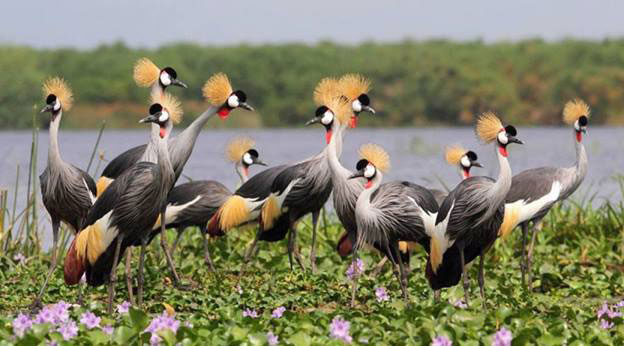
Kampala, Uganda | THE INDEPENDENT | Uganda’s national bird, the grey crested crane, is facing mounting threats from habitat destruction, poisoning, illegal capture, and human encroachment on wetlands—factors that conservationists warn are pushing the species closer to extinction.
Over the past 25 years, Uganda has lost 80 percent of its crested crane population, according to statistics from the Ministry of Wildlife and Antiquities.
The numbers have dropped sharply from an estimated 35,000 birds to about 13,500, based on the 2023 census.
Dr. Basil Aja, Director for Conservation at the Ministry, says the decline is largely driven by rampant wetland destruction, which deprives the cranes of their breeding and feeding grounds.
He explains that the birds are also being poisoned by farmers who target them for feeding on crops, while others are illegally captured for trade and ornamental purposes.
The continued displacement of cranes from shrinking wetlands, he warns, threatens not only biodiversity but also one of Uganda’s key tourist attractions. The sharp decline, according to Dr. Aja, is “a wake-up call to all stakeholders to join hands in conserving the country’s heritage.”
As part of the response, the Uganda Wildlife Authority (UWA) is exploring heightened adaptive breeding as an additional intervention to multiply the crane population.
Vanice Mirembe, Manager for Conservation Education and Awareness at UWA, notes that “given the high rate at which the country’s emblem is being killed and losing its natural habitats due to the destruction of wetlands, there is a need to put more efforts in promoting adapted methods of conserving the cranes through their artificial breeding.”
Speaking at the National Crane Festival in Masaka City, Mirembe expressed concern that despite enforcement of strict laws against killing and capturing crested cranes, “their population has continued to decrease, making it one of the most highly endangered wild bird species in the country.”
She added that alongside vigorous wetland conservation efforts, UWA is encouraging more people to acquire permits granting them exclusive rights to breed rare crested cranes for ornamental purposes, “which has a multiplier effect on their population.”
“The Ugandan Wildlife Act 2023 grants heavily punitive sentences, including life imprisonment or a fine of UGX 20 billion, to convicts of offences that present existential threats to crested cranes,” Mirembe said.
However, not all conservationists agree that adaptive or captive breeding should be prioritized. Dr. Adalbert Ainomuchunguzi, East Africa Regional Director for the International Cranes Foundation, cautions that domestication may alter the birds’ natural character and ecological role.
“Domestication is not the best solution. We must focus on habitat conservation to see these numbers increasing,” he said.
Meanwhile, the Ministry is working to operationalise the national single-species action plan for conservation of the grey crested crane.
The strategy integrates habitat restoration, rigorous community engagement, scientific monitoring, education, and policy reforms.
“The crane conservation strategy aims to ensure that all actors, government, communities, and partners work together,”Dr. Aja said.
With wetlands shrinking, human activity intensifying, and population numbers dwindling, conservationists say the future of Uganda’s national bird will depend on whether protection of its natural habitat can keep pace with development pressures.
****
URN