The Independent Uganda: You get the Truth we Pay the Price



Kabale, Uganda | URN | Computer illiteracy among civil servants and poor internet connectivity are hindering the wealth declaration exercise in Kabale district which currently stands at only 38.5 percent, with the deadline set for April 30, 2026 (Thursday this week).
The exercise requires civil servants from a certain level to declare their income, assets and liabilities to the Inspectorate of Government (IG) in accordance with the law. Under the law, such public officers must declare their salaries, allowances, business income, assets such as land and vehicles, and liabilities, including loans and debts, every five years.
The exercise, being fully digital, requires civil servants to use computers, smartphones, and the internet to submit their declarations to the IG database. However, it has been established that many civil servants in Kabale District are still struggling to meet the deadline.
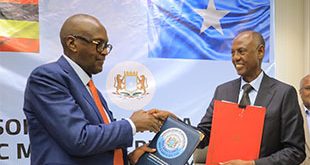
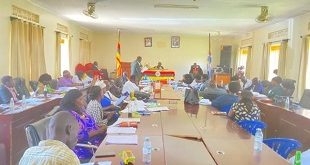
On Tuesday, officials from the Office of the IG, led by Deputy Inspector General of Government Patricia Achana Okiria, met top officials from Kabale, Rukiga, and Rubanda districts, as well as Kabale Municipality, Kabale University, and Kabale Regional Referral Hospital, to discuss ways of improving compliance and boosting participation in the exercise.
During the meeting, Kabale District Chief Administrative Officer Richard Mugabe revealed that the district is still below average performance. Out of a total of 2,445 civil servants, only 942 have successfully declared. Mugabe attributed this to widespread computer illiteracy, as many civil servants lack basic digital skills, do not own smartphones, or are unaware that the exercise is ongoing.
Mugabe also highlighted connectivity challenges, especially for teachers deployed in schools along the Uganda-Rwanda border, where internet access is unreliable due to interference from Rwandan networks. He called for decentralization of the exercise to address challenges such as email corrections and password resets more efficiently, noting that relying on the national centre has created delays and heavy system traffic.
Mugabe’s concerns were supported by Tobias Habasa, the district’s Senior Information and Communication Technology Officer, and Richard Kalema, Human Resource Officer at Kabale Regional Referral Hospital. They also called for decentralisation, saying they are overwhelmed by complaints from civil servants but unable to assist effectively since responses must come from the central system, which is often slow.
They said many civil servants are struggling to receive access tokens needed to log into the system and submit their declarations.
Kabale Resident District Commissioner, Retired Major Godfrey Katamba, called for an extension of the exercise to allow civil servants in hard-to-reach and network-challenged areas more time to comply.
Achana acknowledged the challenges and assured stakeholders that they would be reviewed. But she emphasized that the declaration process must continue, being a critical tool for promoting integrity and accountability in public service.