The Independent Uganda: You get the Truth we Pay the Price


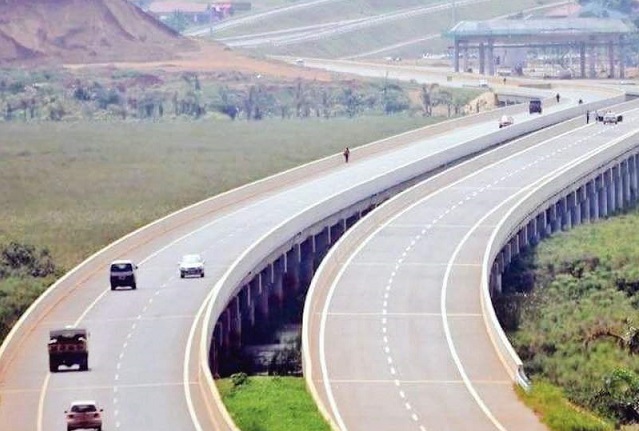
Kampala, Uganda | URN | The Attorney General has cautioned against the immediate termination of the contract of the private operator of the Kampala-Entebbe Expressway, warning that failure to follow contractual procedures could expose Uganda to costly international arbitration.
The warning, contained in a response presented to Parliament by Deputy Attorney General Jackson Karugaba Kafuuzi on Thursday, came as legislators prepared to consider 14 recommendations arising from an inquiry into the management, operation and toll collection system of the 25-kilometre expressway.
Parliament’s Committee on Physical Infrastructure, chaired by Mwine Mpaka, has called for the immediate termination of the private operating arrangement and the transfer of the road’s operations to the Ministry of Works and Transport.
The committee also wants Uganda Revenue Authority (URA) to take over toll collection, arguing that direct government control would reduce the cost of private contractual arrangements and free up more resources to service the debt incurred to finance the expressway.
However, the Attorney General’s response says the government cannot simply terminate a valid contract without first establishing that the operator has committed a persistent breach and following the termination procedure set out in the agreement. Kafuuzi told Parliament that the contractor must first be formally notified of any breach and given 14 days to remedy it.
Where improvement works are delayed, the contract provides for liquidated damages and reductions in payments. Persistent failure that could justify termination only arises after specified contractual thresholds have been reached.
Ministry of Works to investigate
The Attorney General has therefore advised the Ministry of Works and Transport to undertake a comprehensive assessment to establish whether the operator’s failures meet the contractual threshold for termination.
The dispute centres on the performance of the French company EGIS Road Operation S.A., which was contracted by Uganda National Roads Authority (UNRA) on April 13, 2021 to operate and maintain the expressway.
The five-year contract, valued at Shs122.86 billion, took effect on May 24, 2021 and provides for a possible extension of up to 24 months subject to satisfactory performance.
Its obligations extend beyond toll collection to include road-safety improvements, lighting, tolling infrastructure, an Independent Traffic Monitoring System, an Automatic Vehicle Classifier and systems for controlling overloaded vehicles.
Parliament’s committee found that several of these obligations had not been fully implemented. It cited incomplete installation of the Independent Traffic Monitoring System and Automatic Vehicle Classifier; inadequate carriageway lighting and road-reserve fencing; as well as shortcomings in high-speed Weigh-In-Motion systems.
The committee argued that these failures justified taking the expressway back under direct government management. The Attorney General, however, acknowledged that failure to complete works within the agreed timelines constitutes a contractual breach but stressed that a breach does not, by itself, trigger immediate termination.
Contract extension dispute
The legal response also challenges Parliament’s concerns over the extension of a related contract involving Pinnacle Security Limited. The committee recommended an investigation into the former Permanent Secretary over what it described as an illegal 36.3 billion Shillings extension allegedly granted without Attorney General approval.
The Attorney General’s office disputes that finding, saying the Ministry extended the contract through a letter dated May 20, 2026, with the extension running from May 24, 2026 to May 24, 2027.
According to the legal opinion, the extension was provided for under Clause PCC 39.1 of the original agreement and did not introduce additional expenditure.
The 36.3 billion Shillings cited by the committee, the office said, formed part of the original contract price, making the extension a “no-cost extension” that did not require fresh legal clearance.
The office also rejected claims that the novation agreement transferring the contract to Pinnacle had not been legally approved, saying the Solicitor General cleared it on April 22, 2026.
Kafuuzi said satisfactory performance remained a condition for the extension and that responsibility for assessing performance against the agreed key performance indicators rested with the Ministry. Parliament’s proposal to hand toll collection to URA also faces a legal hurdle.
The Attorney General says the Roads Act places responsibility for toll collection on the relevant roads authority, in this case the Ministry of Works and Transport.
As a result, the function cannot simply be transferred in its entirety to URA without legislative changes, although the two institutions can collaborate in administering the tolling system.
Audit of EGIS
The Ministry also cannot take over the expressway’s operations immediately while the existing operating contract remains legally enforceable. Rather than an immediate takeover, the Attorney General supports a forensic audit of the EGIS and Pinnacle revenue collection systems from their inception.
The audit is intended to establish whether government lost revenue that should have been used to service the loan that financed the expressway.
The legal response points to the latest information-systems audit, finalised on August 19, 2026, which identified several weaknesses in the expressway’s operations. These include high operating costs, weak governance systems, network-security vulnerabilities, incomplete overload-control systems, limited payment options, manual vehicle classification, unsupported toll exemptions and prolonged lane closures.
The Attorney General also addressed concerns over free toll passes issued at Busega Toll Plaza. Parliament’s inquiry found free passes worth 314.355 million Shillings had been issued between January 2022 and June 2026.
The Attorney General said recovery of the money from the contractor may not be straightforward because, although the Roads Act specifies categories of vehicles and persons exempt from toll payments, the contract also provided free passes for certain Ministry and operator staff.
The legal opinion said the irregularity was attributable to government and could therefore not automatically be recovered from the private operator.
The Ministry and Attorney General’s office have proposed regularising the exemptions through appropriate statutory instruments.
The Attorney General also urged caution over calls for criminal investigations and prosecution of officials involved in the procurement, management and oversight of the expressway. The office said determination of whether offences were committed should be left to the relevant authorities, noting that Article 120 of the Constitution gives the Director of Public Prosecutions authority over investigations and prosecutions.
It further noted that previous Auditor General reports had not identified irregularities in the procurement of EGIS. The proposed forensic audit, the office said, should first establish whether financial losses occurred and quantify any loss before responsibility is assigned.
The standoff has exposed a broader question over how Uganda manages major infrastructure projects financed through sovereign borrowing but operated by private companies.
For Parliament, the concerns are centred on accountability, revenue protection and whether government is receiving value from the operating arrangement. For the Attorney General, those objectives must be pursued without disregarding contractual and statutory obligations that could expose the country to even greater financial liabilities.