The Independent Uganda: You get the Truth we Pay the Price


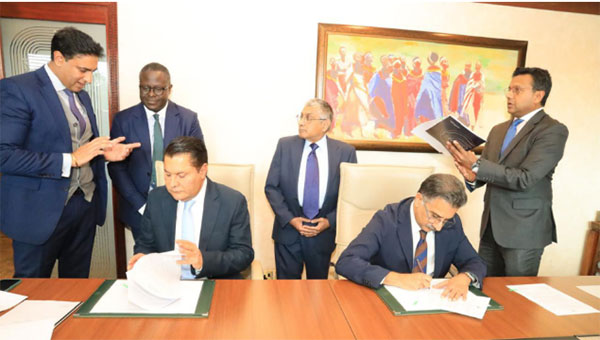
Economic Development (AKFED), sign transaction documents in Nairobi on March 10
This development comes at the time traditional media outlets worldwide are struggling with declines in core revenue streams, particularly print and broadcast advertising as audiencees goes online
NEWS ANALYSIS | JULIUS BUSINGE | The Aga Khan Development Network (AKDN) is poised to exit East Africa’s traditional media industry after more than six decades, agreeing to sell its controlling stake in Nation Media Group to Tanzanian investor Rostam Aziz in a move that signals a strategic shift toward sectors viewed as higher growth and greater development impact.
The planned transfer of a 54.08 percent shareholding in the Nairobi‑listed company marks the end of a 66‑year chapter that began in 1959, when the Aga Khan founded East African Newspapers, the precursor to Nation Media Group.
Over time, the media house evolved into the region’s most influential independent news organisation, publishing newspapers and operating television and radio stations across Kenya, Uganda and Tanzania.
The approaching completion of the transaction – expected within three to four months pending regulatory approvals – reflects broader transformations in global media economics and underscores a recalibration by the Aga Khan Fund for Economic Development (AKFED).
Rather than a withdrawal from East Africa, analysts say this marks a strategic redirection of capital into sectors believed to deliver more measurable economic returns, including financial services, infrastructure, manufacturing and tourism.
Media economics under strain
This new development comes at the time traditional media outlets worldwide are struggling with secular declines in core revenue streams, particularly print and broadcast advertising, as audiences increasingly migrate online and advertisers shift budgets to global platforms such as Google and Meta.
In Africa, these pressures have been acute. Newspapers, television and radio broadcasters are grappling with fragmented audiences and the costs of digital transformation, including investment in data infrastructure, multimedia production and subscription‑based models.
Nation Media Group’s recent financial results illustrate these headwinds. For the year ended Dec. 31, 2024, the company reported its second consecutive annual loss after tax, with a deficit of Ksh254.4 million compared with a loss of Ksh205.7 million in 2023. Gross profit declined 9.1 percent to Ksh4.3 billion, while turnover fell 12.5 percent to Ksh6.2 billion, driven by shrinking advertising revenues and broader economic challenges. Total assets also contracted, dipping 8.6 percent to Ksh7.5 billion.
While the company’s digital segment grew – reporting an 11 percent increase and expanding its online audience to 62.4 million users by year‑end – that growth has not yet offset declines in legacy operations. Profitability has steadily deteriorated since 2013, when the group posted more than Ksh2.5 billion in net profit, highlighting the ongoing struggle to adapt legacy media models to digital era economics.
Industry analysts say Nation Media Group’s trajectory mirrors a global pattern in which traditional publishers confront intensified competition from digital platforms that dominate online advertising and user engagement, leaving legacy media to seek new revenue models amid persistent structural pressures.
Strategic shift by AKFED
For AKFED, the altered media landscape and slowed financial prospects in publishing could have made the sector less attractive as a long‑term development investment.

Founded with a mandate to blend commercial viability with socioeconomic impact, AKFED operates across roughly 30 countries in Africa, Asia and the Middle East. Its investment philosophy prioritises sectors that can generate jobs, mobilise private capital, and build essential infrastructure – outcomes that are easier to measure and scale than those from traditional media.
“In a rapidly changing information ecosystem, the transition to digital news demands scale and capital intensity that are difficult to sustain without significant revenues from diversified businesses,” said an investment strategist familiar with AKFED’s portfolio strategy. “By redeploying capital toward financial services, industry, infrastructure and tourism, the network aims to deliver more quantifiable impact in economic growth and inclusion.”
Central to this strategic recalibration is financial services, where AKFED has built a foothold through institutions that play catalytic roles in credit access, savings mobilisation and enterprise financing across emerging markets.
In East Africa, Diamond Trust Bank Group operates across Uganda, Kenya, Tanzania and Burundi, providing corporate banking, trade finance, retail lending and services for small and medium‑sized enterprises (SMEs). With deeper penetration of digital banking and credit products, the bank aims to expand its reach to underserved populations and support local business growth.
Beyond East Africa, AKFED holds stakes in Habib Bank Limited in Pakistan and Development Credit Bank in India, both of which have pursued digital transformation initiatives aimed at broadening financial inclusion. Complementing these commercial banks, the Aga Khan Agency for Microfinance provides loans, savings products and micro‑insurance across multiple countries, including Afghanistan, Pakistan, Kenya, Tanzania and Mozambique.
The group also maintains a presence in the insurance sector through Jubilee Holdings, offering life, health and general insurance products across East Africa. Together, these financial institutions are expected to support entrepreneurship, facilitate trade and strengthen economic resilience.
Industrial expansion and local value chains
Industrial investments have emerged as another area of focus for AKFED, reflecting efforts to strengthen local manufacturing and reduce reliance on imports. Across East Africa, the network has backed firms that produce goods for domestic and export markets.
In Kenya, Allpack Industries manufactures packaging materials for the food and consumer goods sectors, while Alltex EPZ produces garments for international markets. In Uganda, Kampala Pharmaceutical Industries supplies medicines to regional markets, and Uganda Fishnet Manufacturers produces nets for the fisheries industry. Moshi Leather Industries in Tanzania supplies processed leather for export.
These ventures aim to contribute to the development of competitive value chains, attract further private investment, and generate employment – particularly for youths and women – at a time when economic diversification remains a priority for regional policymakers.
AKFED has also signalled interest in expanding its industrial footprint into emerging sectors such as renewable materials, agro‑processing and logistics, which are poised to benefit from rising domestic demand and regional integration under frameworks such as the African Continental Free Trade Area (AfCFTA).
Building infrastructure and connectivity
Infrastructure,too, remains a cornerstone of AKFED’s strategy, with investments targeting power generation, telecommunications and other essential services that enable economic activity.
In Uganda, Bujagali Energy Limited operates a 250‑megawatt hydropower plant on the Nile River, supplying a significant portion of the country’s electricity and supporting industrial growth. In Kenya, the Kipevu II Power Station contributes to the national grid, while in Ivory Coast, Azito Energie produces more than 700 megawatts of electricity from natural gas.
AKFED’s stakes in telecommunications infrastructure are anchored by SEACOM’s submarine fibre‑optic cable systems, which link East Africa to global internet networks and bolster connectivity for businesses and consumers alike. These assets are increasingly critical as digital adoption accelerates across sectors such as e‑commerce, fintech and remote work.
Elsewhere, the network’s investments in energy distribution and rural electrification projects aim to extend access to underserved communities, supporting broader development goals tied to education, healthcare and enterprise growth.
Tourism and hospitality investments also remain a strategic priority. Through the Serena Hotels chain, AKFED operates more than 35 hotels and lodges across Africa and Asia, positioning itself as a key player in premium and business travel segments.
In Uganda, properties such as the Kampala Serena Hotel and Lake Victoria Serena Golf Resort & Spa are positioned as major conference and tourism hubs. In Kenya, the Nairobi Serena Hotel and several safari lodges support leisure tourism and promote conservation‑linked hospitality.
The group’s broader hospitality portfolio includes international properties such as the Polana Serena Hotel in Mozambique and the Kabul Serena Hotel in Afghanistan, offering global exposure and diversified revenue streams.
As tourism rebounds post‑pandemic, AKFED has signalled plans to expand its footprint in underdeveloped destinations and invest in sustainable tourism infrastructure that can generate employment and support local supply chains.
Market reaction and forward momentum
Interestinly, investors have responded positively to the announcement of the media stake sale. Shares of Nation Media Group jumped 28.3 percent over two trading sessions following the disclosure that Rostam Aziz’s Taarifa Ltd would acquire the majority stake, lifting the stock to a two‑year high of Ksh17 per share and valuing the company at about Ksh3.24 billion.
The trading volumes surged as investors exchanged nearly 300,000 shares valued at approximately Ksh4.84 million amid optimism that new ownership could accelerate digital transformation and stabilise earnings.
Aziz has signalled plans to prioritise investment in digital platforms and new revenue streams, saying the company needs to adapt to changing media consumption patterns while preserving its legacy as a trusted news provider.
“Our intention is to increase investment so that we can be more profitable. There will be more jobs created as we go forward because we need to transform and cater for every Kenyan in order for this to be a successful partnership,” Mr Aziz told reporters at a briefing.
He emphaised commitment as a long‑term strategic owner, aiming to uphold editorial independence and strengthen the company’s digital capabilities.
*****
Key milestones in NMG’s history:
1959: His Highness Prince Karim Aga Khan IV founds East African Newspapers (Nation Series) Ltd and acquires the Kiswahili weekly Taifa Leo
1960: Launch of the Sunday Nation and Daily Nation
1973: NMG lists on the Nairobi Stock Exchange (now the Nairobi Securities Exchange)
1994: Launch of The EastAfrican, hailed as one of sub-Saharan Africa’s finest newspapers
1999: Launch of NTV Kenya and Easy FM l, marking NMG’s entry into broadcast media
2002–2005: Regional expansion through acquisition of Daily Monitor (Uganda) and establishment of Mwananchi Communications (Tanzania)
2006: NMG is among the first African media companies to establish a comprehensive online presence in response to the digital revolution
2009: Newspapers in Education programme launched, bringing literacy and civic awareness to marginalised schools
2016: Aga Khan IV inaugurates a $20 million state-of-the-art printing press, then the largest media investment in the history of East and Central Africa
2024: Digital audience exceeds 62 million users