 The Independent Uganda: You get the Truth we Pay the Price


COMMENT | ANDREW PI BESI | For the past few days, a video showing Hassan Bassajabalaba addressing mourners at his mother’s funeral has been trending on social media. It has been trending because in it, Hassan B, as he is commonly called, decries the inefficient state of our healthcare system.
The symphony of his lament reaches its crescendo when he begs our solemn-looking Deputy Speaker of Parliament, Thomas Tayebwa and other Members of Parliament to convince President Museveni of the benefits of National Healthcare Insurance.
Our healthcare system, as many of us have long lamented, remains deeply inefficient, with medicines and equipment perennially lacking in public hospitals and Health Centres. In cases where medicines and equipment are present, corrupt staffers auction them to the highest bidder.
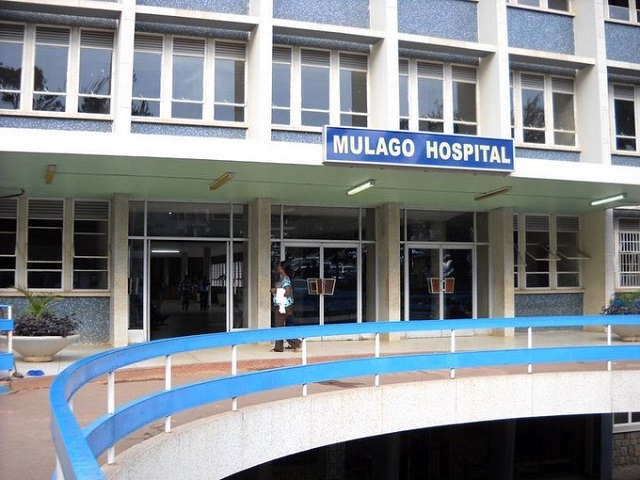
Attempts to address these challenges have been made with the USD 50+ million renovation and expansion of Mulago National Referral Hospital to include the Kawempe and Makindye branches, as well as a specialised Women’s and Neonatal Hospital. Still, from experience, I know that a C-section at the new Specialised Women’s and Neonatal Hospital at Mulago costs the same as one at the privately owned Nakasero Hospital. Some argue that the service at Nakasero—or even at IMC in Namuwongo—is better. No wonder then that senior civil servants and members of our political elite still prefer private hospitals. Many times, for the smallest of conditions, at our expense, they fly abroad.
Perhaps this is why, as Dr. Olive Kobusingye reminds us in her seminal work The Patient, the real crisis is not in the buildings but in the experience of the ordinary Ugandan at the point of care. She writes of patients who walk into hospitals with hope but are received by a system that “treats illness as an inconvenience and the sick as intruders.” She describes corridors where people wait not for treatment but for someone—anyone, even a cleaner, as the New Vision once reported—to notice they are deteriorating. Absenteeism is rife.
The tragedy, she observes, is that many deaths in our hospitals are not caused by disease alone but by delays, missing supplies, and a bureaucracy that has forgotten the human being on the bed.
May the soul of Basajabalaba’s beloved mother rest in eternal peace. Her passing is not only a personal tragedy but a mirror held up to our health system, a system that must reckon with the reality that even a willingness to spend 2 million Euros could not guarantee the gift of… pic.twitter.com/5lLrLliDO3
— Ronald Amanyire (@amronaldo) November 19, 2025
These realities hover over Mulago’s new wings like an imp’s shadow. The structures now glitter, but the patient’s fate remains familiar: buy your own medicine, find your own gloves, pray for a nurse who is not overwhelmed, and hope that the oxygen cylinder has not just run out.
And then there is Lubowa. On this once leafy hill in Makindye Ssabagabo Municipality, Enrica Pinetti—with extravagant financial backing from our government—is, after a long unexplained delay, constructing her International Specialised Hospital of Uganda (ISHU). Whether ordinary Ugandans—those unfortunate enough not to have medical insurance or access to Euros, US Dollars, and British Pounds in sacks—will benefit from ISHU remains to be seen.
Dr. Kobusingye cautions that healthcare systems do not collapse dramatically; they rot slowly, often beneath impressive announcements and expensive blueprints. A hospital can be “world-class” on paper while its future patients remain trapped in the same old cycle of neglect.
This is why many fear that the ISHU hospital at Lubowa risks becoming a grand promise built on the assumption that ordinary Ugandan lives can wait.
Hassan B is not a poor man. He is fantastically rich. But in the end, his lament is not merely the sorrow of a wealthy man discovering the limits of his privilege. It is the sound—and reflection—of a nation confronting the consequences of neglect. For if the system cannot save those with every advantage—money, influence, access—what hope remains for the teacher at Kinyasano Primary School, the boda rider in Jinja, the market vendor in Kalerwe, or the village preacher in Mulanda?
Perhaps his lament, for that is what it is, will stir the conscience of those who make laws, who approve budgets, who treat healthcare as a political ornament rather than a moral obligation. Perhaps, for once, we shall build a system not for ribbon-cuttings but for human beings who fall sick, suffer, and hope.
But until that day arrives—until policy becomes protection and hospitals become havens—we remain a country where survival is a private transaction and suffering a public routine. And so all we can do, like Hassan B did in his grief, is ask a question that should haunt every leader in this land:
Must someone die before we finally learn to save the living?
*****
By Andrew “Pi” Besi | On X: @BesiAndrew

Since Hassan B is a member of CEC, these are things he should aim to push through and be remembered for. As Uganda, we should learn to adopt best practices in advanced societies. No need to reinvent the wheel. What’s clear is that our health sector is sick, even for us that have never been admitted-thank God!-but who are driven to the deepest concern by empathy and patriotism.