The Independent Uganda: You get the Truth we Pay the Price


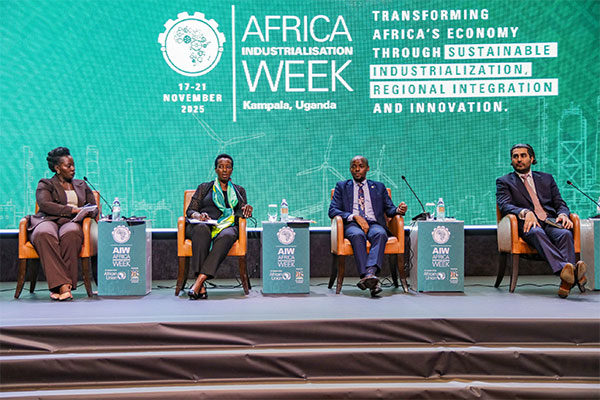
COMMENT | NANTEZA SARAH KYOBE | A week ago, Uganda hosted its first Africa Industrialization Week, attracting over 40 countries and 450 participants to the Munyonyo Commonwealth Resort to discuss issues related to industrialization of the continent.
The launch of the inaugural Africa Industrialization Week in Uganda coincides with a period of significant growth and transformation in the country’s industrial sector, driven by strategic government policies, increased foreign direct investment (FDI) in the oil sector, and an expanding manufacturing base.
Uganda is home to over 5,000 industrial enterprises, employing approximately 1.3 million people. The event was held under the theme “Transforming Africa’s Economy through Sustainable Industrialization, Regional Integration, and Innovation.”
This theme highlights the importance of sustainable industrialization, regional integration, and innovation in advancing Africa’s structural transformation agenda.
The event took place from November 17th to 21st and concluded with the observance of Africa Industrialization Day, celebrated annually on November 20th. The forum addressed key issues, including women-led industrial parks and gender-sensitive policies aimed at promoting industrial growth.
It emphasized the need for improved access to finance through development finance institutions, banks, venture capital, and public-private partnerships. Skills development was a primary focus, emphasizing certification, quality standards, digital tools, and ESG compliance.
Innovation and digitalization were also central themes, with advocates encouraging the use of technology to enhance production and market access. Recommendations included increasing financial access for youth, advancing technological skills, and creating an African Youth Start-up Network linked to industrial initiatives.
Africa Industrialization Week 2025 began with remarks from the State Minister of Industry, David Bahati, who noted the changes in procurement legislation that have delayed various project initiations. The minister also acknowledged significant progress, with South Africa and Morocco advancing in automotive manufacturing, Ethiopia rapidly developing industrial parks, and Uganda offering land, tax incentives, and benefits to attract investors in both public and private parks.
During a panel discussion focused on skills development, Allen Kagina, Chairperson of the TVET Council, stressed the need for a mindset shift to address the skills gap. She underscored the importance of improving training institutions, revising curricula, and re-certifying trainers to enhance the quality and portability of skills across borders.
The president’s call for unity and value addition was echoed throughout Africa Industrialization Week 2025, indicating broad public support for his message. This sentiment was further reinforced by comments from Dr. Amany Asfour, president of the Africa Business Council, who highlighted the necessity for Africa to unite for the collective benefit of its people, especially in value addition within industrialization.
She addressed the financial losses Africa faces from exporting raw materials, then emphasized that Africa has the potential to process goods for Europe, generating higher profits—aligning with the president’s vision for Africa. Besides promoting unity and value addition, the meeting called for policies to protect the African industrial sector’s access to financial resources, recognizing that it holds the essential resources for production and the free movement of people and goods.
In his speech closing Africa Industrialization Week 2025 and Africa Industrialization Day, delivered by Major Jessica Alupo, Uganda’s Vice President, President Museveni reiterated his stance against Africa exporting unprocessed raw materials for value addition while importing finished goods based on those same resources.
He pointed out that Africa relies heavily on imports for machinery, equipment, vehicles, mineral fuels, electronics, chemicals, as well as large quantities of food items like rice and cereals, and pharmaceuticals—all despite the continent’s abundance of natural resources, including a diverse range of minerals and agricultural products.
Africa holds approximately 85% of the global platinum reserves, 50% of manganese reserves and production, 90% of chromium reserves, 40% of gold reserves, and 75% of phosphate reserves worldwide.
He also highlighted the need to address the main obstacles: ideological disorientation, interference with the private sector, underdeveloped infrastructure, insufficient industrialisation and low value addition, underdevelopment of agriculture, erosion of democracy and governance, and the underdevelopment of human resources—all crucial for advancing Africa’s industrial sector.
I found the discussion both fascinating and educational, offering crucial insights into Africa’s industrialization efforts. If the ideas discussed are documented and actively pursued beyond the conference room, Africa’s industrial future looks promising.
*******
 Nanteza Sarah Kyobe works with Uganda Media Centre