The Independent Uganda: You get the Truth we Pay the Price


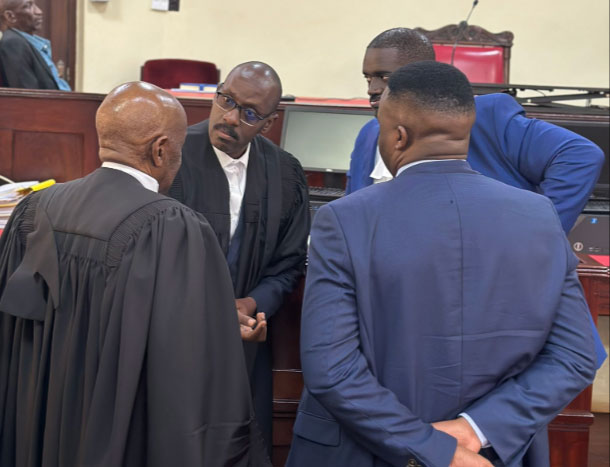
SPECIAL REPORT | ANTHONY NATIF | As recorded in the case Uganda Vs Molly Katanga and adapted from @TonyNatif on X. This is the 4th of a series on the case ahead of February 26th, when Justice Kania is expected to rule on whether the prosecution has established a prima facie case.
****
Here is the defense’s rejoinder to the prosecution’s submissions in reply on the 4th ingredient of murder.
The question both sides seek to answer is, “Did Mrs Katanga participate in the commission of the crime?”
Unsurprisingly, the prosecution says, ABSOLUTELY
The defense says, “No es posible. Get out of here with your phantom DNA and GSR results born out of non-existent swabs, discredited expert witnesses and misrepresentation of experts’ testimony” (words; mine)
Fair warning: you might want to brush up on your forensic science knowledge because it gets rather technical.
On this point, the prosecution conceded right at the opening bell that due to the “unique and peculiar” nature of this case, having happened behind closed doors – in the couple’s master bedroom – and with only one person surviving, they were bound to rely on circumstantial evidence, which they called “the best evidence”.
Out came the “doctrine of last seen” and alleged “conduct of the accused person” after the death of her husband, spun to infer guilt on A1’s part.
The prosecution then argued that while they’re cognizant of the fact that “accused persons bear no responsibility to prove their innocence”, “the ideal situation would be that a wife who has lost her husband would be interested in offering a plausible explanation at the earliest opportunity as to the cause of her husband’s death ”.
They then went into DNA and gunshot residue evidence, and it is here that most of the sharp knives were drawn between the defense and prosecution.
1: DNA Evidence
The defense lambasted the prosecution’s take on DNA evidence as shared by the director of forensic services in the Ugandan police, Andrew Kizimula Mubiru, who was PW8.
They said the DNA limb of the prosecution’s case collapses because it “is not anchored in evidence but in conjecture” and it stands in stark contrast to their own witness’ testimony.
This was just the opening salvo.
Inviting Justice Comfort Kania to look at page 715 of the court record, they said that “PW8 was clear and emphatic about the limits of his science. He testified that his report was only a “source-level” report. It answers one question: Whose DNA was detected?”
They wondered how the prosecution stretched the interpretation of the DNA evidence to speak as to the guilt of their client when the expert himself said before court that his report and analysis could do no such thing.
To them, it appeared like the state stretched the evidence to fit the crime, and they didn’t hesitate in saying as much. They pointed to the fact that the DPP charged their client with murder and claimed to have DNA evidence, which evidence, according to prosecution witnesses, was only processed about 6 months after the indictment. At one point during the cross-examination of PW8, defense attorney Karuhanga accused the state of “operating in the prophetic realm” and “running the forensics lab like a kitchen for cooking results”.
Back to the submissions, the defense wrote: “PW8 expressly disclaimed any ability to say how that DNA was deposited, when it was deposited, by whom it was deposited in the sense of primary or secondary transfer” (pages 714 and 724 of the court record)
Like marauding sharks sensing blood in the water, the defense went on the offensive: Mr Mubiru “told this court that he cannot distinguish between direct contact and indirect transfer. He cannot exclude DNA deposited through talking, coughing, screaming, blood droplets, physical struggle or contact long before the incident” (pg: 717-719 of the record). “When asked directly whether A1 fired the firearm, he declined to answer, stating that such a conclusion required an offense level evaluation which he did not do” (pg 783)
The prosecution raised the issue of major and minor DNA contributors, arguing that a major contributor likely handled the weapon. It’s to this that defense turns.
Before we continue, you may be wondering what “major” and “minor” DNA contribution means.
It simply means that when a sample is analyzed, they look for whose DNA is dominant and whose is less. It’s that straightforward. The interpretation, though, isn’t.
The prosecution submitted that Mrs Katanga’s DNA was predominant on the magazine and trigger house; Mr Katanga’s was predominant on the barrel of the killer gun. According to them, “this naturally raises a high possibility that a person with the most prevalent DNA on the item is the one that used it”.
The defense was having none of that, and it appears neither was the prosecution’s own expert witness.
The defense wrote, “PW8 further testified that major and minor contributors should not be confused with handling, recency or use. He explained that DNA prevalence depends on individual shedding characteristics. Some people are high shedders, others shed very little. One person may deposit a single cell, another millions without any relationship to duration of handling, last contact or firing of a weapon. In other words, ‘major contributor’ does not mean ‘user’, ‘handler’ or ‘shooter’ (page 783 of the court record)”.
They called the prosecution’s submission on that point “wholly improper and inappropriate”, treating “the presence of DNA as proof of loading, coming and firing the firearm”. They reminded Justice Kania that the expert expressly said that this “meaning cannot scientifically be assigned”. They said the state wasn’t interpreting evidence but was instead creating “evidence by submissions”.
Packing a defiant punch, the defence submitted the following: “Counsel is not entitled to infer what an expert has said cannot be inferred, and Counsel cannot supply by argument what science has withheld in evidence ”.
They called the prosecution’s submission “dangerous and absurd” and invited the court to put it to a logical test.
They wrote: Going by this argument, A1 loaded the magazine (she’s the major); handed the gun to the deceased, who cocked it (he’s the major on the barrel); and then the deceased handed it back to A1, sat comfortably on his bed, and never raised his hand or voice. A1 came within a few centimeters of his head and pulled the trigger. And she stopped bleeding when she reached the bedsheets (her blood was found allover the room but the bed where a dead Mr Katanga was found, gun beside him*). The submission is manifestly absurd.”
With the foregoing, the defense called the state’s DNA evidence “irrelevant to the central issue before the court”.
They went further to question the authenticity of this evidence, especially given the fact that “there was no swab of the safety lever, no swab of the grip, and no swab of the trigger. Instead, the trigger was combined with the trigger house in a single swab without scientific justification. Distinct surfaces were collapsed into one sample, while critical contact points were ignored. That approach destroys any possibility of meaningful interpretation even at source level ”.
The defense then told Justice Kania that none of the critical swabs were presented in court, with the Judge being reminded that she’s being invited to partake in a “trust me bro” trial, relying on evidence of Andrew Mubiru who has a history of “producing results without samples”.
They reminded her that in the Kato Kajubi case, the Court of Appeal held that this particular witness “produced results without having samples”.
They further called into question the credibility of the analysis and pushed back on the prosecution’s claim that Mubiru did the analysis. They said that system logs showed that Lillian Mutesi and not PW8 did the DNA analysis.
In fact, they wrote: “PW8 admitted on page 1172 of the record that ASP Lillian Mutesi analyzed the magazine, the barrel and the trigger and trigger house”. The prosecution, in their submissions said he “merely used her credentials”. The defense threw the law at them, saying this contradicts S.93 & 94 of the evidence act.
According to the defense, the act of having ASP Lillian Mutesi on the analysis system logs and Mr Andrew Mubiru claiming to have done the analysis further offends section 8 (4) (c) of the Electronic Transactions Act.
They then went ahead to ask that the prosecution pick a struggle (my words—to borrow from modern parlance).
They wrote, “In any event, either the DNA report relied upon by the prosecution is false or the testimony of PW8 is false. In either case, a court properly directing its mind cannot rely on that evidence.”
They go ahead to accuse the prosecution of misrepresenting the results themselves, telling Justice Kania that: “as with the trigger, the magazine contained DNA from another unidentified individual who was not reported. See pages 1127 to 1133 where PW8 was shown during cross-examination that the magazine had a substantial amount of DNA of an unknown individual that he had not revealed in his report.”
As they took leave of this DNA issue, the defense told the Lady Justice that “when all speculation is stripped away, the DNA evidence only shows this: DNA deposited by unknown means, at unknown times, by unknown persons, on inadequately swabbed exhibits, some of which were never produced, documented or traced, and interpreted in direct contradiction of the prosecution’s own expert. It does not prove use of the firearm. It does not prove firing. It does not exclude suicide.”
And then they bring it home with, “My Lord, this is not a case of weak DNA evidence. It is a case where the prosecution has substituted assumption for proof and narrative for science. This is the type of case which (Bhatt v. Republic) refers to as manifestly discredited that no reasonable tribunal can rely upon.”