The Independent Uganda: You get the Truth we Pay the Price


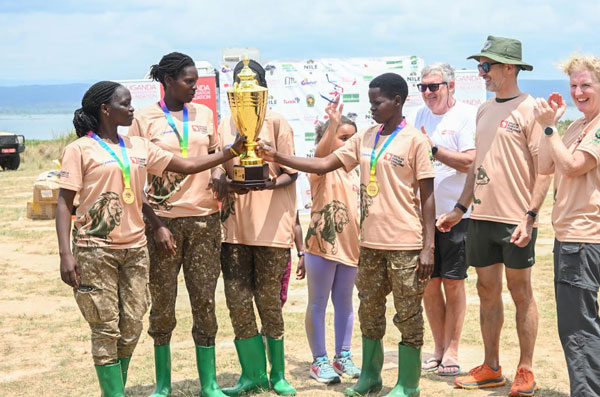
The race, the rangers and the cost of protecting Uganda’s wild places
SPECIAL REPORT | RONALD MUSOKE | At around six o’clock on the morning of September 19, as the first orange light of the sun began to spread across the savannah in the northern sector of Murchison Falls National Park, dozens of youthful rangers gathered on the murram runway of Pakuba Airstrip for what, under ordinary circumstances, might have been described simply as a race.
The air was cool, the sky was clear and there was no rain, conditions that seemed almost perfectly timed for the 21-kilometre Wildlife Ranger Challenge that would take the teams from the airstrip towards the Delta, near a flat spot on the River Nile known as the Hippo Pool. The men adjusted backpacks weighing 22 kilogrammes, while the women prepared for the same distance carrying 10-kilogramme loads, and across the start area, teams from Uganda’s conservation landscapes made their final preparations.
Yet this was never going to be an ordinary race for the men and women representing Kidepo Valley National Park, a picturesque conservation area found in the northeastern tip of Uganda. Just days before they arrived in Murchison Falls, one of their colleagues had been killed while on patrol in Kidepo Valley.
Private David Onenchan, who had previously served in Murchison Falls and had been transferred to Kidepo in February, this year, was killed after an encounter with armed poachers. His death had brought into sharp focus the danger that lies behind the physical strength and discipline celebrated by the Wildlife Ranger Challenge, turning what might otherwise have been a straightforward celebration of ranger fitness into something more solemn: an opportunity for Kidepo’s teams to remember one of their own while doing what they had come to do. And they did what they had come to do remarkably well.
Kidepo once again produced both the winning men’s and women’s teams, extending a remarkable run in a competition in which other Ugandan conservation areas had arrived determined to stop them. But the significance of the victory was no longer simply that Kidepo had won again. The rangers were running with a colleague’s memory very much in their minds.
The race begins
The Wildlife Ranger Challenge brings together thousands of rangers across Africa in a synchronized 21-kilometre race designed to raise funds and awareness for the people working on the frontline of conservation.
This year, more than 2,000 wildlife and marine rangers from 21 African countries took part in 166 teams, with participants carrying operational packs weighing as much as 22 kilogrammes. The Challenge, now in its seventh year, is organized by Tusk and the Game Rangers Association of Africa, with funding support from Mark Scheinberg, and has reportedly raised more than US$25 million since its launch while supporting or engaging more than 11,500 rangers.
In Uganda, the event was hosted by the Uganda Conservation Foundation (UCF) and brought together wildlife ranger teams from across the country, including Bwindi, Queen Elizabeth, Kibale, Pian Upe, Murchison Falls, Ziwa, Kidepo Conservation Areas and community conservancies in the Karamoja region of northeastern Uganda.
The day before the race, UCF founder, Michael Keigwin, had gathered the teams for their final briefing, reminding them that although there would be winners and losers, the fundamental purpose was to complete the course together. “Go at the pace of the slowest person,” he told them, emphasizing teamwork and safety rather than allowing the competitive instinct to push anyone beyond their limits.
It was advice that sounded particularly appropriate for people whose normal working lives can involve days of moving through difficult terrain with colleagues whose safety may depend on them. For the Kidepo women, that principle of collective movement is already part of their professional culture.
Private Akello Robinah Brella, the women’s team captain, described teamwork as fundamental to their work, explaining that they move together, wait for a colleague who becomes tired and “never leave anyone behind.”
On patrol, however, the stakes are considerably higher than they are on a race course. The women participate in mobile patrols that can keep them in the bush for six or seven days, carrying food, clothes, cooking equipment and weapons and sleeping and eating in the field. Akello explained that they train alongside their male colleagues and take part in mixed patrols, meaning the physical demands represented by a 10-kilogramme race pack are, in some respects, only a controlled version of what they routinely encounter in the field.
A fourth victory, and something more
For Private Henry Pekorom, the captain of Kidepo men’s team, the secret to their success is not mysterious. Experience helps. Fitness helps. And the terrain in which they work has already trained them for endurance.
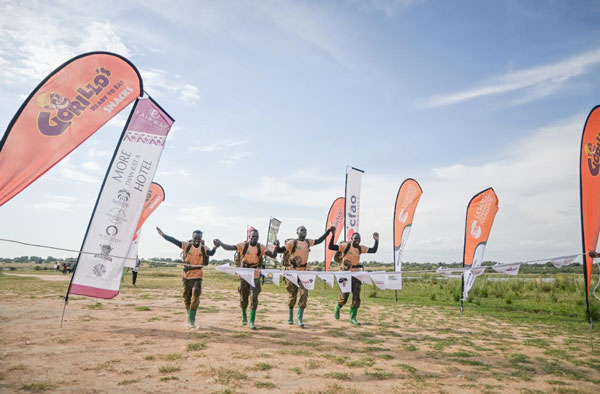
Pekorom told The Independent that Kidepo’s rangers regularly exercise and spend long periods on patrol in hilly terrain, with some patrols covering as much as 200 kilometres and lasting for weeks. The team had already won the men’s competition three times in succession, meaning that the other Ugandan teams arrived at Pakuba with a clear objective: stop Kidepo from making it four. They did not manage it. Kidepo won again. The women followed them to the top of their own category, maintaining Kidepo’s dominance of both competitions.
For a team accustomed to the physical demands of patrol work, there was satisfaction in the result. Pekorom explained that the experience gained in the field, together with regular exercise, gives the Kidepo team an advantage when it comes to a challenge built around endurance.
But this year, the victory could not be separated from the death of Private David Onenchan. When The Independent asked Pekorom about his fallen colleague, the sporting confidence of the earlier conversation gave way to remembrance.
Pekorom spoke of Onenchan as one of their own and offered a simple prayer for him, recalling a colleague who had been on patrol when the armed poachers attacked. Onenchan had previously served in Murchison Falls before being transferred to Kidepo in February, this year. His death was the first that Pekorom had experienced during his four years in Kidepo, making the loss particularly painful for a team already conscious of the risks attached to their work.
For the Kidepo teams, then, the Challenge was not only about demonstrating what their bodies could withstand. It was also about carrying the memory of someone who had died while doing the same job.
The reality behind the pack
That distinction matters because the Wildlife Ranger Challenge can easily be understood through its spectacle. There is something compelling about watching a group of rangers run 21 kilometres carrying heavy operational packs, particularly when the race forms part of an international campaign involving thousands of people across Africa.
But the pack is also a symbol of the profession itself. Rangers work in difficult landscapes, often for long periods away from their families, and their responsibilities extend well beyond patrols. They monitor wildlife, support communities, respond to emergencies, assist with search and rescue, help reduce human-wildlife conflict, gather information and intelligence, and provide conservation education.
Across Africa, the need is enormous. According to Tusk Trust, a non-profit that has been working over the last 35 years to halt the decline in wildlife and biodiversity across Africa, the continent currently has about 65,000 rangers, compared with an estimated requirement of 345,000. Around half of the rangers are reported to have no health insurance, while only about 40% report having adequate health and safety training.
That is why a race intended to celebrate ranger fitness also becomes a conversation about ranger welfare. As Chantal Migongo-Bake, the Chief Conservation Officer at Tusk, put it, the Challenge is about “strength, discipline and unity,” while recognizing rangers as essential frontline defenders of the environment. But the question is, what happens after the celebration.
What the Challenge is really funding
The Wildlife Ranger Challenge began during the COVID-19 pandemic, when the disruption to conservation operations exposed just how dependent ranger work was on systems that could suddenly become difficult to sustain.
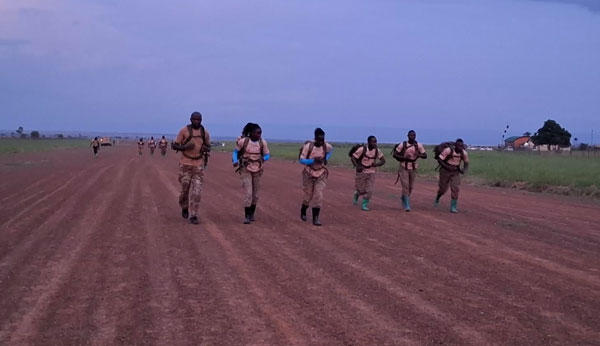
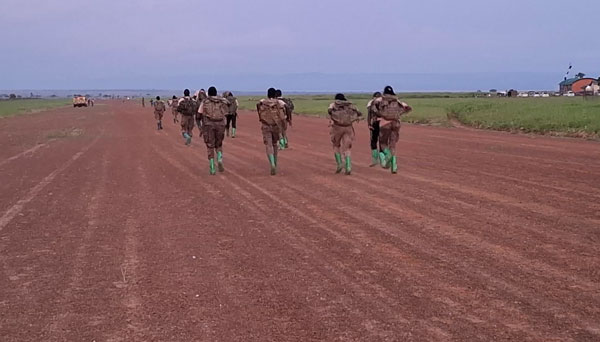
Keith Roberts, one of the Challenge’s co-founders and a judge, recalled a period when rangers were struggling with salaries, rations, operational support and training, while restrictions made it difficult for conservation teams to move boats and vehicles or maintain normal operations. The Challenge emerged partly from that crisis. Its purpose was not simply to put rangers on a starting line, but to raise money for the welfare and operational needs that allow them to continue doing their jobs.
The funds raised support operational costs, equipment, medical insurance, training and specialized capacity development. Keigwin has seen some of those needs directly through the Uganda Conservation Foundation, which has supported ranger posts with items including raincoats, boots, medical assistance, fuel, water bottles and other equipment in places including Kidepo, Murchison Falls and Queen Elizabeth.
For him, the link between ranger welfare and conservation is obvious. Rangers cannot protect wildlife effectively if the basic systems supporting them are inadequate, and when the threats include armed poachers, the consequences can be devastating.
“Only last week (mid-September) we lost a good friend up in Kidepo on patrol and killed by a poacher,” Keigwin said during his briefing on the Challenge. That observation, made before the race, captured the tension that would define the event. The rangers were preparing to demonstrate their physical resilience at the moment when the risks of their profession have become painfully real.
Beyond equipment
The response to ranger vulnerability cannot, however, be reduced to providing boots, vehicles or better packs. The people who work around Kidepo repeatedly pointed to a larger set of problems involving poverty, community relations, borders, insecurity and the economic value of conservation.
John Makombo, the Commissioner in charge of Biodiversity Management at the Uganda Wildlife Authority, told The Independent that poaching remains one of UWA’s major challenges and argued that conservation authorities need to work closely with communities living around protected areas. Revenue-sharing arrangements, livelihood programmes and opportunities linked to tourism can all play a role in reducing the incentives for illegal activity, he said.
Yet Kidepo also presents additional complications because of its location. Its border with South Sudan is porous, and instability in the wider region can affect the security environment in which rangers operate. Wildlife also moves across borders, making conservation a transboundary issue rather than one that can be addressed entirely from within Uganda.
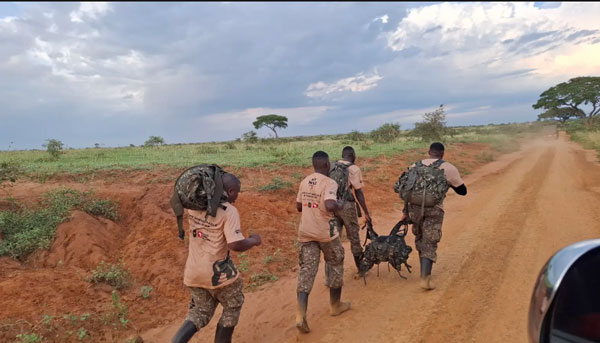
UWA has built outposts and plans further deployments in strategic locations around the park, while officials have also pointed to the importance of cooperation between neighbouring countries. For the rangers on the ground, these policy discussions eventually become practical questions. Do they have enough colleagues? Can they communicate quickly? Are their patrol posts adequately equipped? Do they have the training and technology necessary to understand what is happening around them? And, when they return from patrol, do they have the medical and financial protection that their profession demands?
Recognition matters too
Uganda’s Ministry of Tourism, Wildlife and Antiquities says progress has been made in strengthening the ranger workforce through improvements in salaries, accommodation, training, equipment and technology.
George Oweyesigyire, the Commissioner for Wildlife Conservation, pointed to investments in vehicles, binoculars, cameras, food and other operational resources, while also acknowledging the continuing challenges posed by poaching, encroachment, invasive species and climate change. Technology is increasingly part of the answer, with government agencies using tools such as GIS, EarthRanger and drones to improve monitoring and conservation operations. But Makombo emphasized another need that is less tangible and therefore easier to overlook: recognition.
The Challenge gives rangers an opportunity to meet others doing similar work, exchange experiences and feel connected to a wider professional community. Makombo said such recognition can improve morale because rangers can otherwise feel isolated in remote conservation areas. That may be one of the most important functions of the Challenge. The public sees a race. The rangers experience a network. And the people funding the event are being asked to see conservation not simply as the protection of wildlife, but as an investment in the people who make that protection possible.
The cost of protecting wild places
Louise de Bruin, the CEO of the Game Rangers Association of Africa (GRAA), has argued that rangers are not simply people who happen to work in national parks; they are essential workers whose safety and wellbeing are fundamental to the health of the planet.
The Ranger Welfare Standards Initiative, launched in 2024 by Tusk and GRAA with support from the Royal Foundation of the Prince and Princess of Wales, has already provided insurance coverage to nearly 6,800 rangers, with a target of reaching 10,000 by 2030.
It is an important development because the welfare question goes beyond the moment when a ranger is in the field. A professional conservation workforce needs medical protection, training, career development and a degree of security for families who live with the knowledge that a husband, wife, parent or child may spend days at a time in remote and potentially dangerous places.
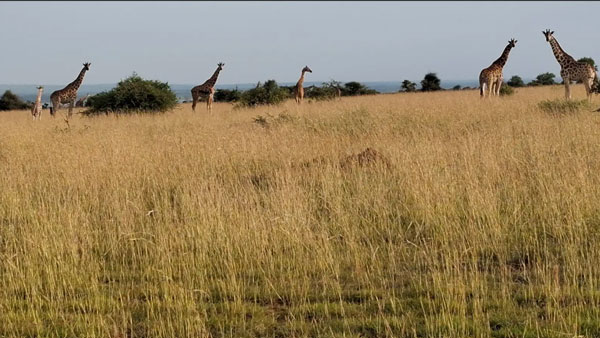
Roberts told The Independent that the longer-term ambition should be to see rangers recognized as professionals with meaningful career paths rather than simply as people expected to endure difficult conditions because they are committed to conservation. That idea changes the meaning of the race. It is no longer simply about how much a ranger can carry or how quickly a team can cover 21 kilometres. It becomes a public demonstration of the value of the profession itself.
And then they crossed the finish line
By the time the Kidepo teams reached the Delta near the Hippo Pool, the morning had transformed from anticipation into celebration. They had completed the 21 kilometres. They had carried their packs. They had stayed together. And once again, Kidepo had won both the men’s and women’s competitions.
There was every reason to celebrate the achievement, particularly because the teams had arrived carrying the weight of a recent loss. But the finish line could not erase what had happened in Kidepo.
Private David Onenchan died and he is no longer with his colleagues. The Kidepo rangers had come from a landscape where patrols can last for days, where the terrain can stretch for hundreds of kilometres and where the threats confronting conservation workers are not theoretical. They had come to compete, but they also came representing a profession whose dangers had been brought painfully close to home.
Perhaps that is why the most enduring image from this year’s Challenge is not the stopwatch, the winning team or even the heavy packs. It is the idea of four rangers moving together and refusing to leave one another behind. For Private Akello Robinah Brella, that principle is simple enough to apply both on the race course and in the bush: “never leave anyone behind.”
In conservation, however, the responsibility to keep people together cannot belong only to the rangers themselves. It belongs to the institutions that employ them, the governments that oversee protected areas, the communities that live alongside them and the partners who finance conservation.
It means providing the equipment and training necessary to make their work safer, ensuring access to medical and insurance protection, increasing staffing where teams are stretched, strengthening cooperation across borders and creating economic opportunities for communities whose lives are intertwined with protected areas.
The Wildlife Ranger Challenge is, at its most visible, a celebration of physical endurance. But the story of Kidepo this year suggests that its deeper purpose is something more demanding. It asks whether the people who spend their lives protecting Africa’s wild places can themselves be protected well enough to build long, safe and dignified careers.
Kidepo ran for victory inside Murchison Falls National Park. It also ran in memory of Private David Onenchan. And somewhere between the starting line at Pakuba and the finish at the Delta, the meaning of the race became larger than the race itself: because while 21 kilometres eventually came to an end, the work of protecting Uganda’s wildlife, and the responsibility to protect those who do it, continues long after the finish line.