The Independent Uganda: You get the Truth we Pay the Price



Kampala, Uganda | THE INDEPENDENT | Ugandans on Tuesday cast their ballots for chairpersons and councillors in 56 municipalities and city divisions. A key concern among the candidates and the election observers was the low voter turnout at the polling stations.
A similar concern was raised at the Presidential and Parliamentary polls and later at the Local Government election held last week. In some parts of Kampala, it was observed that many would-be voters stayed home on election day, including the unemployed ones.
In Jinja, some candidates made last-minute appeals, urging the voters to turn up to the polling station as they emphasized why they needed to vote for their preferred local leaders to represent them at the divisions.
Similar observations have been made, and there is an expectation that the voter turnout could be lower than the first and second rounds of the elections, as per the electoral commission roadmap.
Amidst the voting, the Electoral Commission (EC) appealed to all registered voters in the country to participate actively, emphasising that effective leadership at the local level is essential for service delivery and democratic accountability.
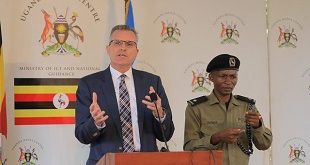
“Leadership at the local government level is very critical, and we therefore call upon all registered voters in these municipalities and city divisions to show up and vote,” an EC Spokesperson, Julius Mucunguzi, stated.
Similar calls have been made during the past general elections, including some of the byelections that have been held since 2016, but voters have continued to stay away from the polling stations.
Some of the candidates during the mayoral elections in Kampala blamed it on voter apathy, though that has not been scientifically verified, especially about the 2026 election.
In parts of Kampala, some voters have been openly demanding to be bribed before they could head to the ballot boxes. Candidates with some financial power had employed youthful men and women for door-to-door patrols to getout and vote in exchange for a financial incentive.
Generally, some observers have noted that voter turnout keeps declining every election, and this is largely due to a lack of civic education. But why would voters shun the Local Council elections?
Under the law, municipalities and city divisions are governed by elected chairpersons, commonly referred to as mayors, and councillors, who oversee sectors such as education, primary healthcare, water and sanitation, roads, and agricultural extension services.
“These leaders are often called mayors in everyday language, but legally they are chairpersons of municipalities and city divisions,” Mucunguzi clarified.
Early observations from parts of Kampala suggest voter turnout has been lower than in national elections, a pattern often seen in local polls. Arafat Lubega, a resident of Makindye East Division, noted: “People were very active during the presidential and parliamentary polls, but this local government election has been treated with a lot of apathy.” He also pointed to the uneven deployment of biometric voter verification kits at some stations.
In Makindye West Division, voter Juma Muwonge described turnout as uneven, with some residents citing the challenge of voting on a working day.
The EC has also highlighted the upcoming elections on February 4, 2026, when voters nationwide will elect sub-county (LC3) chairpersons and councillors. With 21.6 million registered voters expected to participate, these elections will cover the full country.
“It is at the local government level that real service delivery reaches the people,” Mucunguzi said. “The leaders elected at the sub-county level are responsible for implementing government programmes and ensuring communities benefit from national policies.”
He stressed that national policies and budgets only become meaningful through effective local implementation.
“Budgets approved by Parliament and policies formulated at the national level find fulfillment at the local government level. That is why voters must choose leaders who can effectively translate national priorities into tangible services.”
Uganda’s administrative structure, comprising 2,191 sub-counties, towns and municipal divisions, 146 districts, 312 counties, 353 constituencies, 10,717 parishes, and 71,214 villages, aims to deepen citizen participation and make governance responsive to local needs.
As voting continues, the commission has reiterated its call: “Show up, participate faithfully, and follow the guidelines of the election.”
****
URN