The Independent Uganda: You get the Truth we Pay the Price


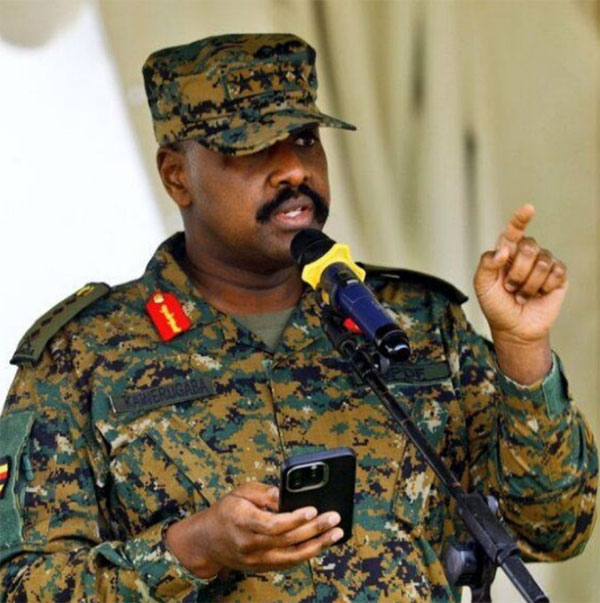
OPINION | JULIUS BUSINGE | At 10:32pm on August 31, 2026, Chief of Defence Forces Gen. Muhoozi Kainerugaba posted on his X account: “In Uganda, people can dance and drink up to morning. Also, women are allowed to dress anyway they want.”
At 11:07pm, he followed with another message: “Opening and closing hours for bars and clubs is up to the proprietors. What we will not tolerate is any form of fighting and violence. Otherwise, Ugandans are entitled to enjoy themselves.” On this, Gen. Muhoozi is right.
His position does not mean Uganda should allow irresponsible drinking, underage consumption, drunk driving, violence or disorder. It means government should regulate behaviour that harms society rather than impose a blanket restriction on thousands of legitimate businesses simply because some people misuse alcohol. That distinction is important.
Local Government Minister Balaam Barugahara recently directed bars, malwa joints and other alcohol-selling establishments not to open before 3pm on working days. He has defended the directive as a measure to discourage early-morning drinking, improve productivity and address social problems associated with alcohol abuse. Local authorities and security agencies have subsequently been instructed to enforce the restriction.
The intention may be understandable. The policy, however, is unnecessarily blunt.
If a licensed bar is operating legally, paying taxes and licences, employing Ugandans and complying with health, safety and age restrictions, why should government decide that it cannot open its doors before 3pm?
The more appropriate question should be: what exactly is the government trying to stop?
If the problem is drinking during working hours, then the government should address absenteeism and workplace productivity directly. If the problem is underage drinking, enforce the law against those selling alcohol to minors. If the problem is violence, arrest those who fight.
If the problem is drunk driving, strengthen enforcement against drunk driving. If the problem is illicit alcohol, go after the illicit producers and distributors.
Closing every licensed bar before 3pm treats compliant businesses and irresponsible drinkers as though they are the same. They are not.
REPUBLIC OF UGANDA
MINISTRY OF LOCAL GOVERNMENTDATE: 11TH AUGUST 2026
TO: ALL LC5 CHAIRPERSONS, CITY MAYORS, AND COUNCIL SPEAKERS
RE: DIRECTIVES ON LOCAL GOVERNMENT TRANSPARENCY, PUBLIC ACCOUNTABILITY, COMMUNITY PRODUCTIVITY AND REGULATION OF ALCOHOL AND BETTING OPERATIONS… pic.twitter.com/S2fV78FHwC
— Barugahara Balaam Ateenyi. (@BalaamBarugahar) August 11, 2026
Opening and closing hours for bars and clubs is up to the proprietors. What we will not tolerate is any form of fighting and violence. Otherwise, Ugandans are entitled to enjoy themselves.
— Muhoozi Kainerugaba (@mkainerugaba) August 31, 2026
Uganda’s formal alcohol industry is a significant part of the economy. A 2026 economic-impact study by Oxford Economics Africa estimated that Uganda Breweries Limited contributed Shs1.127 trillion in gross value added to Uganda’s economy. The study estimated that its wider value chain supported about 100,000 jobs and generated or supported approximately Shs811 billion in tax revenue.
The economic impact does not stop at the brewery gates. More than Shs552 billion of UBL’s estimated economic contribution came from downstream activities involving distribution, retail, bars, restaurants, hotels and entertainment venues. More than 64,000 formal jobs were associated with its distribution and retail ecosystem. This means the bar at the end of the supply chain matters.
A bar employs people. It buys stock from distributors. It pays rent, licences, taxes and utility bills. It creates demand for transport services and entertainment. It supports suppliers, cleaners, security guards, bouncers, waiters, chefs, DJs and other workers.
Take an example of a Bar and Lounge operating in Bukoto in Kampala. The establishment reportedly told me it employs about 30 people daily and contributes to local government revenue through local service tax, licensing fees and other statutory dues. For those workers, reducing the number of hours the business can operate is not a theoretical policy discussion. It can affect turnover, wages and job security.
The government therefore needs to explain whether it has calculated the economic cost of the 3pm restriction before implementing it. The agricultural link is equally important.
Uganda Breweries works with more than 35,000 smallholder farmers supplying crops including barley, sorghum and maize. Oxford Economics estimated that UBL paid more than Shs36 billion to smallholder farmers in 2024.
Nile Breweries officials say the company works with more than 25,000 farmers in more than 30 districts and sources more than 95 percent of its brewing raw materials locally. The company reported a tax contribution of Shs341 billion in the 2024/25 financial year.
These are not insignificant numbers in an economy trying to create jobs, deepen domestic production and expand the tax base.
The industry also contributes to skills development. UBL’s Learning for Life programme reported 366 young people graduating with business and hospitality skills in its 2025 sustainability reporting. Nile Breweries has trained retailers in financial management, stock control, sales and marketing, responsible retailing, digital adoption and business planning.
These programmes do not make alcohol consumption inherently good. They do, however, demonstrate that formal breweries are embedded in an economic system that extends from the farmer to the factory and ultimately to the retail outlet.
Government must therefore be careful not to undermine the formal value chain while attempting to address alcohol abuse.
There is another reason Gen. Muhoozi’s argument deserves attention: Uganda already has a substantial illicit alcohol problem.
Research cited by Uganda Breweries indicates that illicit alcohol accounted for about 67 percent of Uganda’s alcohol market by volume in 2024. This should concern policymakers.
A licensed bar can be inspected. Its operator can be identified. Its licence can be revoked. Its tax records can be examined. Its workers can be protected under labour laws. Its customers can be subject to age restrictions. The same cannot necessarily be said of an illicit alcohol operation.
If consumers are prevented from accessing alcohol through legitimate outlets during certain hours, some may simply turn to informal and unregulated alternatives. That would defeat part of the government’s public-health objective and potentially expose consumers to products whose quality and safety are difficult to monitor. This is why the government should be asking whether it is regulating the right target.
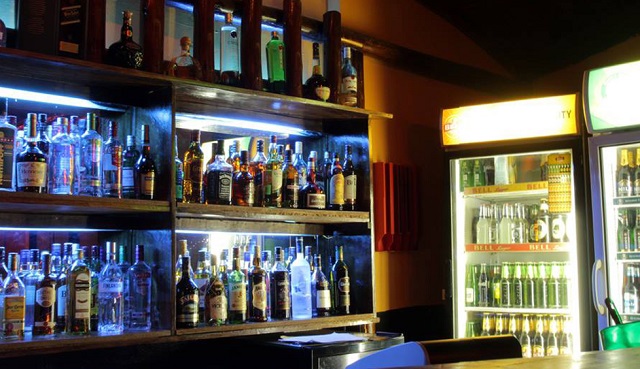
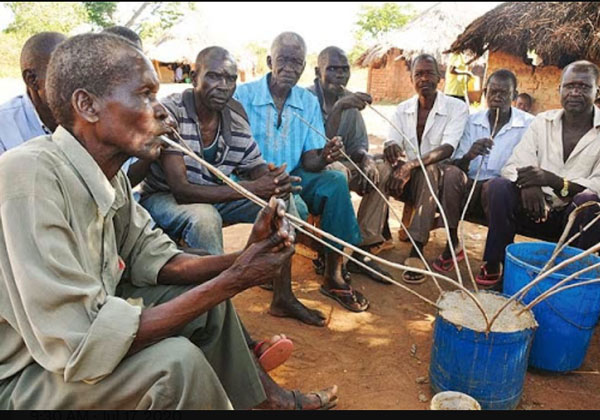
There is nothing wrong with telling a bar owner: You may operate, but you must not sell alcohol to children; you must not permit violence; you must not serve visibly intoxicated customers where the law prohibits it; you must not facilitate drunk driving; and you must comply with licensing, health and safety requirements. That is regulation.
But telling a legitimate business that it cannot open before 3pm regardless of its conduct is a different proposition. It punishes the compliant alongside the non-compliant.
The political contradiction between Gen. Muhoozi and Minister Balaam also deserves attention.
Balaam is not simply a Cabinet minister. He is deeply involved in the day-to-day political activities of the Patriotic League of Uganda, a political pressure group chaired by Gen. Muhoozi.
The PLU’s leadership structure identifies Muhoozi as chairman and Balaam as a senior member of its leadership. That makes their differing public positions particularly striking.
Are they contradicting each other? Or are Ugandans being presented with two different messages from leaders operating within the same political ecosystem?
It would be unfair to conclude without evidence that the two are deliberately playing on the minds of Ugandans. But government should clarify the apparent contradiction.
If Balaam’s 3pm directive is government policy, then Muhoozi’s public statement creates confusion. If Muhoozi’s position reflects the broader government’s thinking, then Balaam’s directive needs reconsideration.
My position is straightforward: Gen. Muhoozi’s approach is the more sensible starting point.
Uganda does not need to choose between public health and economic freedom. It can have both.
The answer is targeted enforcement. But a licensed business should not automatically be treated as a social problem simply because it sells alcohol.
The government should also publish the evidence showing that forcing bars to open only after 3pm will significantly reduce harmful drinking, crime or lost productivity. If such evidence exists, Ugandans deserve to see it.
And before imposing restrictions that affect thousands of businesses, government should disclose the likely consequences for employment, tax revenue, farmers, distributors and small businesses.
The alcohol debate should therefore move beyond the simplistic argument that closing bars earlier will make Ugandans more productive.
People do not become productive simply because a bar is closed. They become productive when there are jobs, decent wages, functioning institutions, effective workplaces, skills and opportunities.
Gen. Muhoozi’s message is ultimately about responsibility: allow adults to make lawful choices, but punish those who turn those choices into violence, disorder or harm to others. That is a more targeted, economically conscious and enforceable approach to alcohol regulation. Uganda should regulate misconduct—not simply the clock.
****
 The writer is a journalist with The Independent Magazine. He has also practiced Public Relations with several organizations.