 The Independent Uganda: You get the Truth we Pay the Price


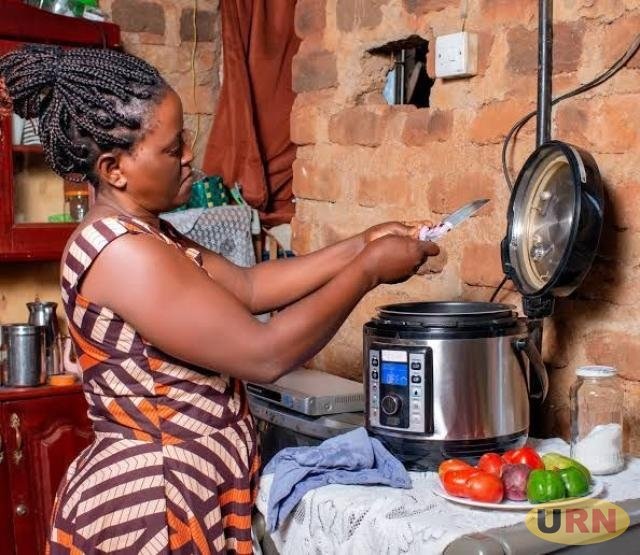
NEWS ANALYSIS | URN | The government of Uganda is targeting 85% electricity access and 50% access to modern cooking solutions by 2030 under a new National Energy Compact that seeks to expand energy infrastructure, attract private investment and address weaknesses in the country’s electricity supply and distribution systems.
The Compact, launched by the African Development Bank Group and the Government of Uganda through the Ministry of Energy and Mineral Development, sets out an investment requirement of US$17.7 billion over five years, including a commitment to mobilise approximately US$9.4 billion in additional private capital.
It was launched during the 11th Africa Energy Market Place held in Kampala in October as part of Mission 300, a joint initiative of the African Development Bank Group and the World Bank Group to connect 300 million additional people across Africa to electricity by 2030.
The Compact seeks to extend modern electricity services to more than 13 million additional Ugandans by 2030.
According to the document, electricity access stood at approximately 60% in 2025, leaving about 40% of the population without access to modern electricity services.
However, access remains unevenly distributed between urban and rural areas. The Compact puts rural electricity access at 43% in 2025, compared with 80% in urban areas.
By 2030, the government wants to increase rural access to 75% and urban access to 95%.
The government plans to achieve the targets through expansion of the national grid, deployment of approximately 2,712 mini-grids and increased use of stand-alone solar systems.
It targets six million solar home systems cumulatively by 2030, building on approximately four million units already deployed by the end of 2025.
The Compact also identifies affordability and last-mile connections as important considerations, particularly for rural households that are unlikely to receive immediate grid connections.
In electricity generation, Uganda plans to increase operational installed capacity from approximately 2,099 megawatts in 2025 to about 2,500 megawatts by the end of 2030.
A further 5,800 megawatts of generation projects are expected to reach financial close within the same period, although their commercial operation is planned for after 2030.
The distinction is important because the additional 5,800 megawatts will not all be available to generate electricity by the end of the decade.
The Compact identifies hydropower, solar photovoltaic, geothermal, battery energy storage, wind and biomass among the technologies expected to support future generation. It also proposes increasing solar power development, with a target of five gigawatts by 2030.
Despite the country’s installed generation capacity exceeding domestic peak demand, the Compact warns that the apparent surplus does not necessarily translate into reliable electricity supply.
Installed capacity stood at 2,098.6 megawatts against peak domestic demand of 1,351 megawatts in 2025.
However, the document identifies hydrological variability, the performance of the Karuma hydropower plant, and transmission evacuation bottlenecks as constraints on the amount of electricity that can reliably be supplied.
It notes that electricity demand grew by approximately 12.9% annually between 2023 and 2025, while generation increased at an average annual rate of 12.7% between 2020 and 2025.
The Compact argues that Uganda needs to expand transmission infrastructure alongside generation capacity to ensure that electricity produced can reach consumers.
On clean cooking, the government seeks to increase access from approximately 25% in 2025 to 50% by 2030, extending access to more than 4.6 million additional households.
The target represents a significant acceleration from previous progress. The Compact indicates that access to modern cooking solutions increased from 15% in 2017 to 25% in 2025, an average improvement of approximately 1.3 percentage points annually. Reaching 50% by 2030 will require an annual improvement of about five percentage points.
More than 80% of Ugandan households still depend on traditional biomass for cooking, particularly firewood and charcoal.
The Compact identifies the associated health risks, pressure on forest resources, time spent collecting fuel, and household financial burdens as reasons for accelerating the transition.
The proposed interventions include liquefied petroleum gas, electric cooking, bioethanol, biogas and improved cookstoves.
The government’s indicative fuel distribution plan includes 2.5 million households using LPG, 1.4 million adopting electric cooking, 700,000 using bioethanol and 3.5 million using improved cookstoves, with a gradual transition towards pellets and biogas.
To support adoption, the Compact proposes a Clean Cooking Acceleration Facility under the Uganda Energy Credit Capitalisation Company.
The facility is expected to provide consumer financing, support supply chains and fund behaviour-change programmes.
The Compact also proposes using associated gas from the Lake Albert oil developments to support the domestic LPG supply chain, subject to a planned Cabinet decision on the midstream pathway.
Financing remains central to the implementation of the programme. The Compact estimates total public and private investment requirements at US$17.7 billion between 2026 and 2030, comprising approximately US$8.8 billion in public financing and US$8.9 billion in private financing in its indicative funding breakdown.
Its separate headline commitment is to mobilise approximately US$9.4 billion in additional private capital across electricity generation, transmission, distributed renewable energy and clean cooking.
Among the proposed financing measures are competitive procurement, private investment in electricity transmission, guarantees and blended-financing facilities intended to reduce risks for investors.
The government plans to establish a Green Energy Facility and Guarantee Fund under UECCC, with an initial capitalisation target of US$300 million by 2027, rising to US$800 million by 2030.
The facility is expected to provide project preparation support, partial-risk guarantees and blended-financing commitments.
The Compact also identifies foreign-exchange risks as a major challenge for private investment, noting that electricity purchase agreements and external borrowing are largely denominated in US dollars, while electricity tariffs are collected in Ugandan shillings.
It proposes foreign-exchange risk management arrangements involving the African Development Bank, the Multilateral Investment Guarantee Agency, and other financing institutions to make investments more attractive.
The government also plans to strengthen the electricity distribution network, targeting a reduction in distribution losses from 18.2% in the fourth quarter of 2025 to below 12% by 2030.
The Compact attributes persistent losses to operational and commercial weaknesses in the distribution system, including the transition from UMEME to the Uganda Electricity Distribution Company Limited in April 2025.
It proposes improved metering, network rehabilitation, revenue collection, automation, and measures against electricity theft.
The government also intends to maintain electricity revenue collection efficiency at a minimum of 95%.
The Compact identifies fragmented electricity subsidies, outstanding government payment obligations, and the need to align tariffs with the actual cost of supplying electricity.
It proposes a multi-year tariff framework based on a cost-of-service study, alongside a lifeline tariff arrangement targeting low-income electricity consumers.
The proposed reforms are expected to be implemented through the Electricity Regulatory Authority and the Ministry of Finance. Regional electricity trade is another component of the plan. Uganda intends to strengthen cross-border transmission links and increase its participation in the Eastern Africa Power Pool.
Four major transmission corridors are identified, including the Tororo-Lessos line linking Uganda and Kenya, the Olwiyo-Biblia-Juba corridor towards South Sudan, the Masaka-Mutukula-Mwanza connection towards Tanzania, and the Nkenda-Beni-Butembo-Bunia corridor towards the Democratic Republic of Congo.
The government expects annual electricity export revenues to increase from approximately US$50 million in 2025 to between US$200 million and US$300 million by 2030.
The National Energy Compact sets out five areas of action covering generation and network infrastructure, regional electricity trade, last-mile electricity access and clean cooking, private-sector participation, and the financial sustainability of public energy services.
It also provides for a Compact Delivery and Monitoring Unit under the Ministry of Energy and Mineral Development to coordinate implementation.
The unit is expected to publish quarterly progress reports, annual delivery reviews and a digital results dashboard drawing on information from the energy sector institutions.
The Compact is part of Mission 300, a joint initiative of the African Development Bank Group and the World Bank Group aimed at connecting 300 million additional people across Africa to electricity by 2030.
The 11th Africa Energy Market Place also produced a Uganda Energy Access Investment Brief aligned with Mission 300.
Participants identified Category A projects expected to become operational by the end of 2030 and Category B projects expected to reach financial close by that date, with implementation and commercial operation following later.

