The Independent Uganda: You get the Truth we Pay the Price


SPECIAL REPORT | For nine decades, the Uganda Virus Research Institute has hunted pathogens, helped uncover viruses that would shake the world, and built a reputation far beyond Uganda. As it turns 90 and assumes a new regional role, its scientists say the next challenge is more ambitious: Africa must not only detect the diseases that threaten it but also increasingly develop the vaccines, diagnostics and treatments needed to defeat them, Ronald Musoke reports.
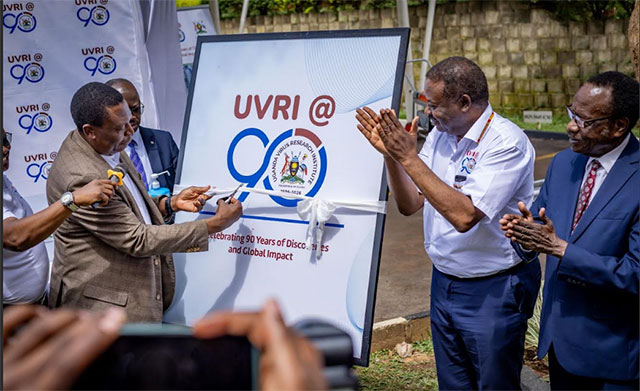
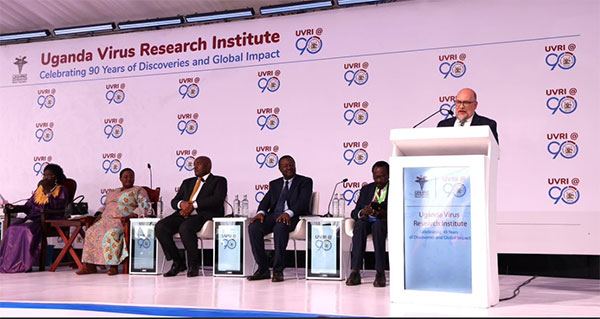
On July 22, senior government officials, scientists, researchers and development partners gathered on the sprawling campus of the Uganda Virus Research Institute on the outskirts of the lakeside town of Entebbe to celebrate an unusual milestone. UVRI was turning 90.
There was plenty to celebrate. From an institute established in 1936 primarily to investigate yellow fever, UVRI has grown into one of Africa’s important centres for infectious-disease research, surveillance and outbreak response. Its history is intertwined with the discovery and study of viruses that subsequently became household names thousands of kilometres from Uganda. Zika and West Nile are among them. Its scientists have worked on HIV, Ebola, Marburg, Rift Valley fever, polio and a succession of emerging and re-emerging infections.
But July 22 was not simply an occasion to look backwards. Uganda unveiled a new regional polio laboratory and formally launched UVRI as the East African Community Centre of Excellence for Virology, giving a 90-year-old institution an expanded mandate at a time when the region continues to confront outbreaks capable of moving rapidly across national borders.
President Yoweri Museveni, whose speech was delivered at the celebrations by Prime Minister Robinah Nabbanja, described the designation as more than an honour. It was, he said, “a call to responsibility to do more for our region.”
The symbolism was difficult to miss. UVRI began life studying one dangerous virus. Nine decades later, it is being asked to help an entire region prepare for pathogens whose identities, origins and consequences may not yet be known. And underneath the celebration ran an even bigger question: after 90 years of discoveries made in Uganda, what should African scientific independence look like in the decades ahead?
A Yellow Fever laboratory that found much more
UVRI’s story began in 1936 as the Yellow Fever Research Institute, established during British colonial rule with support from the Rockefeller Foundation. It would later become the East African Virus Research Institute, reflecting its wider regional mandate, before eventually assuming its present name, the Uganda Virus Research Institute, in 1977.
Its original mission was focused. Its eventual scientific footprint was anything but. While investigating yellow fever, researchers working from the institute encountered viruses previously unknown to science. Among the most consequential was the Zika virus, isolated in Uganda’s Zika Forest, along the Kampala-Entebbe highway, in 1947.
For decades, Zika remained relatively obscure outside specialist scientific circles. Then, almost 70 years after its identification in Uganda, the virus became an international public-health emergency as outbreaks spread through the Americas and evidence linked infection during pregnancy to severe birth defects. It was a dramatic reminder of why pathogen discovery matters even when a newly identified virus appears, initially, to pose little immediate global danger.
West Nile virus followed its own extraordinary trajectory. First identified in Uganda in 1937, it would decades later emerge as a significant public-health concern far beyond Africa. Prof. Pontiano Kaleebu, UVRI’s director and a virologist and immunologist who has spent most of his professional life at the institute, says more than 40 viruses have been isolated or identified through work conducted there over its lifetime.
“Many viruses have been discovered at UVRI,” he said ahead of the anniversary. “Some are well known, like the Zika virus and West Nile virus, while others have local names.” Their importance lies partly in what scientists cannot predict. “These viruses are important because you never know which one may become a future public health threat,” Prof. Kaleebu said. That uncertainty is one of the central paradoxes of infectious-disease research. A virus that appears insignificant today may become the outbreak that preoccupies the world decades later.
UVRI’s record also extends beyond identifying pathogens. Work conducted at the institute contributed to the development of the Smithburn live-attenuated vaccine against Rift Valley fever, which became important in veterinary medicine. Its historical record includes work on Chikungunya, Bwamba and Mengo viruses and research that helped advance understanding of viruses and disease.
Then came HIV. As the AIDS epidemic devastated Uganda and other African countries from the 1980s onwards, UVRI’s accumulated expertise in virology and its international research relationships gave it an important role in HIV research. Prof. Kaleebu himself initially concentrated on HIV before expanding his work into other emerging and re-emerging infections.
By the 1990s, collaborations involving institutions such as the U.S. Centers for Disease Control and Prevention and National Institutes of Health had deepened. UVRI participated in HIV vaccine research, including the first HIV vaccine evaluation trial in Africa, and generated research that would contribute to the much larger international response to HIV.
But its contribution cannot be measured only in viruses discovered or scientific papers published. UVRI has trained generations of scientists at master’s and doctoral levels, creating expertise that Uganda and neighbouring countries can draw upon when an outbreak arrives.
Museveni described those generations of Ugandan and African scientists, together with the surveillance, diagnostic and response systems built around them, as one of the institute’s most important achievements. Some of those scientists, he noted, have worked not only in laboratories but also in the field, sometimes at considerable personal risk.
When hours matter
Outbreak science is ultimately a race against time. A sophisticated laboratory matters because a sample collected from a sick patient can contain the information needed to determine what health authorities are confronting. Surveillance matters because a disease cannot be contained quickly if it is not detected quickly. And when the pathogen is highly infectious, delays can cost lives.
One illustration of how much Uganda’s capacity has changed is laboratory turnaround time for dangerous pathogens such as Ebola and Marburg. According to information presented around the anniversary, a Biosafety Level 3 laboratory established with U.S. support helped reduce turnaround times for some viral testing from more than a month to less than 48 hours.
UVRI’s reach has also expanded geographically. Its field station in Arua, strategically located in northwestern Uganda near the Democratic Republic of Congo and South Sudan, developed from a laboratory focused on plague into a testing platform for diseases including Ebola, mpox, cholera and yellow fever.
During the ongoing Ebola response cited at the anniversary celebrations, the Arua laboratory has tested more than 200 specimens across three sub-regions. The principle is straightforward: bring diagnostics closer to where an outbreak is occurring, reduce the time between suspicion and confirmation, and give public-health teams a better chance of interrupting transmission. Museveni distilled the urgency surrounding the new capacity into a simple warning: “We cannot afford to be late in detection if we are to save our people.”
That logic now sits behind UVRI’s expanded regional responsibility. The East African Community designation turns the institute into a hub for advanced virology research, specialised laboratory training, disease surveillance, diagnostics and scientific knowledge-sharing among partner states.
The timing is significant. East Africa and the neighbouring Great Lakes region remain vulnerable to Ebola, Marburg and other emerging infections. Movement across borders means an outbreak in one country can rapidly become a regional concern. Ahead of the anniversary, Prof. Kaleebu said UVRI was already discussing deployment of mobile laboratories to the Democratic Republic of Congo and possible use of laboratories along Uganda’s border.
In one sense, therefore, the new designation brings UVRI full circle. An institution that once operated as the East African Virus Research Institute has again been formally entrusted with a regional mission. But a centre of excellence cannot exist in name alone. The designation creates expectations; scientists must be retained, laboratories maintained, equipment continually upgraded and the institution adequately financed to deploy expertise when neighbouring countries need it.
The long war against polio
The anniversary brought another significant development: a new polio laboratory with advanced sequencing capacity. Uganda last recorded a case of indigenous wild poliovirus in 1996, Health Minister, Dr Chris Baryomunsi told guests.
That achievement, however, does not mean surveillance can stop. “It’s not that the disease is completely defeated,” Dr. Baryomunsi said.
The new facility is intended to strengthen the ability to analyse poliovirus samples and identify strains, contributing to regional and international efforts to eradicate the disease. For UVRI, there is historical continuity here too. The institute has been involved in polio research and vaccine-related work since the 1960s. Prof. Kaleebu believes the world is approaching the final stages of eradication and hopes the sequencing facility can help push that effort towards the finish line.
Dr. Baryomunsi described its equipment as comparable to technology found in advanced laboratories in Europe and the United States, with ambitions for the Entebbe facility to serve countries beyond Uganda. It is another indication of how the institution’s identity is changing: from a national research institute with international partnerships towards infrastructure upon which other countries may increasingly depend.
Who pays for scientific sovereignty?
Yet beneath the new laboratories, regional titles and anniversary celebrations sits a more difficult question. Scientific excellence is expensive. UVRI’s history is also a history of international partnerships and foreign investment—from the Rockefeller Foundation at its birth to long-running relationships with British and American institutions, the World Health Organisation and other global health partners.
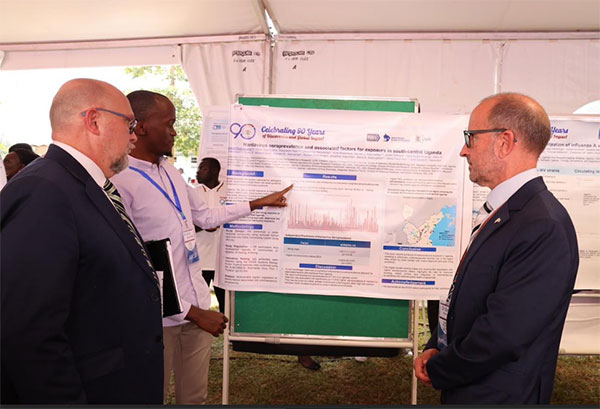
The numbers disclosed around the anniversary demonstrate the scale of that support. The United States says it has contributed nearly US$100 million over the years towards HIV programmes, laboratory systems, surveillance and Uganda’s health security. At the anniversary, U.S. Chargé d’Affaires Mikael Cleverley announced the transfer of a fully equipped mobile laboratory and two vehicles valued at more than US$930,000 to strengthen outbreak detection and emergency response.
Another US$245,000 was awarded through the U.S. Ambassador’s Fund for Cultural Preservation for a four-year project to preserve UVRI’s scientific heritage and develop its museum. That museum project carries an intriguing historical significance. Some of the records of an institution that has spent 90 years conducting science on Ugandan soil remain scattered abroad, including material held in Rockefeller Foundation archives in New York. Other documents, correspondence, laboratory equipment and specimens face deterioration or remain inadequately stored. The project aims to catalogue and preserve that history in Uganda.
Behind those commitments sits a much larger five-year US$2.3 billion U.S.-Uganda health cooperation agreement, signed in December 2025 and intended to support a more resilient health system. International collaboration has unquestionably helped build UVRI. But the anniversary also produced a striking convergence between scientists and Uganda’s political leadership around a concept that complicates the traditional donor-recipient story.
Scientific sovereignty
“A nation that studies its own pathogens is a sovereign one,” Museveni said, “and one that can sequence its own viruses is a self-reliant nation.”
Dr Bruce Kirenga, the Director of the Makerere University Lung Institute and a chief research scientist, made essentially the same argument from the scientific side. “At this point, the issue of science sovereignty is very important for Africans,” Dr. Kirenga said. That convergence matters.
The argument is not that African science should retreat from international collaboration. UVRI’s own history demonstrates precisely how valuable sustained partnerships can be. The harder question is what Africa itself is ultimately able to do with the knowledge, infrastructure and expertise those partnerships have helped create. There is also a tension that the anniversary could not entirely conceal.
Museveni pledged that his government would continue increasing funding for research and innovation—but added an important qualification: “as long as the resource envelope allows.” There, perhaps, lies one of UVRI’s central challenges as it enters its tenth decade.
Scientific sovereignty requires more than sophisticated equipment and highly trained scientists. It requires sustained financing. How does an African institution that has benefited enormously from international investment maintain those partnerships while developing greater domestic and regional ownership of its scientific future?
Beyond finding the virus
For decades, African research institutions have played indispensable roles in identifying pathogens, collecting samples, conducting surveillance and generating data.
Dr Kirenga argues that the next stage must go further. “We need to go beyond describing these pathogens but also be able to create local medical solutions,” he said, “because these solutions will reach our people faster.” That means diagnostics. It means therapeutics. And, critically, it means vaccines. The distinction matters.
A continent that can identify a dangerous pathogen but must depend heavily on technology produced elsewhere to diagnose, prevent or treat it remains vulnerable. The COVID-19 pandemic exposed those inequalities with unusual clarity as African countries found themselves competing for vaccines manufactured overwhelmingly elsewhere. For UVRI, therefore, the question of the next 90 years is not simply how many more viruses its scientists can discover. It is whether institutions such as UVRI can help shift Africa from being a critical site of infectious-disease research to becoming a more powerful producer of the technologies that research makes possible.
Dr Kirenga says Ugandan scientists are already collaborating with UVRI on Ebola-related innovations, including diagnostics and vaccines, although details have not been disclosed. There are also discussions about strengthening UVRI’s role in advanced scientific training, including proposals linked to degree-awarding arrangements with Makerere University.
Such moves would address another crucial component of scientific sovereignty: people. Laboratories can be constructed. Sequencing machines can be purchased. Mobile laboratories can be donated. But sustainable scientific capacity depends on countries continually producing, retaining and financing researchers capable of using them. Preserving the past, preparing for the unknown There was another striking element to the anniversary.
Alongside a laboratory designed to confront future outbreaks, Uganda launched a museum intended to preserve UVRI’s past. Museveni said visitors should leave it understanding that “even a single scientist can change the world”. For UVRI, history provides plenty of evidence for why obscure scientific discoveries should not be forgotten. Zika was once a virus known principally to specialists and named after a Ugandan forest. West Nile took its name from the part of Uganda where it was first identified.
Decades later, both demonstrated how a discovery made in one corner of Africa could become important to the entire world. The lesson is increasingly urgent. Climate change, ecological disruption, population growth, urbanisation and intense movement of people and animals are altering the conditions in which pathogens emerge and spread. A virus can cross borders long before politics catches up. That makes the scientific capacity concentrated at Entebbe important beyond Uganda. It also explains why the East African Community designation may prove more consequential than the ceremony at which it was unveiled.
Ninety years ago, the institution was established to investigate yellow fever. Today, it is expected to detect outbreaks, sequence viruses, train scientists, support neighbouring countries confronting epidemics and contribute to the global surveillance architecture intended to identify dangerous pathogens before they become catastrophes. Yet its next transformation may have to be deeper.
The achievement of UVRI’s first 90 years is that scientists working from Uganda have helped the world understand viruses. Its next test is whether that knowledge can increasingly be converted into African-made solutions, and whether governments on the continent are prepared to finance the expensive, patient and sometimes uncertain scientific work required to make that possible.
The laboratories in Entebbe now contain technology that scientists of 1936 could scarcely have imagined. The regional mandate has been bestowed. International partners are pledging millions. A museum will preserve the instruments, documents and stories of scientists whose work travelled far beyond Uganda.
But an institution devoted to viruses cannot live principally in its past. Somewhere, perhaps in a forest, an animal population, a crowded settlement or a patient whose illness has not yet been explained, another pathogen may already be waiting to be identified. UVRI’s 90-year history suggests that finding it is possible. The question confronting its tenth decade is whether Africa will increasingly possess not only the science to identify the threat, but also the power to build the solution.