The Independent Uganda: You get the Truth we Pay the Price


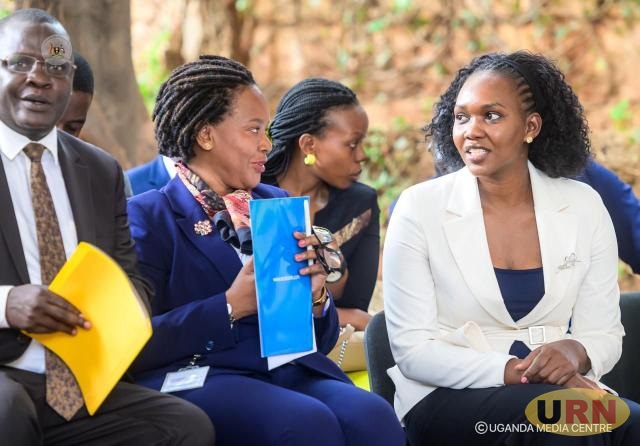
Kampala, Uganda | URN | State Minister for Mineral Development Phiona Nyamutoro has said that Uganda needs to ensure that its mineral wealth generates maximum value for Ugandans.
Nyamutoro said Uganda’s mining sector must move beyond the extraction and export of raw minerals to create productive investment, employment, industrial capacity and sustainable national wealth.
She was speaking at a press briefing at the Uganda Media Centre on Wednesday ahead of the 15th Annual Mineral Wealth Conference, where government is expected to push for greater private-sector investment in exploration, mineral processing and value addition.
The two-day conference, scheduled for September 29-30 at Speke Resort Munyonyo under the theme “Beneath the Surface: Unlocking Africa’s Next Mining Powerhouse,” is organised by the Uganda Chamber of Energy and Minerals (UCEM) with support from the Ministry of Energy and Mineral Development.
The conference will be followed by a field excursion to eastern Uganda from October 1-3. Organisers say previous editions have attracted more than 1,000 delegates annually from more than 50 countries.
Uganda has identified more than 58 categories of minerals, including gold, rare earth elements, iron ore, phosphates, graphite, cobalt, copper, lithium, coltan, tin, tantalum, tungsten, limestone, marble and vermiculite.
Nyamutoro said these resources have potential applications in strategic industries ranging from clean energy and electric vehicles to steel, fertiliser production, electronics and construction.
She said the government wants to use the sector to support its broader economic transformation objectives, including Vision 2040 and the long-term ambition of expanding Uganda’s economy towards US$500 billion.
High-resolution aeromagnetic surveys have also been used to map the country’s geological potential and identify areas with prospects for mineral exploration. However, Nyamutoro said the discovery of mineral deposits would have limited economic impact if Uganda continued to export them in raw or minimally processed form.
She said the government is therefore prioritising processing, beneficiation, refining and manufacturing to retain a larger share of mineral value within the country. The strategy is anchored in the Mining and Minerals Act, 2022, which replaced the 2003 Mining Act and introduced measures aimed at strengthening regulation, promoting transparent and competitive licensing, formalising artisanal and small-scale mining, increasing national content and local participation, and providing for government equity and environmental safeguards.
Regulations introduced under the law provide for different licensing categories, including dedicated artisanal and small-scale mining licences primarily reserved for Ugandans, as well as environmental and social impact assessments and community development obligations.
The government is also developing designated mineral markets and buying centres and supporting efforts to improve traceability in the sector, including through the Bank of Uganda’s gold purchase programme.
Artisanal and small-scale mining remains a major source of livelihoods for hundreds of thousands of Ugandans. Rather than shutting down informal operations, Nyamutoro said the government intends to bring miners into the formal economy.
The objective, she said, is to enable miners to operate legally, safely and productively while giving them access to legitimate markets, technology, skills and financing and improving environmental and social standards. The approach also forms part of efforts to address concerns over mercury use and child labour associated with parts of the artisanal mining sector.
Aggrey Ashaba, chairperson of the UCEM Governing Council, said the private sector has a critical role to play in translating Uganda’s mineral potential into economic opportunities. UCEM, a not-for-profit body representing about 150 entities across mining, petroleum, finance, insurance, logistics and related services, seeks to connect government policy with private capital and expertise.
Ashaba called for policies that maximise Ugandan employment and enterprise participation, predictable regulation and greater industrialisation so that more value from the country’s minerals is retained locally. “It is not enough for us to have mineral potential. It’s important to make sure that potential can provide maximum value for Ugandans,” he said.
Ecobank Uganda, the conference’s headline sponsor, said its participation is aimed at financing the wider mining ecosystem rather than mining operations alone.
Managing Director Grace Muliisa said the bank’s presence across 32 African countries has given it experience in financing economies where mining plays a significant role, including the Democratic Republic of Congo, Guinea, Ghana, Zimbabwe and Sierra Leone.
She said Uganda’s opportunity extends beyond financing extraction to supporting processing, infrastructure, equipment and other businesses connected to the mining value chain. “The opportunity is not simply to finance mining; it’s to finance the ecosystem around mining,” Muliisa said.
The conference will bring together investors, mining companies, technology providers, financial institutions, government agencies and development partners for discussions on mineral governance, licensing, critical minerals, climate impacts and investment opportunities.
A dealers’ room will provide a platform for business engagements, while discussions will cover the entire mineral value chain, from exploration and extraction to processing, refining, equipment, infrastructure and innovative financing.
For government, the broader objective is to position Uganda as a regional mining hub while reducing dependence on raw mineral exports. Nyamutoro urged investors, technology providers and development partners to participate as commercial and development partners capable of investing in exploration, production and value addition.
“There is significant opportunity beneath the surface,” she said, adding that Uganda’s responsibility is to unlock its mineral wealth strategically and responsibly so that it contributes to the prosperity of current and future generations.